Skip to content
Tired of suppliers who over-promise and under-deliver? Your salon’s reputation is on the line with every single bottle of glue you purchase and use on a client.
Look for warning signs like poor communication, a lack of safety certifications, inconsistent quality, and vague production timelines. Choosing a reputable, transparent supplier is crucial for your business’s success and your clients’ safety [2, 5, 6].

As a lash products business owner myself, I have learned many of these lessons the hard way. Your glue is the foundation of every lash set you create, and a bad supplier can cause problems that affect your clients, your reputation, and your profits. Let’s walk through the 10 biggest red flags I’ve learned to watch for, so you can choose your next partner with confidence and avoid the mistakes that I made.
1. Is Their Communication Slow or Unclear?
Are you waiting days for a simple answer to an email? Vague responses create doubt and slow down your entire purchasing process, costing you valuable time and money.
Slow, unclear, or unprofessional communication is a major red flag. A reliable partner will respond promptly and clearly. If they can’t answer simple questions now, they won’t be there for you when a real problem arises.
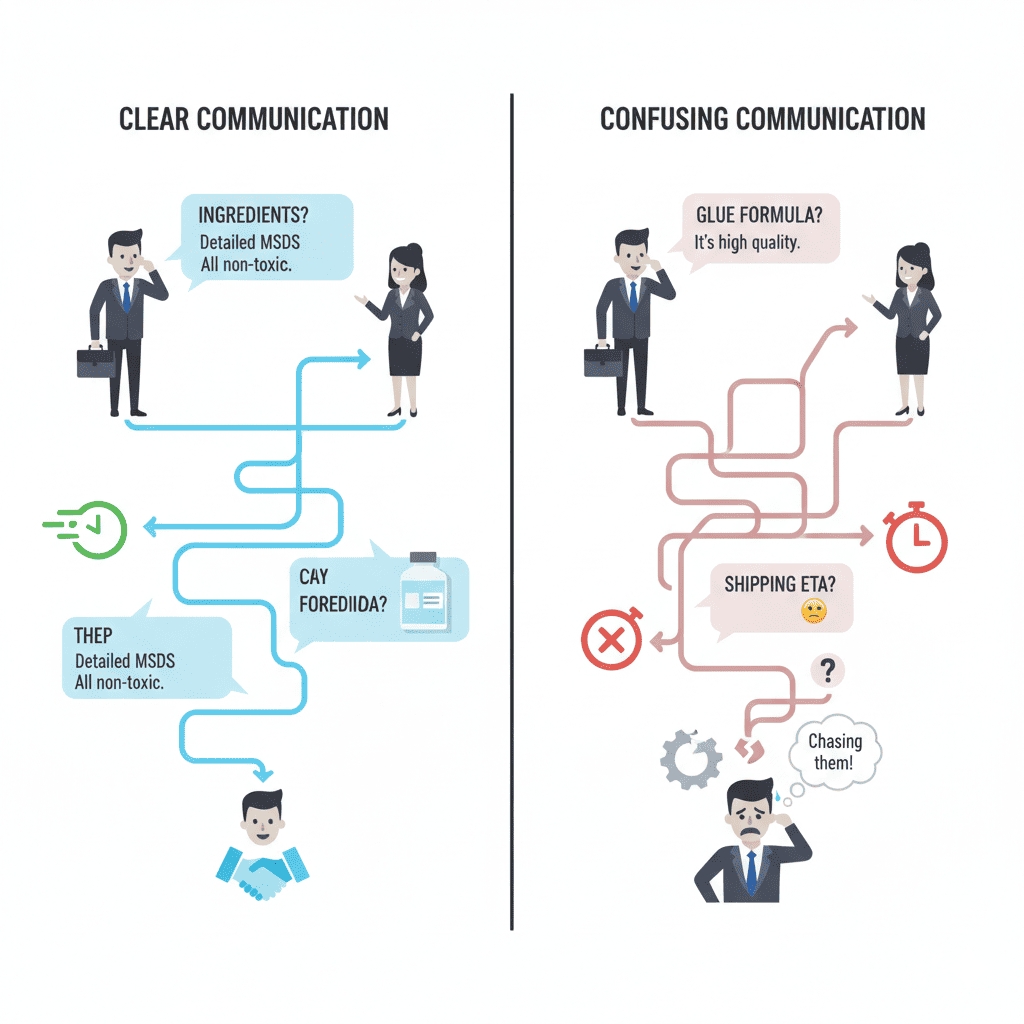
When I first started my business, I reached out to a potential supplier about their glue formulation. The sales representative took three days to reply, and the answer was a generic "it’s high quality." This was not helpful. Clear communication is the cornerstone of a good B2B partnership. You need a supplier who can provide detailed answers about ingredients, shipping, and production without delay. Delays in communication often predict delays in production and shipping. A professional supplier understands that you have a business to run. They should be able to answer your questions within one business day. Their language should be clear, professional, and directly address your questions. If you feel like you are chasing them for information, they are not the right partner for you. This is especially true when discussing problems or custom requirements. A good supplier works with you to find solutions. A bad one avoids difficult questions.
Communication Quality Check
| Good Supplier (Green Flag) | Bad Supplier (Red Flag) |
|---|---|
| Responds within 24 hours | Takes several days to respond or ignores emails |
| Provides detailed, specific answers | Gives vague, unhelpful, one-word answers |
| Proactive with updates on orders | You have to constantly ask for status updates |
| Professional and respectful language | Overly casual, unprofessional, or rude language |
2. Are They Vague on Certifications and Safety?
You ask for an MSDS (Material Safety Data Sheet)1 and they hesitate. Your clients trust you with their eye health, and using uncertified products is a risk you cannot afford.
A trustworthy supplier will provide safety certifications like MSDS and ISO upon request without any hesitation. This transparency proves their products are tested and safe for professional use.

Safety is not negotiable in the lash industry. Your clients’ health, and your business’s liability, depend on the quality and safety of your products, especially adhesive. Any professional supplier should have an MSDS readily available for every adhesive they sell. This document contains crucial information about ingredients, handling procedures, and emergency measures. If a supplier cannot or will not provide this, it is a massive red flag. It suggests they either don’t know what is in their own product or they are hiding something. Furthermore, look for suppliers who operate in facilities with ISO certifications2. This indicates they adhere to international standards for quality management and manufacturing. As a brand owner, this is your proof that the products are made in a clean, controlled environment. I always recommend asking for these documents during your initial conversations. A supplier’s reaction tells you everything you need to know about their professionalism and commitment to quality.
Essential Document Checklist
| Document | Why It’s Important | What to Look For |
|---|---|---|
| MSDS | Details ingredients and safety protocols. | Check for clear ingredient lists and proper handling instructions. |
| ISO Certification | Shows adherence to quality manufacturing standards. | Look for a valid certificate number and scope of certification. |
| Cruelty-Free/Vegan | Meets ethical consumer demands. | Ask for their official policy or third-party certifications. |
3. Is Quality Inconsistent Between Samples and Orders?
The sample glue had amazing retention, but your first bulk order is a complete disaster. This "bait and switch" tactic can destroy your reputation and leave you with unusable stock.
A major red flag is when the quality of the bulk order does not match the sample you approved. A reliable supplier maintains consistent quality across all batches, ensuring every order meets your standards.
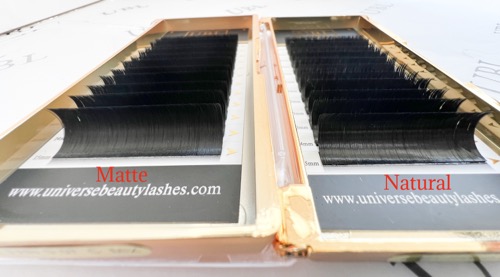
This is one of the biggest fears for any lash salon owner. I’ve heard horror stories from my customers about this exact issue. You test a sample, it works perfectly, and you place a large, expensive order with confidence. Then, the bulk shipment arrives, and clients start calling with retention issues. The glue is too thick, too thin, or has a different drying time. This inconsistency is a sign of poor quality control in the manufacturing process. A reputable supplier has strict batch control procedures to ensure every bottle of glue performs exactly like the last one. Before placing a large order, ask the supplier about their quality control process. How do they ensure consistency between batches? Do they keep retention samples from each batch for future testing? A professional supplier will be happy to explain their processes. If they are evasive, be cautious. You can also place a smaller, mid-size order after the initial sample to test their consistency before committing to a huge inventory purchase.
4. Do They Give Unrealistic Production and Shipping Times?
They promise to deliver your custom-branded glue in two weeks, a timeline that seems too good to be true. Overpromising on delivery times is a common tactic to secure a sale.
Be wary of suppliers who promise impossibly fast turnaround times. A reliable manufacturer will give you a realistic production and shipping schedule, accounting for potential customs delays and logistics.

As someone who manages production, I can tell you that quality takes time. Manufacturing, private labeling, and international shipping simply cannot be done overnight. A supplier promising a one-week turnaround for a custom OEM order from China to Canada is not being honest. A realistic timeline involves several stages: confirming the label design, producing the glue, bottling and packaging, and then the actual shipping, which can take weeks. A trustworthy supplier will be transparent about each stage. They will provide a clear schedule and keep you updated on progress. Ask for a detailed breakdown of the timeline. How long for production? How long for shipping? What shipping methods do they use? Unrealistic promises often lead to major delays, leaving you without stock when you need it most. It is far better to have a realistic two-to-three-week timeline that you can plan for than a false one-week promise that fails to deliver.
Realistic Timeline Expectation (Example)
| Stage | Average Time | Potential Delays |
|---|---|---|
| Order & Design Confirmation | 2-4 business days | Back-and-forth design changes |
| Production | 7-15 business days | Raw material shortages, holidays |
| Packaging & Labeling | 3-5 business days | Custom packaging complexities |
| International Shipping | 10-25 business days | Customs clearance, shipping carrier delays |
5. Is There a Lack of Transparency in Ingredients?
You ask what makes their "sensitive" glue different, and they just say "a special formula." This secrecy is a red flag that they may be hiding low-quality or even harmful ingredients.
A reputable supplier should be able to clearly explain the main ingredients in their adhesives, such as the amount of cyanoacrylate1, and what makes their different formulas unique.
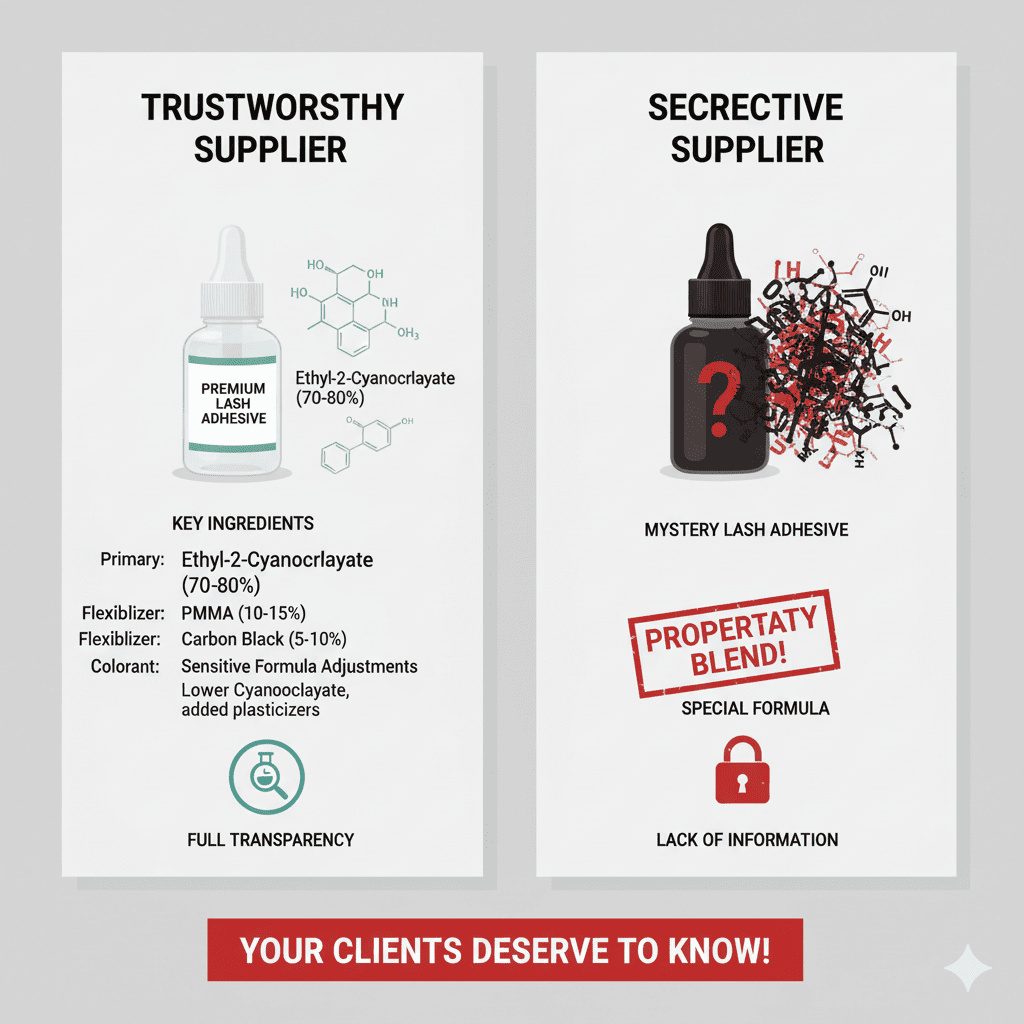
Your clients deserve to know what is being applied to their eyes. While a supplier won’t give you their exact proprietary formula, they should be able to discuss the key active ingredients and their properties. For example, they should be able to tell you the primary bonding agent (like Ethyl or Methyl-2-Cyanoacrylate2) and what they use to make a formula more flexible or lower in fumes. This knowledge is essential for you to make informed decisions and properly serve clients with sensitivities [6]. If a supplier is completely secretive, it could mean they don’t understand the chemistry themselves, or they are using cheap, irritating ingredients. Ask them direct questions: "What is the main bonding agent in this glue?" or "What adjustments are made for your sensitive formula?" A confident, knowledgeable supplier will have no problem explaining the science behind their products in a way that helps you, their customer. This transparency builds trust and shows they are true experts in their field.
6. Are Their Payment and Shipping Policies Inflexible?
The supplier only accepts one form of payment and offers a single, expensive shipping option. This lack of flexibility shows they are not focused on customer convenience.
A good supplier should offer multiple, secure payment methods and flexible shipping options to meet the needs of international buyers. Rigidity in these areas can signal an unprofessional operation.
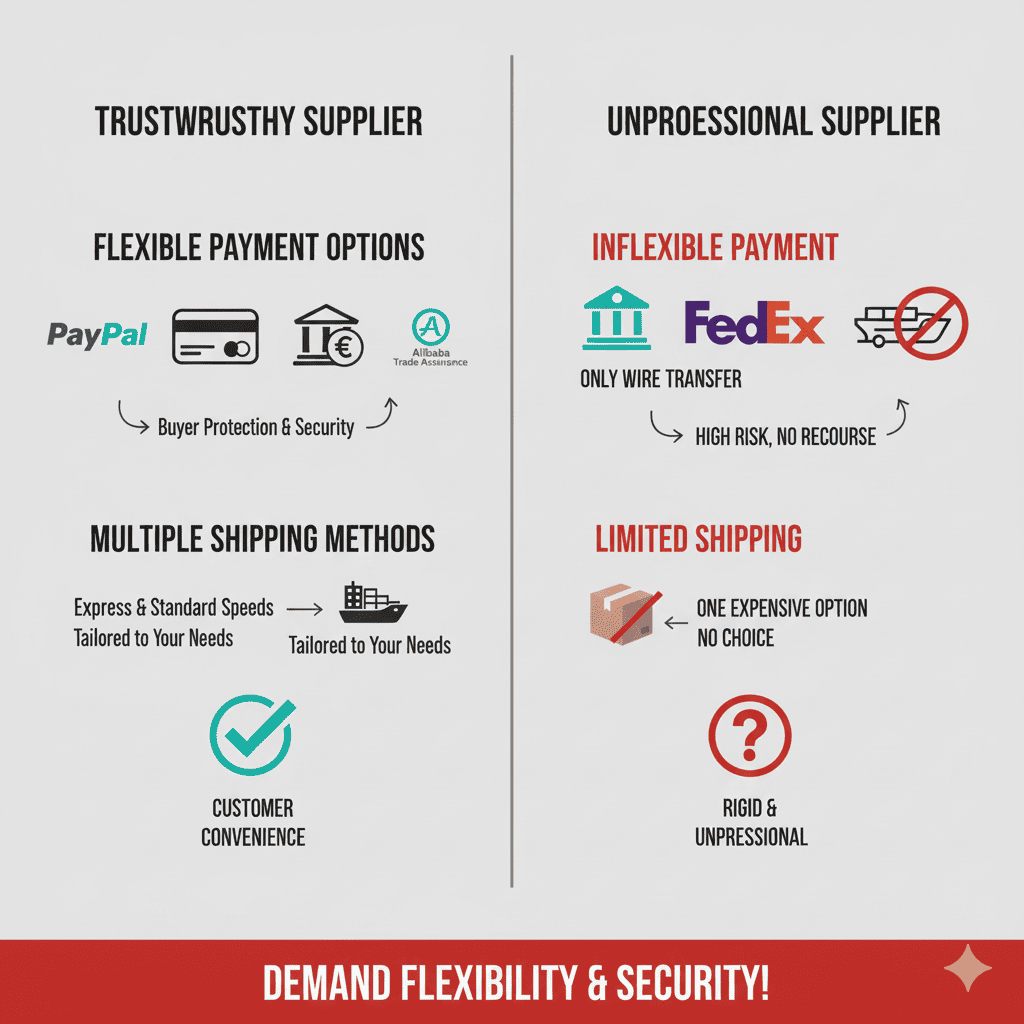
As an international buyer, you need flexibility. A supplier that only accepts wire transfers, for example, puts you at risk because there is little recourse if something goes wrong. Professional suppliers understand the needs of their global customers and offer a range of secure payment options like PayPal or Alibaba Trade Assurance, which provide buyer protection. This shows they are confident in their ability to deliver and are willing to use platforms that protect both parties. The same principle applies to shipping. A one-size-fits-all shipping policy is a red flag. They should be able to offer different carriers (like DHL, FedEx, etc.) and different speeds (express vs. standard) to help you manage your costs and timelines. Inflexible policies suggest a small, perhaps inexperienced, operation that has not adapted to the global market. Always discuss payment and shipping options upfront. If they are not willing to work with you, it’s best to find a supplier who is.
7. Do They Have No Social Proof or Negative Reviews?
You search for reviews of the supplier and find almost nothing. A company with no reputation, or a bad one, is a significant risk for your business to take.
Look for suppliers with a track record of positive customer reviews and testimonials [2]. A complete lack of online presence or a history of negative feedback is a clear warning sign.
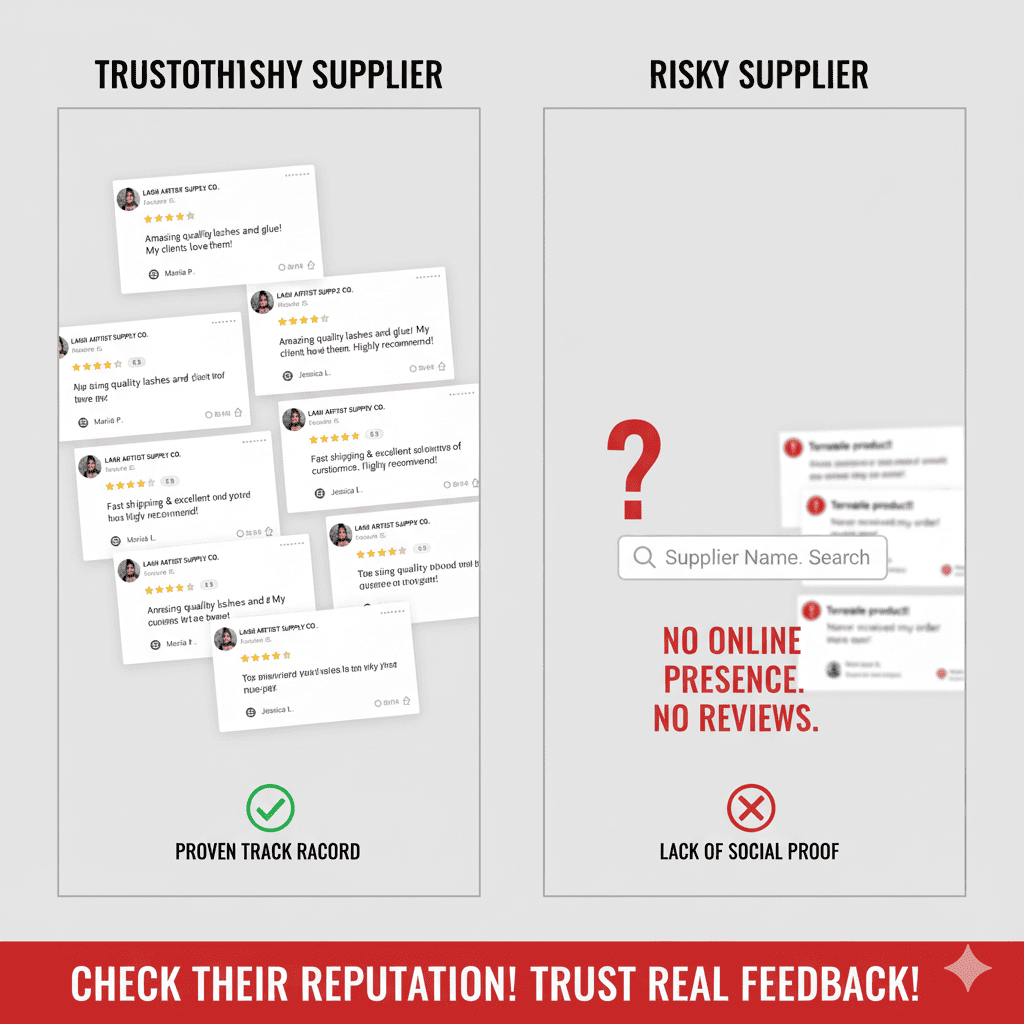
In today’s digital world, a legitimate business has an online footprint. Before committing to a supplier, do your research [2]. Search their company name on Google, in professional Facebook groups, and on industry forums. Look for reviews, comments, and mentions from other lash artists. No online presence at all can be a red flag. It might mean they are a brand new company with no track record, or they are intentionally keeping a low profile, possibly due to past issues. Of course, negative reviews are also a major concern. While one or two bad reviews can happen to any business, a consistent pattern of complaints about quality, shipping, or communication is a clear sign to stay away. I trust my customers’ feedback more than anything. A supplier with a strong, positive reputation is one that has proven they can deliver on their promises. If you can’t find anyone who has had a good experience with them, you likely won’t be the first.
8. Are Their Minimum Order Quantities (MOQs) Excessively High?
A supplier markets themselves as "private label friendly" but then requires a 1000-bottle minimum order. This is a barrier for small to medium-sized businesses and is not truly flexible.
A truly private-label-friendly supplier will offer reasonably low MOQs to help new brands get started. An excessively high MOQ is a red flag for businesses looking for a flexible partner.
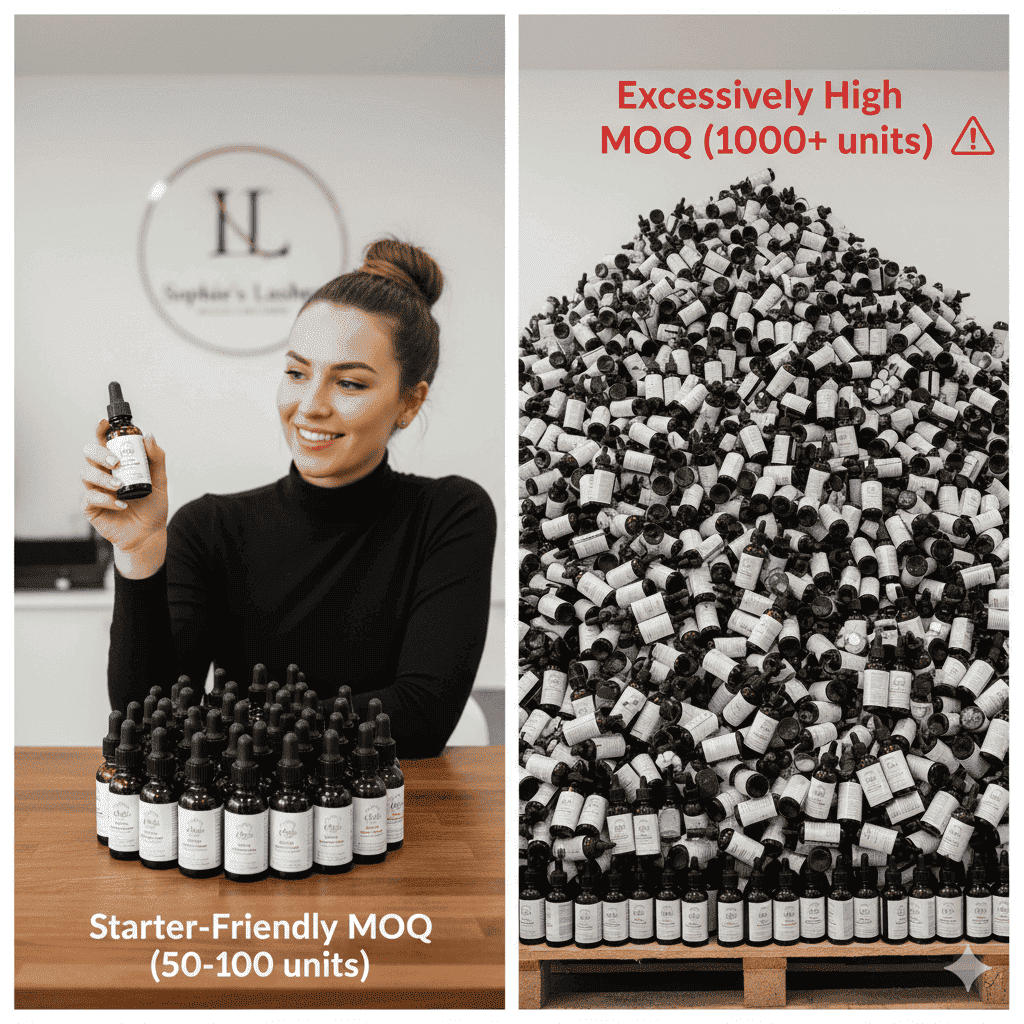
One of my core business principles is supporting other entrepreneurs with low MOQs. For salon owners like Sophie, who are building their own brand, ordering thousands of bottles of glue at once is often not feasible. It ties up too much cash and creates a risk of the product expiring before it can be sold. A supplier that understands the private label market should offer starter-friendly MOQs, perhaps from 50 to 100 units. A supplier demanding a very high MOQ might not be set up for private label clients and may be more focused on large distributors. This misalignment can lead to problems later on, as they may not prioritize your smaller orders. Be clear about your needs from the beginning. If a supplier’s MOQ is far beyond what is comfortable for your business, don’t be tempted by a slightly lower unit price. It’s better to find a partner who can grow with you, starting with manageable order sizes.
9. Is Their Product Range Outdated?
You look at their catalog and see the same basic glues they have sold for ten years. The lash industry innovates quickly, and a supplier who isn’t keeping up can hold you back.
A great supplier is constantly innovating and staying updated with the latest trends and technologies in lash adhesives [3]. A stagnant product line is a sign they are not invested in the industry’s future.
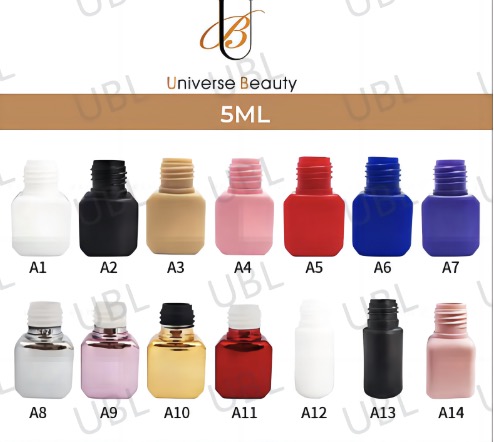
The lash world is always evolving. New techniques, new lash materials, and new adhesive formulations appear every year [3]. You need a supplier who is at the forefront of this innovation, not one who is stuck in the past. A forward-thinking supplier will be introducing new products like clear adhesives for colored lashes, glues with better flexibility, or formulas with even lower fumes. They should be able to talk to you about what’s new and what’s coming next. This shows they are invested in research and development and are passionate about the industry. A supplier with an outdated product list is not just boring; they are a liability. Your clients, especially trend-conscious ones, will seek out artists who use the latest and greatest products. If your supplier isn’t providing you with modern tools, your business will fall behind the competition. Always ask a potential supplier what’s new in their product line and what they are developing for the future.
10. Is Their Packaging and Handling Poor?
Your glue arrives in a simple padded envelope with no temperature protection. Improper handling can ruin the adhesive before it even reaches you, wasting your money.
Professional suppliers understand that lash adhesive is a sensitive chemical. They should use temperature-controlled packaging with silica gel packs to protect the glue from heat and moisture during transit.
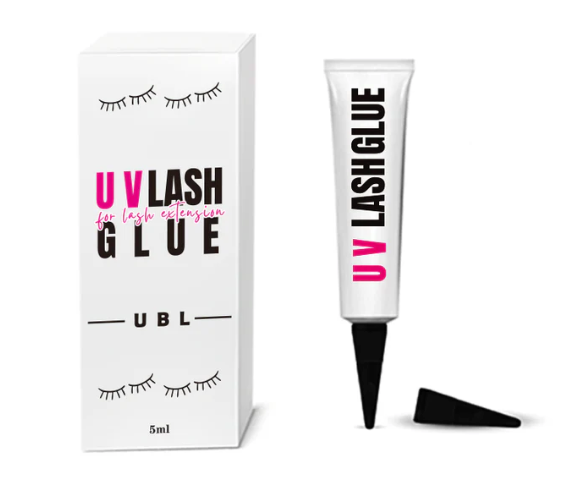
How a supplier packages their glue tells you a lot about their understanding of the product. Lash adhesive is highly sensitive to temperature and humidity. If it gets too hot during shipping, its chemical structure can break down, leading to poor performance and retention. A professional supplier knows this and takes steps to protect their product. They should ship adhesives in insulated packaging, often with a silica gel pack to absorb moisture and an ice pack in hot weather. When a package arrives in a simple, unprotected bag, it’s a clear sign that the supplier either doesn’t understand their own product or doesn’t care about its quality upon arrival. This is a huge gamble for you. I’ve had to throw away entire shipments in the past from other suppliers because they were not packaged correctly. Always ask a new supplier how they package their adhesives for shipment. If they don’t mention temperature protection, it’s a major red flag.
Conclusion
Choosing the right lash glue supplier is a critical business partnership. Avoid these ten red flags to protect your brand, ensure client safety, and build a profitable business.