Skip to content
The lash lift and tint is a client favorite, but what happens when they also want extensions? Choosing the wrong glue can ruin both services and damage your reputation.
The best adhesive for a lash lift is a water-soluble glue to secure lashes to the shield. For applying extensions after a lift, a flexible cyanoacrylate adhesive with a slightly slower drying time (1-2 seconds) is ideal to ensure a secure bond on the newly curled lashes.
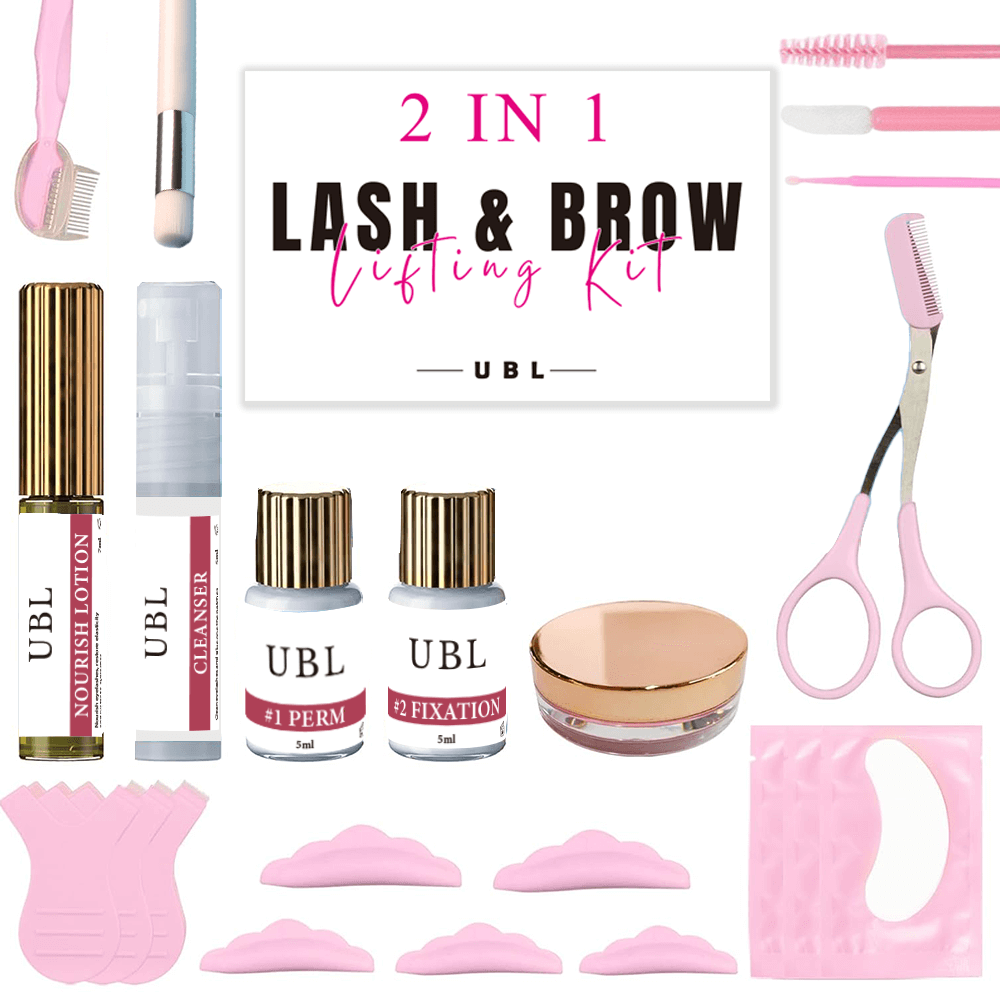
Combining these popular services can be a huge revenue booster for your salon [1]. But it requires a deep understanding of the different adhesives involved. Let’s break down what you need to know to do it safely and effectively.
What kind of adhesive is used during the actual lash lift process?
Many artists get confused and think all lash glues are the same. But the adhesive for a lash lift is completely different from what you use for extensions.
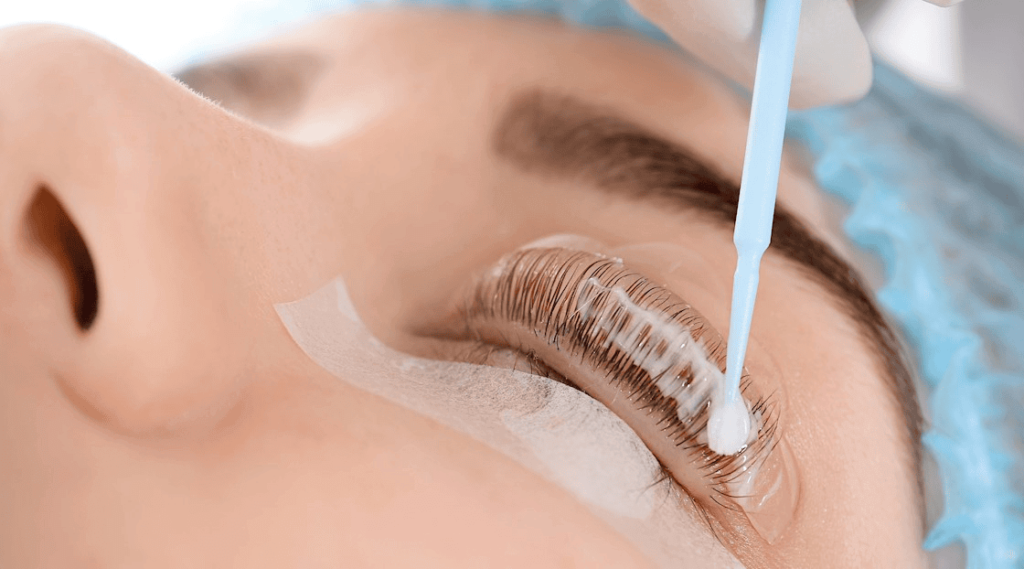
During a lash lift, you use a temporary, water-soluble adhesive, often called a balm or lifting glue. Its purpose is to hold the natural lashes onto the silicone shield during the chemical curling process. It is designed to be gentle and easy to remove.
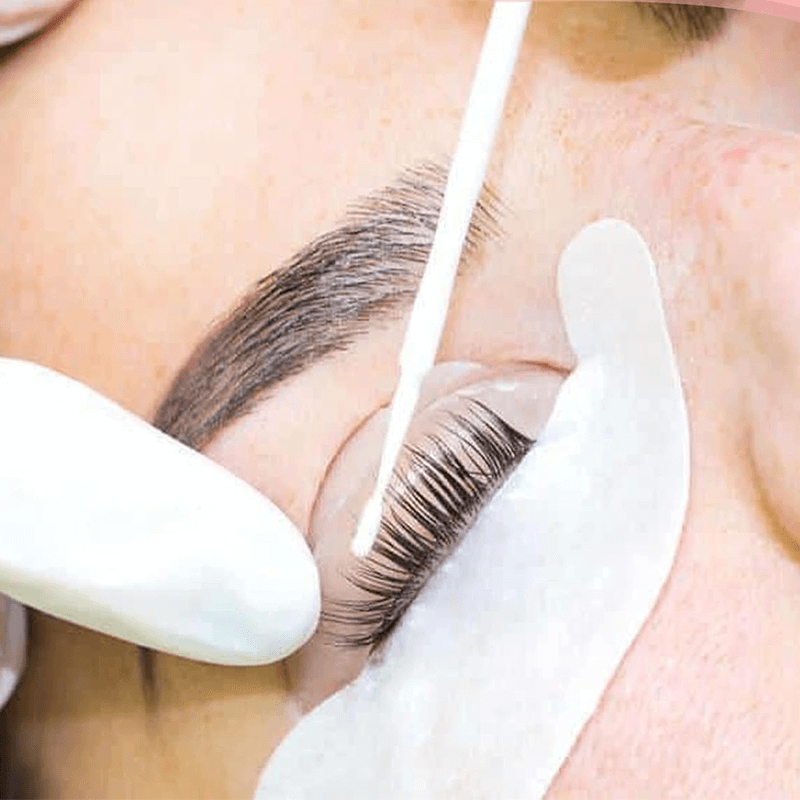
The adhesive used in a lash lift service has one primary job: to temporarily stick the natural lashes to the silicone rod or shield. Think of it as a styling product rather than a permanent glue. This adhesive needs to be strong enough to hold the lashes in place while you apply the lifting and setting solutions, but gentle enough to not cause damage. Crucially, it must be water-soluble so it can be completely cleansed away at the end of the service without leaving any residue. If any residue remains, it could interfere with the chemical processing or cause irritation. This is a world away from cyanoacrylate extension adhesives. As a private label manufacturer, we create both types of products, and the formulations couldn’t be more different. One is designed for a temporary hold and easy removal, while the other is engineered for a long-lasting, semi-permanent bond [6].
Lash Lift Adhesive vs. Extension Adhesive
Understanding the fundamental differences is key to client safety and service quality.
| Feature | Lash Lift Adhesive (Balm/Glue) | Lash Extension Adhesive (Cyanoacrylate) |
|---|---|---|
| Purpose | Temporarily holds natural lashes on a shield | Creates a semi-permanent bond for extensions [4] |
| Main Ingredient | Typically Aqua, Polyvinyl Alcohol (PVA) | Cyanoacrylate, PMMA, Carbon Black |
| Solubility | Water-soluble for easy removal | Not water-soluble; requires a special remover |
| Curing Mechanism | Dries by air evaporation | Polymerizes in the presence of moisture |
| Client Safety | Formulated to be very gentle on skin and lashes | Formulated for minimal contact with skin; fumes can be an irritant |
Can you even apply lash extensions to lifted lashes?
You’ve just given a client a beautiful lift, and now they want a dramatic set of volume lashes. Is this a great upsell, or a recipe for disaster?
Yes, you can apply lash extensions to lifted lashes, but it is considered an advanced technique. It’s crucial to wait at least 24-48 hours after the lift service to allow the lashes to settle and the chemical bonds to fully neutralize before applying extensions.
Applying extensions to lifted lashes can create stunning, wide-eyed results, but it’s not without its challenges. The primary difficulty is getting a proper bond. A lash lift changes the angle of the natural lash, often making the base point straight up instead of curving outwards. This can make it very difficult to attach the extension base flush against the natural lash. A poor attachment point will lead to poor retention. I’ve spoken with many lash trainers, like Sophie, who emphasize this point in their courses. Another concern is the health of the natural lash. The chemical process of a lift can make lashes more porous and sometimes a bit dehydrated. Applying extensions immediately can add extra stress. That’s why the waiting period is non-negotiable. It allows the disulfide bonds in the hair to reform and harden, and for the lash cuticle to close. Rushing this process compromises both the lift and the potential extension set. A gentle application technique is absolutely essential to protect the integrity of the lashes [2].
Key Considerations Before Lashing Lifted Lashes
Before you offer this combination service, make sure you understand the risks and requirements.
| Consideration | Why It Matters | Best Practice |
|---|---|---|
| Waiting Period | Allows lash chemical bonds to stabilize and pH to return to normal. | Wait a minimum of 24-48 hours, with 48 hours being ideal. |
| Lash Health | The lifting process can make lashes more fragile. | Assess the client’s natural lashes. Avoid lashing if they seem over-processed or damaged. |
| Attachment Point | The new curl makes it hard to get the proper 1-2mm base attachment. | Use a "top" or "side" attachment method instead of the standard "bottom" attachment. |
| Client Expectations | The set may not last as long as on non-lifted lashes due to attachment challenges. | Be transparent with your client about potential retention issues. Educate them on proper aftercare [2]. |
What makes an adhesive ideal for lashing over a lift?
Not all extension glues are created equal, especially when working on the tricky canvas of lifted lashes. The wrong adhesive will pop right off the curled base.
The best adhesive for lifted lashes has a slightly slower drying time (1-2 seconds) and higher flexibility. This gives you a moment to perfect the placement on the awkward angle and ensures the bond won’t become brittle and break as the curved lash moves.
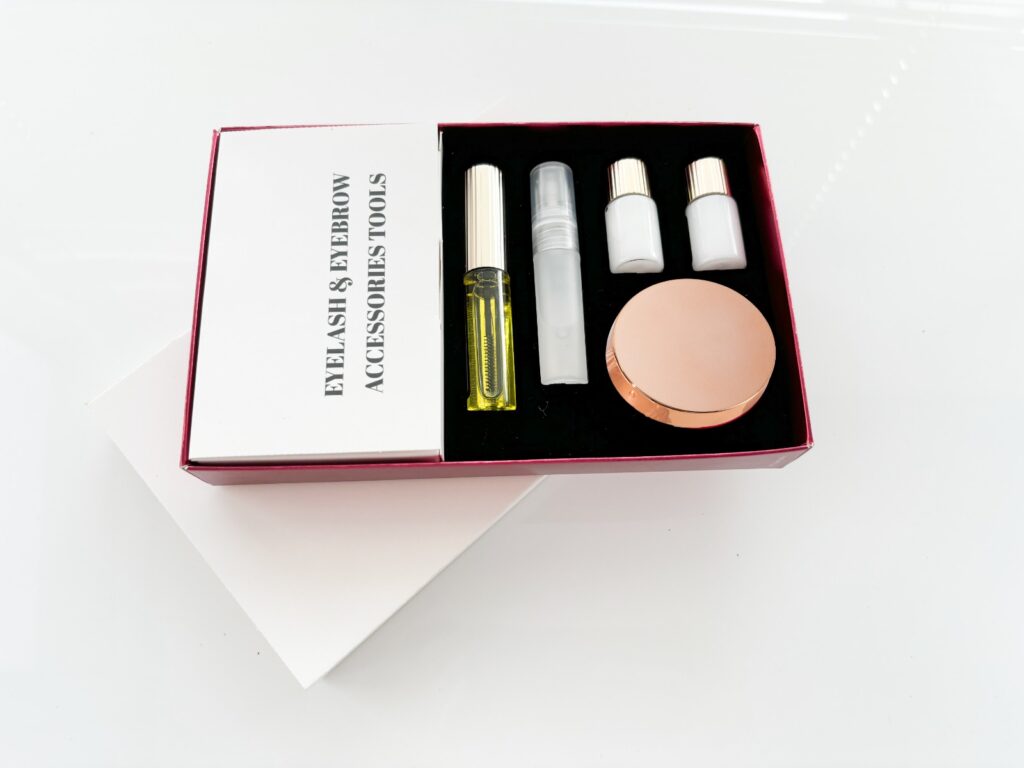
When I work with brands like Sophie’s to develop their private label adhesive line, we always discuss specialized formulas. For lashing over a lift, a standard, ultra-fast-drying glue is not your friend. You need a bit more time to maneuver the extension and secure a solid attachment point on that curled lash. An adhesive with a 1-2 second drying time provides that perfect window. Viscosity also plays a big role. A medium-viscosity adhesive is often best. It’s not so thin that it runs, but not so thick that it creates a bulky, visible bond. The most important factor, however, is flexibility. After a lift, lashes are set in a new, curved shape. A rigid, brittle adhesive bond is more likely to crack or pop off. You need a formula with added flexibilizers that can move with the natural lash. Choosing the right eyelash adhesive is crucial for longevity and safety [5], and this is especially true in this advanced application. A high-quality adhesive will always provide a stronger, more reliable bond [4, 6].
Adhesive Characteristics for Lifted vs. Natural Lashes
Tailoring your adhesive choice to the specific service is a hallmark of a true professional.
| Adhesive Property | Ideal for Natural (Un-lifted) Lashes | Ideal for Lifted Lashes |
|---|---|---|
| Drying Time | 0.5 – 1 second (for experienced artists) | 1 – 2 seconds |
| Viscosity | Low to Medium | Medium |
| Flexibility | Standard | High |
| Fume Level | As low as possible | As low as possible (sensitive formula is a good option) |
| Bond Strength | Maximum | Strong, but flexibility is prioritized |
Conclusion
For beautiful, long-lasting results, use the right glue for the right job. Use a lifting balm for the lift, and a flexible, 1-2 second adhesive for extensions after.