Skip to content
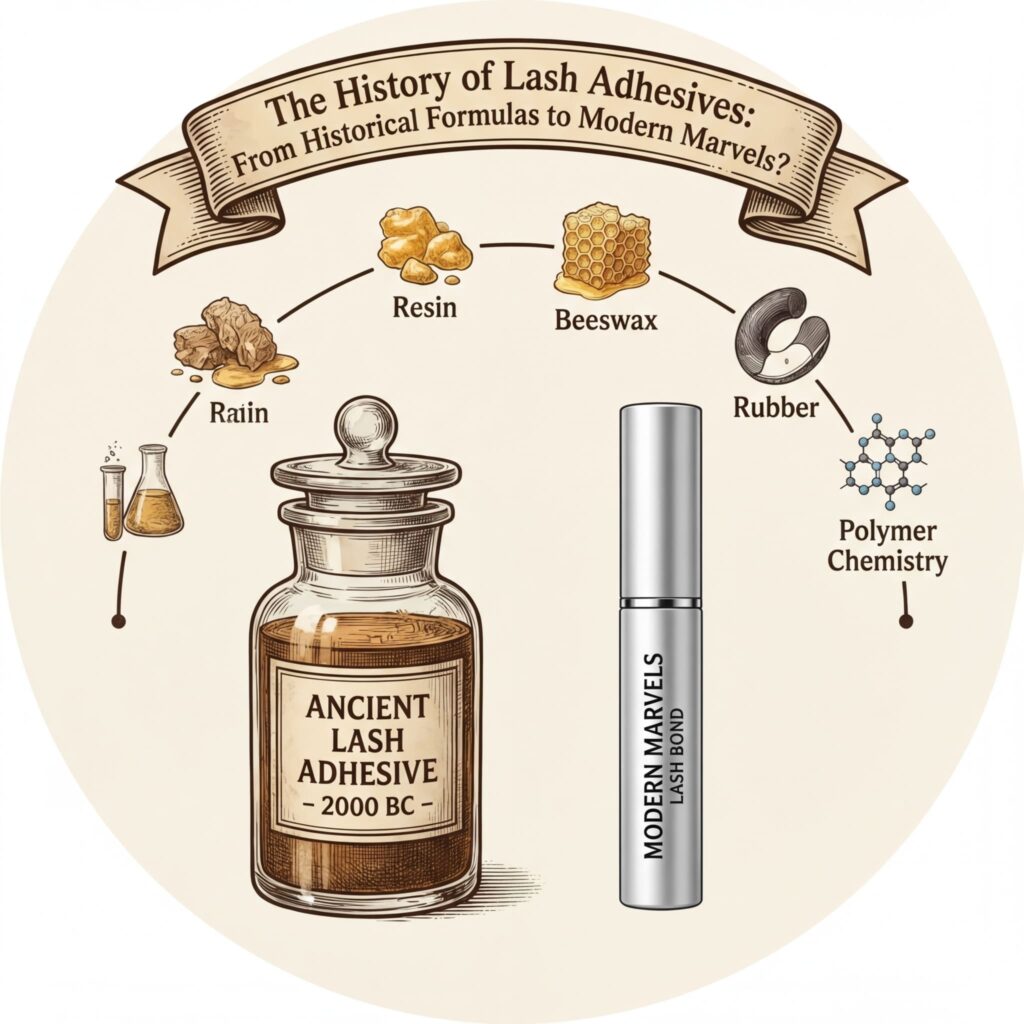
Have you ever wondered what holds lash extensions in place? The glue we use has a fascinating history, filled with risky experiments and incredible scientific breakthroughs.
Lash adhesives have evolved from simple, often irritating glues like spirit gum to the sophisticated, high-performance cyanoacrylate formulas we use today. This journey reflects major advancements in chemistry and a growing focus on client safety, which completely transformed the professional lash industry.
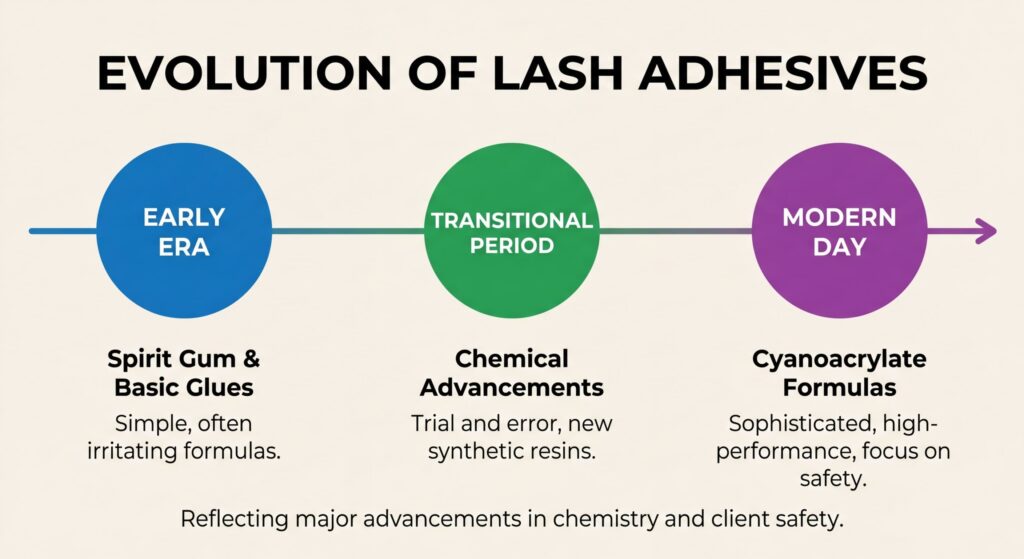
This amazing transformation didn’t just happen overnight. It was a long process of trial and error. Understanding this history helps us appreciate the quality and safety of the products we now use on our clients. Let’s explore this journey from the very beginning.
What were the earliest lash adhesives made of?
Imagine using theater makeup glue near your eyes. Early lash artists faced this reality, working with harsh adhesives that were unreliable and often caused irritation.
The first false eyelashes in the early 20th century were attached with primitive glues like spirit gum or other skin fluids not designed for the delicate eye area. These adhesives often led to irritation and had very poor holding power.
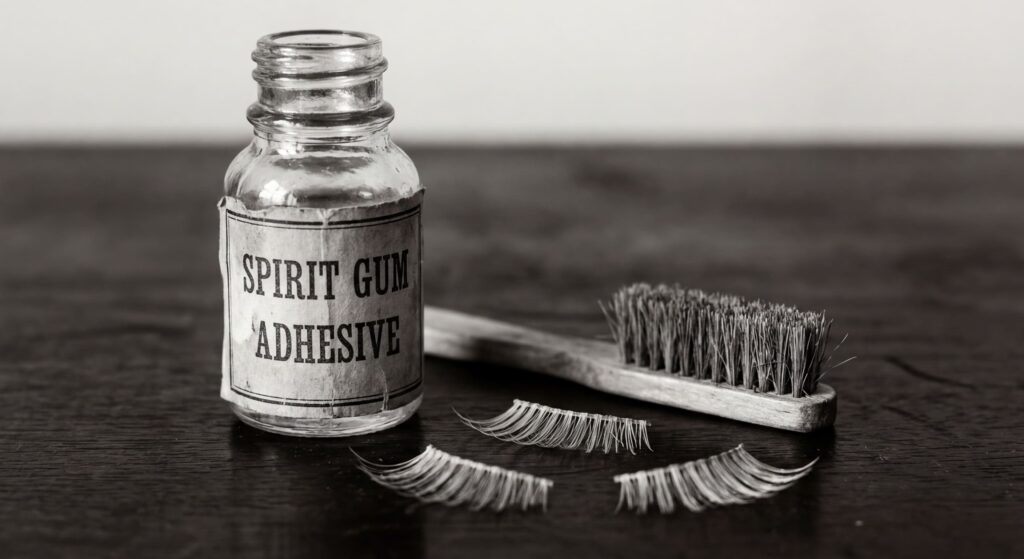
In the early days, the focus was purely on appearance, not safety. The story of director D.W. Griffith asking for dramatic lashes for an actress in his 1916 film, Intolerance, is a perfect example. A wigmaker created the lashes from human hair and attached them with spirit gum. The actress, Seena Owen, reportedly came to the set with her eyes swollen from the strong adhesive. This was not an isolated incident. The available glues were simply not meant for prolonged contact with such a sensitive area. They were sticky, but they were also unpredictable and unsafe. As a private label supplier, I often think about this history. It reminds me how crucial it is to prioritize safety and quality in every single product we develop. We’ve come a long way from those early, risky formulas.
Early Adhesives vs. Modern Formulations
The difference between what was used then and what we use now is huge. It shows a massive leap in cosmetic science and safety standards.
| Feature | Early Adhesives (e.g., Spirit Gum) | Modern Adhesives (Cyanoacrylate-based) |
|---|---|---|
| Main Ingredient | Tree sap resin and alcohol | Cyanoacrylate |
| Bond Type | Sticky, non-permanent bond | Strong, semi-permanent chemical bond [1] |
| Safety | High risk of skin irritation and allergic reactions | Formulated for sensitive area; low fume options available |
| Durability | Lasted for a day, if lucky | Can last for several weeks with proper care and lead to better retention [3] |
| Application | Messy and imprecise | Precise application for individual lashes [6] |
When did cyanoacrylate change the game?
A chemical first used for medical purposes became the lash industry’s biggest star. The introduction of cyanoacrylate completely changed our expectations for lash extensions.
Cyanoacrylate, the primary ingredient in modern lash adhesives, created a strong, durable, and fast-drying bond that made semi-permanent lash extensions possible [1]. This innovation moved the industry from temporary strips to professional, long-lasting applications.
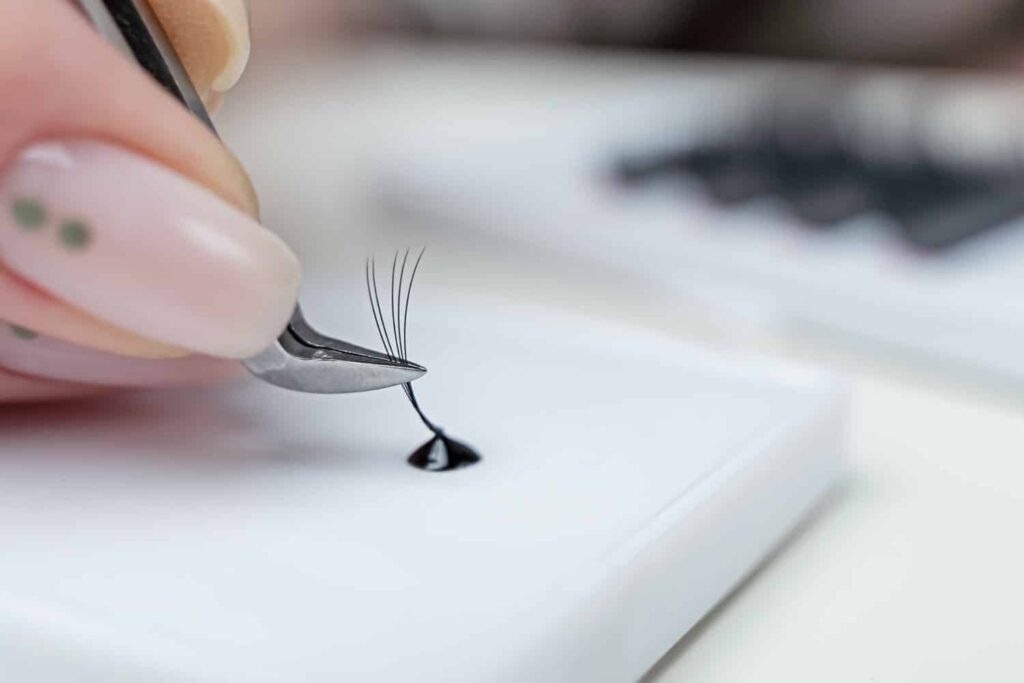
Cyanoacrylate is a type of adhesive that forms a very strong bond very quickly when it comes into contact with moisture. It was first used in medical situations, like closing wounds without stitches. Its potential for the beauty industry was eventually recognized, especially in Asia where lash artists in Korea and Japan were pioneering the technique of applying a single extension to a single natural lash. This method required an adhesive that was much stronger and longer-lasting than anything used before [1]. Cyanoacrylate was the perfect solution. It allowed for the creation of customized, flawless lash sets that could last for weeks [3]. This was the birth of the modern lash extension industry. For business owners like Sophie, this innovation created a whole new, highly profitable service to offer in salons. It turned lashes from a one-night accessory into a recurring beauty treatment that requires educating clients on proper aftercare [2].
The Impact of Cyanoacrylate on the Lash Industry
This single ingredient elevated the entire profession, creating new standards for skill and product quality.
| Benefit | Description |
|---|---|
| Longevity | Enabled extensions to last for the entire life cycle of a natural lash, improving retention [3]. |
| Professionalism | Created a need for trained and certified lash technicians who practice gentle application [2]. |
| Customization | Allowed for artistic application of different styles (classic, volume, hybrid) [6]. |
| Strong Bond | Provided a reliable, secure bond that clients could trust in their daily lives [1]. |
| Efficiency | Fast-curing properties allowed technicians to work more quickly. |
How do modern adhesives ensure both safety and performance?
Your clients put immense trust in your hands. Using a professionally formulated adhesive is not just about creating beautiful lashes; it’s about protecting that trust.
Modern lash adhesives are complex formulas designed to balance bond strength, flexibility, and client safety [1, 6]. Reputable manufacturers use purified, high-grade ingredients and offer a range of products to suit different environments, techniques, and client sensitivities.
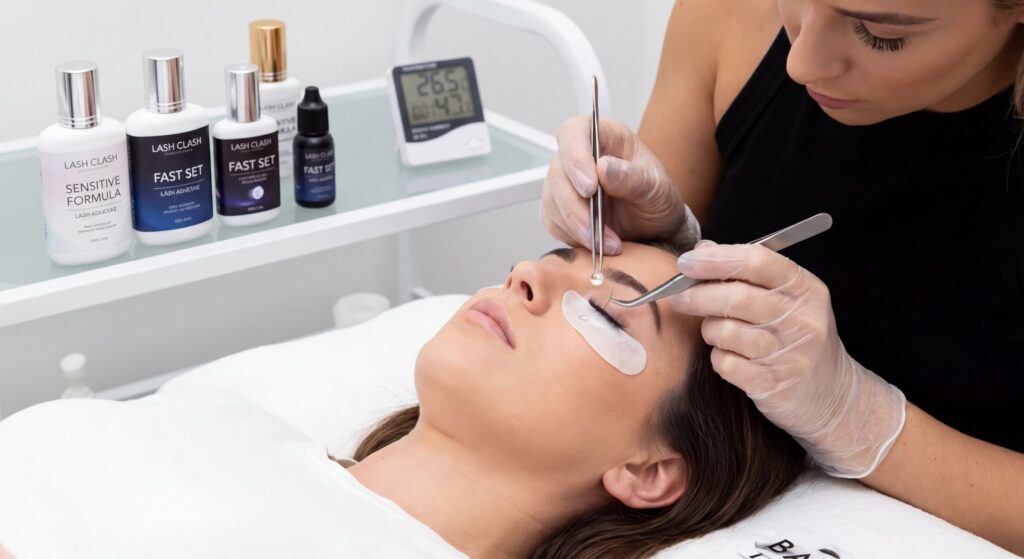
Today, we don’t just use pure cyanoacrylate. As a manufacturer, I know that a high-quality adhesive is a carefully balanced recipe [3]. We add other ingredients to the formula to control its properties. We add thickeners to get the right viscosity, stabilizers to increase shelf life, and flexible agents to make the bond less brittle. This ensures the extensions feel comfortable and move naturally with the client’s lashes. We also produce different formulas for different needs. For example, some adhesives are designed for high-humidity environments, while others are for dry climates. There are fast-drying glues for experienced technicians and slower-drying ones for those still learning. As a salon owner, it’s vital to understand these differences. Choosing the right adhesive for your climate and skill level can dramatically improve lash retention and client satisfaction [3]. This is why partnering with a knowledgeable supplier who provides a variety of high-quality options is key to success. Using an appropriate amount of adhesive is crucial for a secure bond without adding weight or fumes [4].
Best Practices for Adhesive Use and Storage
Getting the best results from modern adhesives requires proper handling and care.
| Practice | Why It’s Important |
|---|---|
| Shake Vigorously | Ensures all ingredients are well-mixed for optimal performance and a strong bond [1]. |
| Store Upright & Cool | Prevents the nozzle from clogging and protects the formula from heat degradation. |
| Cleanse and Prime | Thoroughly cleansing and priming lashes removes oils and improves adhesion for better retention [4, 5]. |
| Use a Fresh Drop | Replace your adhesive drop every 15-20 minutes to ensure it hasn’t started curing from air exposure. |
| Control Humidity | Cyanoacrylate cures with moisture; the right humidity level ensures a proper bond. |
Conclusion
The evolution of lash adhesive is a story of progress. We moved from risky, basic glues to safe, scientifically advanced formulas that empower artists and delight clients.