Skip to content
In lash extensions, retention problems are rarely caused by one single thing. More often, they come from a chain of small decisions: the wrong adhesive for the room, too much glue on the fan, poor storage, unclear supplier communication, or rushed aftercare instructions.
For lash artists, trainers, wholesalers, and private label brands, understanding eyelash glue mistakes is not just about better application. It is also about protecting your reputation, reducing complaints, improving repeat orders, and choosing lash glue products that perform consistently from sample to bulk order.
Below are the most common lash glue mistakes to avoid in 2026, with practical fixes you can use in the salon, in training, or when sourcing lash extension products for your own brand.

1. Choosing Lash Glue Based on Drying Time Only
One of the biggest eyelash glue mistakes is buying adhesive only because it says “fast drying.” A 0.5-second or 1-second glue may sound attractive, especially for advanced lash technicians, but speed is not the only factor that matters.
A glue that dries too quickly for the technician’s hand speed can create poor attachment. The extension may touch the natural lash after the adhesive has already started curing, leading to weak bonding and early fallout.
For distributors and private label buyers, this mistake can also create customer complaints. If you sell only ultra-fast adhesives, beginner and intermediate lash artists may struggle to use them correctly.
Pro tip to fix it:
Offer or use different lash glue options for different skill levels and working environments:
- Fast-drying glue for experienced technicians with quick placement.
- Medium-speed glue for most salon environments.
- Beginner-friendly glue for training, slower placement, or new lash artists.
Good lash glue advice always starts with matching drying time to real working habits, not just choosing the fastest product on the shelf.
2. Ignoring Room Temperature and Humidity
Lash glue is highly sensitive to the environment. Temperature and humidity can affect how quickly adhesive cures, how it feels during application, and how well it bonds.
Many lash artists blame the glue when retention drops, but the real issue may be the room. If the humidity is too low, the glue may cure slowly. If the humidity is too high, the glue may cure too fast before proper attachment happens.
This is especially important for customers in places like Canada, Europe, Australia, and North America, where seasonal changes can be strong. Winter heating, summer humidity, air conditioning, and salon ventilation can all change glue performance.
Pro tip to fix it:
Keep a digital hygrometer and thermometer in the lash room. Check the room before every working day, not just when problems happen.
Also, when buying lash glue in bulk or under private label, ask your supplier for recommended working conditions. You do not need exaggerated claims. You need clear, practical guidance that your customers can understand.
3. Using Too Much Glue on the Lash Extension
More glue does not mean stronger retention. In fact, too much glue can create messy bases, stickies, discomfort, and poor-looking sets.
A heavy glue bead may look secure at first, but it can cure unevenly. It may also add extra weight to the natural lash, which can affect the final look and comfort of the set.
For volume lash extensions and easy fan lash extensions, this mistake is especially common. Because the fan base is delicate, too much adhesive can close the fan, create clumps, or make the set look less fluffy.
Pro tip to fix it:
Dip only the base of the extension or fan into the adhesive. Aim for a small, clean amount of glue that coats the bonding area without forming a large drop.
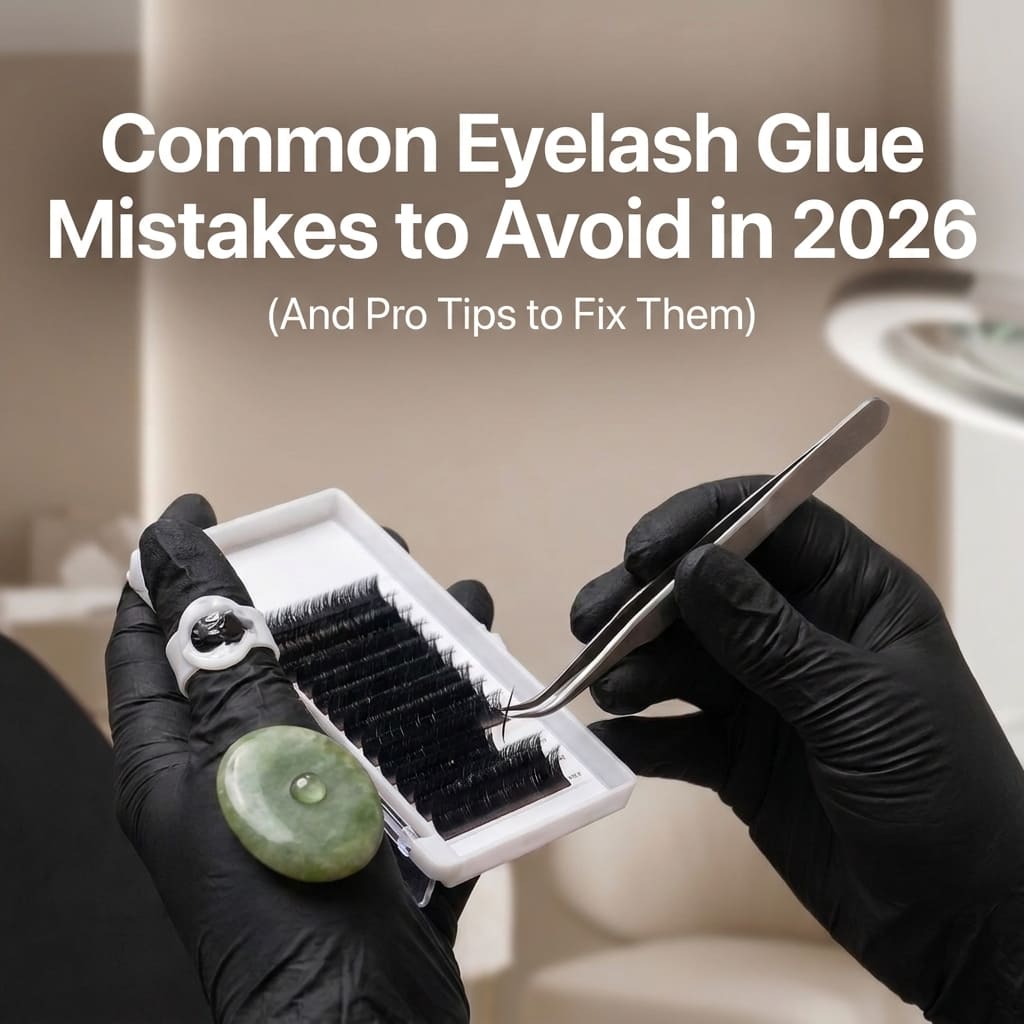
For trainers, this is a useful point to demonstrate slowly. Show students what “too little,” “too much,” and “just right” look like on a lash tile.
For wholesalers, consider offering training visuals, short videos, or usage cards with your private label lash glue. This reduces misuse and improves customer satisfaction.
4. Using Too Little Glue
While too much glue is a problem, using too little glue can also cause retention failure. A tiny amount may not create enough bonding surface between the extension and the natural lash.
This mistake often happens when lash artists are afraid of stickies or when they are working with a very fast-drying adhesive. They dip lightly, place quickly, and assume the bond is secure. A few days later, the client notices lashes falling out too soon.
Pro tip to fix it:
Focus on proper glue contact, not just the visible amount. The base of the extension should have enough adhesive to wrap or connect cleanly to the natural lash.
If retention is poor, check these details:
- Is the extension attached along enough of the natural lash?
- Is the glue still fresh when placement happens?
- Is the adhesive bead clean and active?
- Is the room condition suitable for the glue?
This kind of lash glue advice helps you troubleshoot more accurately instead of immediately changing products.
5. Not Shaking the Lash Glue Properly
Lash glue ingredients can separate while the bottle is standing. If the bottle is not mixed well before use, performance may become inconsistent. One client may get excellent retention, while the next client may have poor results from the same bottle.
This is one of the simplest eyelash glue mistakes, but it is also one of the most overlooked.
Pro tip to fix it:
Shake the adhesive thoroughly before dispensing the first drop. Many lash artists use a glue shaker to make this faster and more consistent.
After shaking, release the first small drop if needed, then use a clean, fresh drop for application.
If you sell lash glue under your own brand, include clear shaking instructions on your packaging, insert card, or product page. Small instructions can prevent big complaints.
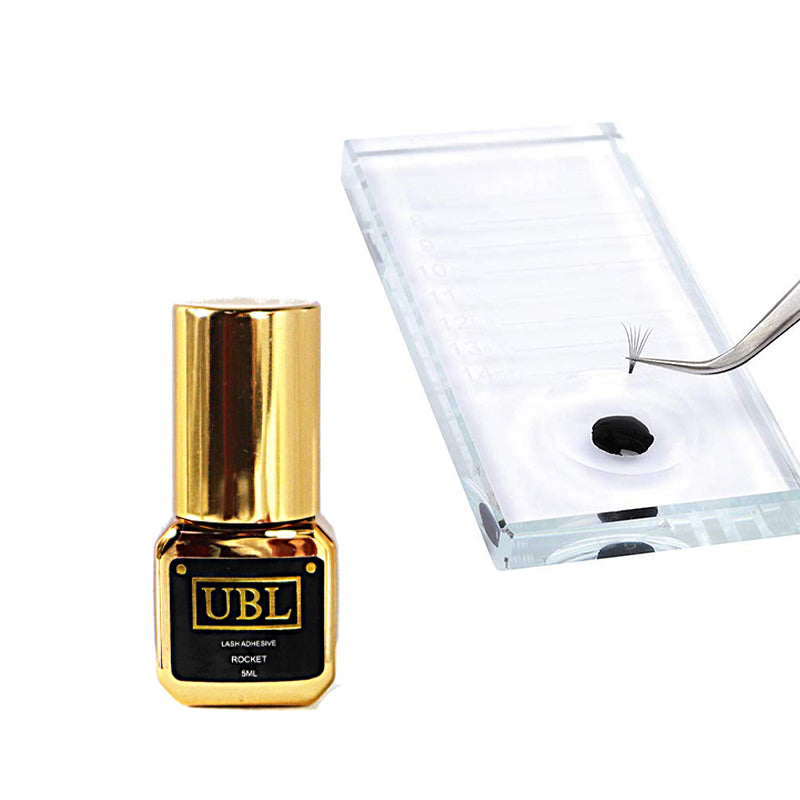
6. Keeping the Same Glue Drop for Too Long
A glue drop does not stay fresh forever. Once exposed to air, it begins reacting with moisture in the environment. Over time, the drop becomes stringy, thick, or less effective.
Some lash artists continue using the same drop because they do not want to waste product. But using an old drop can create weak attachment and uneven application.
Pro tip to fix it:
Refresh the glue drop regularly during the appointment. The exact timing depends on the adhesive, humidity, temperature, and working speed, so avoid a one-size-fits-all rule.
A simple habit is to watch the glue texture. If it becomes thick, sticky, stringy, or harder to dip into cleanly, replace it.
For salon owners and trainers, teach artists that a fresh glue drop is part of product control. Saving a tiny amount of adhesive is not worth losing retention quality.
7. Storing Lash Glue in the Wrong Place
Poor storage can damage lash glue before it is even used. Heat, sunlight, moisture, and repeated air exposure can all affect adhesive performance.
A common mistake is leaving glue near a sunny window, on a trolley under strong lighting, in a hot car after delivery, or in a humid bathroom-style storage area.
For B2B buyers, storage also matters during shipping and warehousing. If you are importing lash glue from China to Canada, Europe, North America, or Australia, ask your supplier how the product should be packed, shipped, and stored after arrival.
Pro tip to fix it:
Store unopened and opened glue according to the supplier’s instructions. Keep the bottle tightly closed when not in use. Clean the nozzle after dispensing so the cap can seal properly.
If you are a distributor, create a simple storage guide for your customers. Include reminders such as:
- Keep away from direct sunlight.
- Avoid high heat and high moisture.
- Close the cap immediately after use.
- Track opening dates.
- Do not use glue that has changed texture or smell abnormally.
8. Forgetting to Burp and Clean the Bottle Nozzle
After dispensing glue, air can remain inside the nozzle. If the bottle is not cleaned and sealed correctly, the nozzle may clog, the cap may stick, or the glue may cure around the opening.
This creates waste and frustration. It can also make the next drop less clean.
Pro tip to fix it:
After dispensing, gently release trapped air if your bottle design allows it, then wipe the nozzle with suitable lint-free material. Close the cap tightly.
Avoid using cotton pads or fuzzy tissues near the nozzle because fibers can stick to the glue.
For private label buyers, bottle and cap quality matter. A good adhesive formula still needs packaging that supports clean dispensing and storage.
9. Applying Lash Glue on Oily or Dirty Natural Lashes
Lash glue needs a clean surface to bond properly. Oils, makeup residue, skincare products, sunscreen, dust, and natural buildup can interfere with attachment.
Some clients arrive with “clean” lashes, but there may still be invisible residue on the lash line. If the lash artist skips proper cleansing, retention can suffer.
Pro tip to fix it:
Build cleansing into your lash service, even when the client says they washed their face. Use professional lash cleansing steps before application and make sure the lashes are dry before dipping and placing extensions.
For salons, this also creates a better client experience. Clean preparation shows professionalism and helps explain why retention is a shared responsibility between artist and client.
For retailers and wholesalers, lash shampoo, cleansing brushes, and aftercare cards are smart add-on products to pair with lash glue and extensions.
10. Not Matching Glue to Lash Style
Classic lashes, volume fans, mega volume sets, easy fan lashes, and premade fans may not all feel the same with one adhesive. The required glue amount, attachment area, and working speed can change depending on the style.
For example, easy fan lash extensions are popular because they help artists create fans faster. But if the adhesive is too thick or the dipping technique is not controlled, the fan base can become bulky.
Pro tip to fix it:
Test lash glue with the actual lash styles your customers use most. If you are a distributor selling volume lash extensions and easy fan lashes, test the adhesive with those products before making bulk decisions.
For lash brand owners, this is also useful for marketing. Instead of saying “best glue for everyone,” you can give more specific guidance:
- Recommended for classic sets.
- Suitable for volume fans.
- Good for experienced lash artists.
- Better for moderate humidity environments.
Specific product education builds trust.

11. Working Too Slowly With a Fast Adhesive
Fast lash glue rewards speed and precision. If the artist dips the extension, waits too long, adjusts the angle, searches for the natural lash, and then places it, the glue may already be partly cured.
The result is poor attachment even though the application looks fine at first.
This is one of the most common eyelash glue mistakes among artists upgrading from beginner glue to advanced glue.
Pro tip to fix it:
Before switching to faster adhesive, improve isolation and placement speed. The movement should be smooth:
- Isolate the natural lash.
- Dip the extension or fan.
- Place immediately and accurately.
- Move on without over-adjusting.
If the artist needs more time, choose a slightly slower glue. The best adhesive is the one that matches the user’s technique.
12. Using the Wrong Glue Viscosity
Viscosity refers to how thick or thin the glue feels. A very thin glue may spread quickly and feel lightweight. A thicker glue may be easier for some artists to control but can create heavier bases if overused.
There is no single perfect viscosity for every lash artist. The right choice depends on technique, lash type, room condition, and personal preference.
Pro tip to fix it:
When testing glue, do not judge only by retention. Also evaluate:
- How easily the extension dips.
- Whether the fan base stays open.
- Whether the glue travels too far up the extension.
- Whether the bond looks clean.
- Whether the adhesive feels comfortable to work with during a full set.
For B2B buyers, ask for samples before bulk purchasing. Compare sample performance with your target customers’ needs, not just your own preference.
13. Ignoring Shelf Life and Opening Dates
Lash glue is not a product to keep forever. Once opened, it is exposed to air and moisture each time it is used. Over time, performance can decline.
A common mistake is using an old bottle because there is still product inside. The glue may look usable, but retention may become unpredictable.
Pro tip to fix it:
Write the opening date on the bottle. Train your team to replace glue based on supplier guidance, product condition, and salon usage.
For lash distributors, make shelf life and storage guidance easy to find. Customers appreciate clear product information, especially when they are comparing suppliers.
If you operate a private label lash brand, batch management is also important. Keep records of production batches, shipment dates, and customer feedback so you can track product performance more professionally.
14. Buying Lash Glue Without Testing Samples
For wholesalers, retailers, and lash brand owners, one of the most expensive eyelash glue mistakes is placing a large order without proper sample testing.
A product page can look beautiful. The price can be competitive. The supplier can sound confident. But lash glue must be tested in real conditions before bulk purchase.
This is especially important if you plan to rebrand the product and sell it at a premium. Your customers will judge your brand by the consistency of the glue.
Pro tip to fix it:
Create a sample testing process before ordering bulk adhesive:
- Test the glue in your normal salon environment.
- Ask several lash artists with different speeds to try it.
- Test it with classic, volume, and easy fan lashes if those are your main products.
- Record retention feedback after appointments.
- Check packaging, bottle quality, labeling, and instructions.
- Confirm whether the bulk product will match the sample quality.
At UBLash, we understand that sample-to-bulk consistency is a major concern for lash business owners. For private label buyers, clear communication and quality inspection steps are essential before production.
15. Not Asking Suppliers the Right Questions
Many buyers ask only, “What is the price?” or “How fast is the glue?” Those questions matter, but they are not enough.
If you are sourcing from China for your lash brand, salon chain, training academy, or wholesale business, you need supplier communication that is specific and efficient.
Pro tip to fix it:
Before confirming an order, ask practical questions such as:
- What working conditions are recommended for this glue?
- What drying speeds are available?
- What viscosity options are available?
- Can packaging be customized for private label?
- What is the MOQ for custom packaging?
- How is quality checked before shipment?
- What documents can be provided if needed for your market?
- What shipping methods are available?
- What payment methods are accepted?
- How will production time be confirmed?
This type of lash glue advice is especially useful for buyers who care about quality inspection, certification, logistics, payment, and delivery timing.
16. Overlooking Packaging Quality for Private Label Lash Glue
For private label lash glue, the formula matters, but packaging also shapes the customer’s experience. A weak bottle, unclear label, poor cap, or messy nozzle can make a good product feel unprofessional.
Your packaging is part of your brand promise. If you sell to lash technicians, salons, or students, they need to trust your adhesive every time they open the bottle.
Pro tip to fix it:
When reviewing packaging, check:
- Bottle size and shape.
- Cap sealing performance.
- Nozzle control.
- Label durability.
- Outer box design.
- Instruction clarity.
- Batch or tracking information.
- Overall brand presentation.
If you are building a lash brand in Canada, Europe, North America, or Australia, customized packaging can help you stand out while keeping your product line professional.
UBLash supports private label lash extension products with customizable packaging and low MOQ options, making it easier for growing businesses to test the market without overstocking.
17. Using Glue Too Close to Sensitive Areas
Professional lash extension adhesive is designed for lash extension application, not for direct skin contact or DIY use. Applying adhesive too close to the eyelid skin can increase discomfort and create a poor client experience.
Some irritation complaints are not caused by the formula itself but by poor placement, too much adhesive, fumes being trapped, or extensions touching the skin.
Pro tip to fix it:
Maintain proper placement distance according to professional training standards and your product instructions. The extension should bond to the natural lash, not the skin.
Also, never ignore client discomfort. If a client reports strong discomfort, burning, swelling, or unusual reaction, stop the service and follow appropriate salon safety procedures. Encourage clients to seek professional medical advice when symptoms are concerning or persistent.
For brand owners, include clear professional-use instructions. Responsible education protects both your customers and your reputation.
18. Poor Isolation During Application
Even the best lash glue cannot fix poor isolation. If natural lashes stick together, clients may feel pulling as their lashes grow. Stickies can damage the look of the set and may lead to complaints.
Poor isolation also affects retention because extensions may not bond cleanly to one natural lash.
Pro tip to fix it:
Improve isolation before blaming the adhesive. Use quality tweezers, proper lighting, clean pads, and patient technique.
For salon owners and trainers, inspect work during and after the set. Encourage artists to check for stickies before the client opens their eyes.
For wholesalers, tweezers are a strong complementary product to lash glue. Many lash technicians need reliable isolation and volume tweezers as much as they need good adhesive.
19. Not Controlling Fumes During the Service
Lash glue fumes can affect comfort, especially if the client’s eyes are not fully closed or if too much adhesive is used. Poor ventilation or bad eye pad placement may make the experience worse.
This does not mean the glue is automatically poor quality. Sometimes the issue is technique, room setup, or client eye movement.
Pro tip to fix it:
Check that the client’s eyes remain closed throughout the service. Make sure pads and tape are placed comfortably and do not pull the eyelid open.
Use a controlled amount of adhesive, work cleanly, and maintain a professional salon environment. If your clients are sensitive, discuss product options and salon procedures before starting.
For lash businesses, customer education matters. Explain aftercare and comfort expectations clearly, without making unrealistic promises.
20. Skipping Aftercare Instructions
Retention does not end when the appointment is finished. Aftercare has a major impact on how long lash extensions look good.
If clients use oily products, rub their eyes, sleep face-down, skip cleansing, or expose lashes to unsuitable conditions too soon, they may blame the glue even when application was correct.
Pro tip to fix it:
Give every client simple aftercare instructions. Do not assume they remember what you said during the appointment.
Useful aftercare reminders include:
- Clean lashes regularly with suitable lash cleanser.
- Avoid rubbing or pulling extensions.
- Be careful with oil-based products around the eyes.
- Brush lashes gently.
- Book fills at appropriate intervals.
- Contact the salon if unusual discomfort occurs.
For private label brands, aftercare cards are a low-cost way to improve the customer experience. They also make your packaging feel more complete and professional.
21. Switching Glue Without Training the Team
When salons or academies introduce a new adhesive, they sometimes expect every technician to adjust immediately. But a new glue may have a different drying speed, viscosity, ideal humidity, or dipping feel.
If the team is not trained, results can become inconsistent. One artist may love the glue while another struggles with it.
Pro tip to fix it:
Create a transition period when changing lash glue. Let your team test the adhesive, compare notes, and adjust technique before using it widely on paying clients.
If you sell lash glue to salons, provide usage tips and troubleshooting support. This can become a competitive advantage for your brand, especially when your customers are salon owners or lash trainers.
22. Comparing Prices Without Comparing Real Value
Competitive pricing matters. Lash business owners need healthy profit margins, especially when buying from overseas suppliers and reselling under their own brand.
However, the cheapest glue is not always the best business decision. If the adhesive causes complaints, returns, inconsistent retention, or brand damage, the low unit price becomes expensive.
Pro tip to fix it:
Compare total value, not just price. Consider:
- Product consistency.
- Sample-to-bulk reliability.
- Packaging quality.
- MOQ flexibility.
- Communication speed.
- Production timeline.
- Shipping support.
- Custom branding options.
- Customer feedback after launch.
For buyers like salon owners, distributors, and lash trainers, a reliable supplier can save time and reduce stress. This is especially important when you are building a premium brand from imported products.
23. Not Documenting Retention Problems
When retention problems happen, many lash artists or customers simply say, “The glue is bad.” But without details, it is difficult to identify the real cause.
Was the room too dry? Was the bottle old? Was the client wearing makeup? Did the artist use too little glue? Was the batch different? Was the glue stored correctly after delivery?
Without records, every complaint becomes emotional instead of useful.
Pro tip to fix it:
Create a simple retention tracking habit. Record:
- Glue name and batch.
- Opening date.
- Room temperature and humidity.
- Lash style used.
- Client aftercare notes.
- Artist name.
- Any unusual application issues.
For distributors and private label sellers, customer feedback records are valuable. They help you communicate with your supplier, improve product education, and identify whether the issue is formula-related, technique-related, or storage-related.
24. Ignoring Quality Inspection Before Shipment
For B2B lash buyers, quality inspection is not optional. If you receive a bulk order with inconsistent packaging, incorrect labels, damaged bottles, or products that do not match approved samples, it can delay your sales and damage your brand.
This is a serious issue for wholesalers, retailers, lash distributors, and salon owners who depend on timely launches and repeat customer trust.
Pro tip to fix it:
Before bulk production, confirm your specifications in writing. Before shipment, request quality checks based on your order details.
Important points may include:
- Product name and type.
- Bottle quantity.
- Packaging design.
- Label content.
- Carton packing.
- Batch information.
- Sample approval.
- Shipping requirements.
Working with a supplier that understands OEM and ODM needs can make this process smoother.
25. Not Planning Production and Logistics Early
Lash glue sourcing is not only about product performance. It also involves production time, packaging time, documentation, shipping, customs, and delivery planning.
A common mistake is waiting until inventory is almost gone before reordering. If production or logistics take longer than expected, the brand may run out of stock.
For businesses selling in Canada, Europe, North America, or Australia, this can affect customer loyalty and cash flow.
Pro tip to fix it:
Plan reorders early. Keep communication clear with your supplier and confirm timelines before launching promotions or accepting large wholesale orders.
If you are testing a new private label glue, start with a manageable MOQ, collect feedback, then scale your order once performance is confirmed.
UBLash offers low MOQ private label options, which can help growing lash brands test products while managing inventory risk.
26. Giving Customers Unrealistic Retention Promises
Strong retention is important, but no lash glue can overcome every issue. Client aftercare, natural lash growth cycle, application technique, room conditions, and product storage all affect results.
If a brand or lash artist promises unrealistic retention, customer disappointment becomes more likely.
Pro tip to fix it:
Use honest, professional product descriptions. Explain what the glue is designed for, who it suits, and how to use it properly.
For example, instead of making extreme claims, describe practical details:
- Suitable skill level.
- Suggested working environment.
- Drying speed category.
- Texture or viscosity.
- Recommended storage.
- Best lash styles to pair with it.
Clear education builds more trust than exaggerated marketing.
27. Forgetting That Lash Glue Is Part of a Full System
Lash glue does not work alone. Retention depends on the full lash system: extensions, tweezers, cleanser, primer if used, remover, aftercare, technician skill, and client habits.
If one part of the system fails, the glue may get blamed.
Pro tip to fix it:
Think in product systems. For salons and distributors, build product lines that work together:
- Lash extensions.
- Lash glue.
- Glue remover.
- Tweezers.
- Cleansing products.
- Aftercare tools.
- Training materials.
- Private label packaging.
This is also better for sales. Customers who trust your lash glue may also buy your volume lashes, easy fan lashes, remover, tweezers, and accessories.
28. Choosing a Supplier Who Does Not Understand Your Market
For private label lash businesses, communication can be just as important as product quality. Many buyers become frustrated when suppliers respond slowly, misunderstand packaging details, or fail to explain production timelines clearly.
If you are a salon owner, lash trainer, wholesaler, or distributor, you need a supplier who understands both product quality and business needs.
Pro tip to fix it:
Choose a supplier that can support:
- OEM and ODM orders.
- Custom packaging.
- Low MOQ testing.
- Product samples.
- Quality inspection communication.
- Export experience.
- Clear production updates.
- Lash extension product knowledge.
UBLash is based in China and works with lash extension products including lash glue, lash remover, tweezers, and customizable private label options. For buyers targeting Europe, North America, and Australia, supplier communication and product consistency are key parts of long-term growth.

Quick Checklist: How to Avoid Lash Glue Problems
Before blaming the adhesive, review the full process:
- Is the glue suitable for the artist’s speed?
- Are temperature and humidity within the recommended range?
- Was the bottle shaken properly?
- Is the glue drop fresh?
- Are the natural lashes clean and dry?
- Is the artist using the correct glue amount?
- Is the attachment area clean and secure?
- Is the bottle stored correctly?
- Is the opening date recorded?
- Are clients receiving aftercare instructions?
- Was the product tested before bulk purchase?
- Did the bulk order match the approved sample?
- Are packaging and labels clear?
- Is supplier communication efficient?
- Are production and logistics planned early?
This checklist can help lash technicians, trainers, salon owners, and distributors identify problems faster and make better buying decisions.
What Lash Businesses Should Look for in a Lash Glue Supplier
If you are building or expanding your lash brand in 2026, your supplier should offer more than a product catalog. You need a partner who understands quality, customization, communication, and export requirements.
A strong lash glue supplier should help you with:
- Product selection based on your target customers.
- Sample testing before bulk orders.
- Private label and custom packaging options.
- Low MOQ for new or growing brands.
- Consistent quality from sample to production.
- Clear communication about timelines.
- Support for lash extension product combinations.
- Export experience for your destination market.
For buyers like Sophie, who care about quality inspection, competitive pricing, certifications, logistics, and payment methods, the right supplier can make sourcing from China much smoother.
Final Lash Glue Advice for 2026
The most common eyelash glue mistakes are not always dramatic. They are often small habits repeated every day: using the wrong drying speed, ignoring humidity, keeping an old glue drop, storing bottles badly, or skipping supplier checks before a private label order.
The fix is to treat lash glue as both a technical product and a business product. Lash artists need correct application habits. Salon owners need team training. Distributors need consistent quality. Private label brands need packaging, communication, and logistics they can trust.
When you combine good technique with smart sourcing, your lash glue becomes more than an adhesive. It becomes part of your brand reputation.
Ready to Create Your Own Private Label Lash Glue Line?
UBLash helps lash businesses source lash extension products from China, including lash glue, lash extensions, removers, tweezers, and other professional lash supplies. We support B2B, OEM, and ODM orders with customizable packaging and low MOQ options for growing brands.
If you are a wholesaler, retailer, lash distributor, salon owner, or lash trainer looking for reliable private label lash products, we would be happy to help you test samples and plan your next order.
Contact Fanny at UBLash: contact@universebebautylashes.com
Let’s build a lash product line that looks professional, performs consistently, and supports your brand growth.