Skip to content
Getting lash extensions can transform your look, but are you aware of the potential risks? Understanding side effects is crucial for both technicians and clients to ensure safe, beautiful results.
Lash extension side effects include allergic reactions, infections, natural lash damage, and eye irritation. Prevention involves choosing certified technicians, proper aftercare, hypoallergenic adhesives, and regular maintenance to minimize risks while enjoying enhanced beauty.
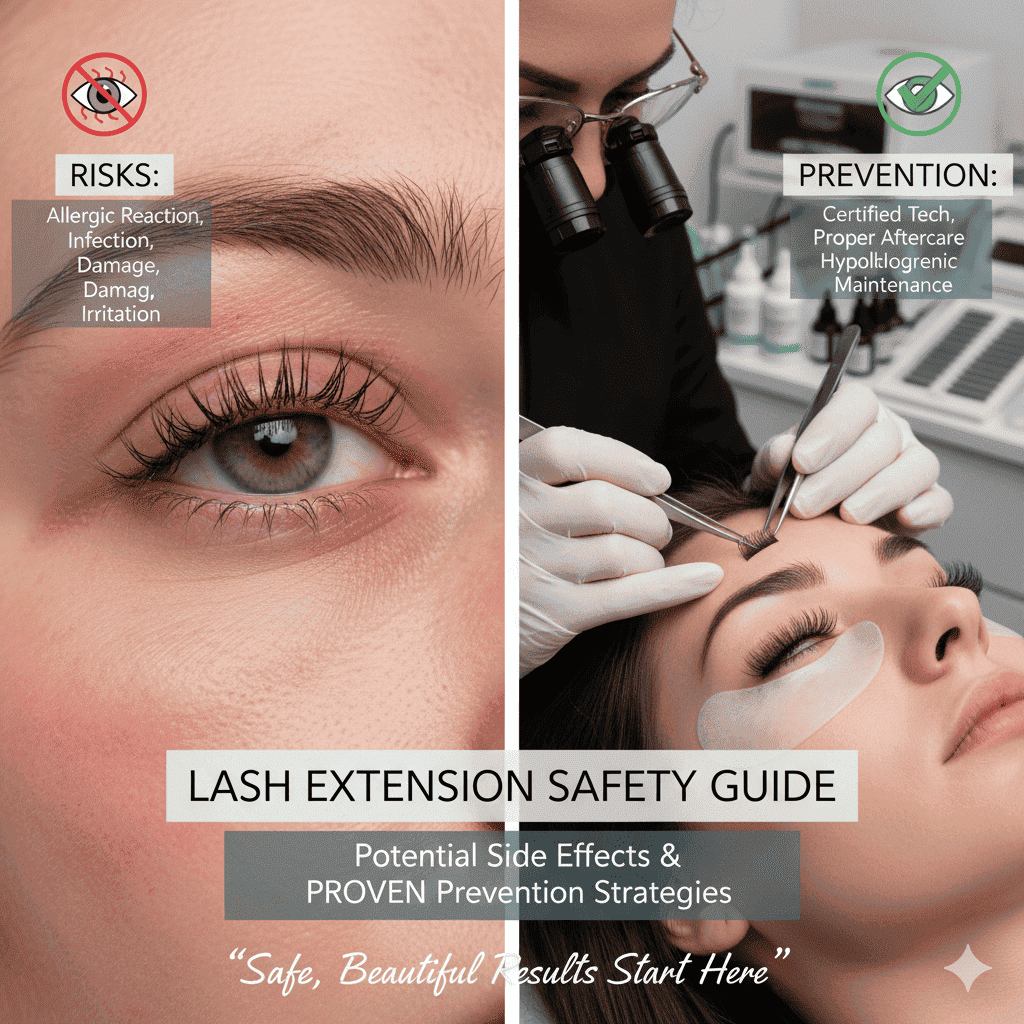
As a lash industry professional, I’ve seen how proper education can prevent most complications. Let me share the complete guide to side effects and proven prevention strategies for safe, beautiful lash extensions.
What Are the Most Common Allergic Reactions to Lash Extensions?
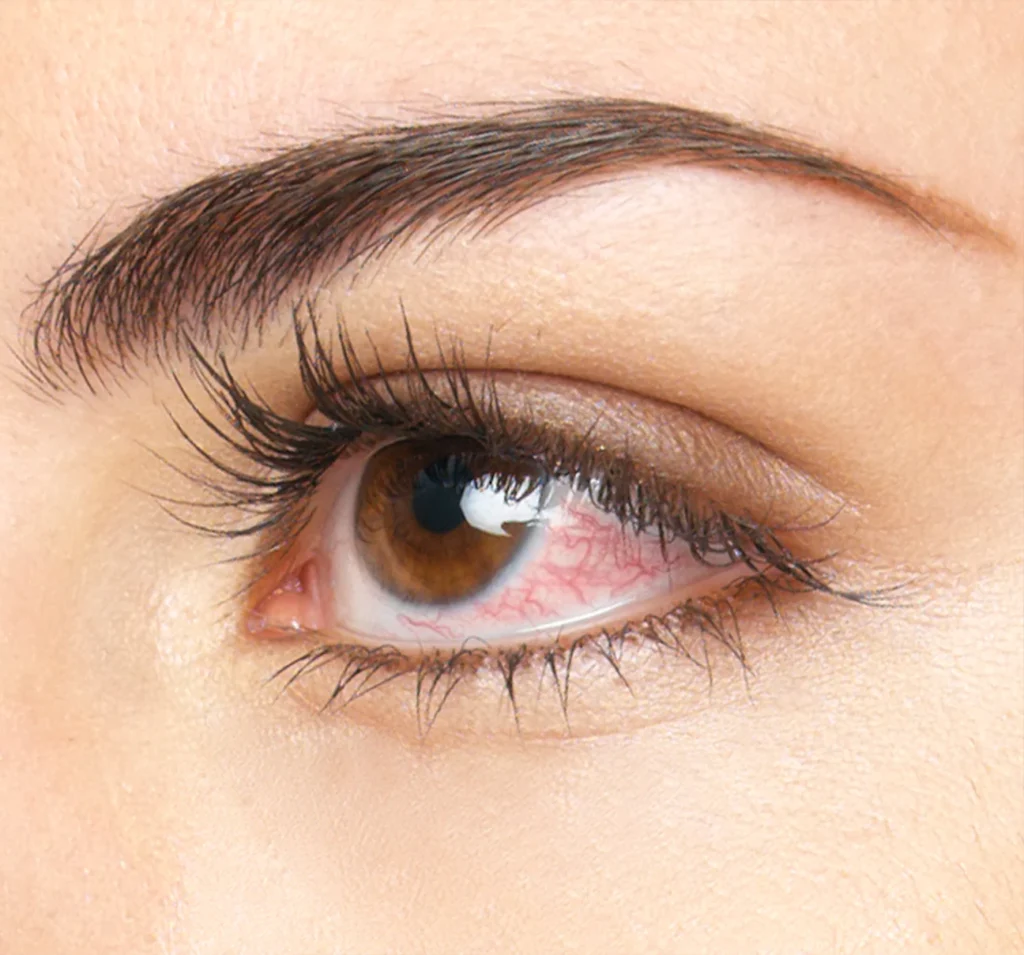
Allergic reactions represent one of the most frequent side effects clients experience with lash extensions, often stemming from adhesive sensitivity.
Common allergic reactions include eyelid swelling, redness, itching, and watery eyes caused by cyanoacrylate in lash adhesives. Prevention involves patch testing, hypoallergenic formulas, and proper ventilation during application.
Allergic Reaction Types and Management
| Reaction Type | Symptoms | Onset Time | Severity | Prevention Strategy |
|---|---|---|---|---|
| Immediate Sensitivity | Redness, burning | During application | Mild to moderate | Low-fume adhesives, proper ventilation |
| Delayed Allergy | Swelling, itching | 24-48 hours after | Moderate | Patch test 48 hours before |
| Contact Dermatitis | Rash, flaking skin | 12-72 hours | Moderate | Hypoallergenic tape, sensitive skin prep |
| Chemical Conjunctivitis | Red eyes, watering | Immediate to 24 hours | Moderate to severe | Eye protection, precise application |
| Chronic Inflammation | Persistent irritation | Ongoing | Mild but persistent | Regular breaks, gentle adhesive formulas |
| Severe Reaction | Significant swelling, pain | Rapid onset | Emergency | Medical attention, adhesive avoidance |
Allergic reactions to lash extensions primarily stem from the cyanoacrylate-based adhesives used in the application process. These adhesives contain chemicals that can trigger immune responses in sensitive individuals. Immediate sensitivity reactions occur during or right after application, manifesting as burning sensations, redness, or mild swelling around the eyelids. These typically result from adhesive fumes irritating the delicate eye area rather than true allergies. Delayed allergic reactions appear 24-48 hours post-application as the body’s immune system recognizes the adhesive components as foreign invaders. Symptoms include significant eyelid swelling, intense itching, and sometimes tiny blisters along the lash line. Contact dermatitis develops when the adhesive or other products contact the skin, causing red, flaky, or scaly patches that can spread beyond the immediate eye area. Chemical conjunctivitis occurs when adhesive fumes or tiny particles enter the eye, leading to red, watery eyes that feel gritty or sore. Chronic inflammation happens with repeated exposures in sensitive individuals, creating persistent low-level irritation that doesn’t resolve until the extensions are removed. Severe reactions, though rare, require immediate medical attention and present with significant swelling that affects vision, difficulty breathing, or intense pain. Prevention starts with comprehensive client consultations that include allergy history discussions and patch testing recommendations. Technicians should use low-fume, medical-grade adhesives formulated for sensitive eyes and ensure proper ventilation during application. Clients with known sensitivities benefit from hypoallergenic options that contain fewer potential irritants.
How Can Lash Extensions Cause Infections and Eye Damage?
Infections represent serious side effects that can lead to permanent damage if not properly addressed through sterile techniques and proper aftercare.
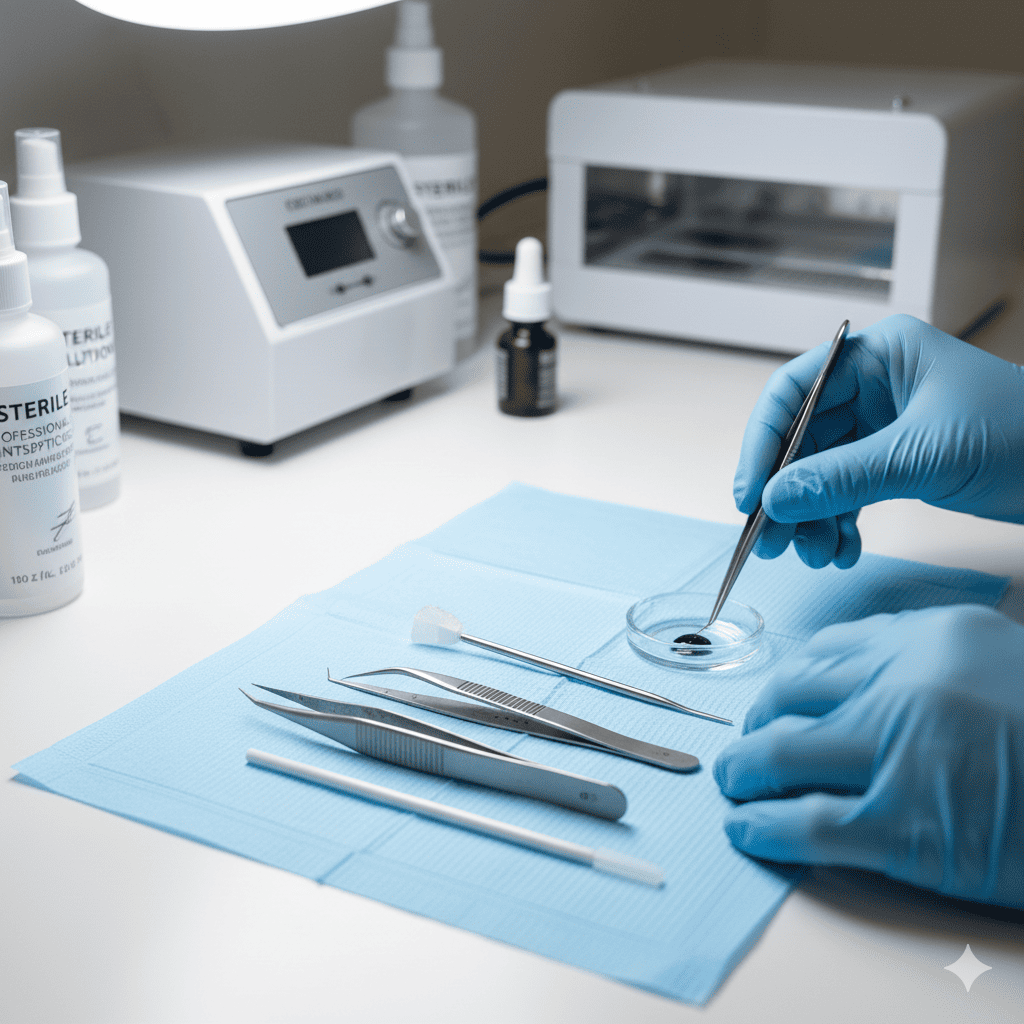
Lash extensions can cause infections through bacterial contamination, improper hygiene, or adhesive entering the eye. Prevention requires sterile equipment, proper application technique, and strict client aftercare protocols.
Infection Risks and Prevention Methods
| Infection Type | Causes | Symptoms | Risk Level | Prevention Measures |
|---|---|---|---|---|
| Blepharitis | Bacteria buildup | Red, swollen eyelids | Moderate | Proper lash cleaning, tool sterilization |
| Conjunctivitis | Contamination | Pink eye, discharge | Moderate to high | Single-use applicators, no cross-contamination |
| Styes | Blocked glands | Painful lumps | Mild to moderate | Regular breaks, gentle extension weight |
| Corneal Abrasions | Improper application | Eye pain, sensitivity | High | Technician training, client cooperation |
| Folliculitis | Infected follicles | Pimple-like bumps | Moderate | Sanitary conditions, proper isolation |
| Serious Eye Infections | Severe contamination | Vision issues, severe pain | Emergency | Medical-grade standards, immediate care |
Infections from lash extensions typically stem from compromised hygiene practices during application or inadequate aftercare. Blepharitis, inflammation of the eyelid margins, develops when bacteria accumulate around the lash bases where extensions attach. This creates red, swollen eyelids with crusting along the lash line that can lead to lash loss if untreated. Conjunctivitis (pink eye) occurs when bacteria or viruses transfer from contaminated tools, hands, or the environment to the eye’s sensitive conjunctival tissue. Symptoms include redness, watery discharge, and that distinct pink appearance that gives the condition its name. Styes form when oil glands at the base of eyelashes become blocked and infected, creating painful, red bumps that can interfere with comfortable eye closure. Corneal abrasions represent one of the most serious risks, occurring when sharp tools or improperly applied extensions scratch the cornea’s sensitive surface. This causes significant pain, light sensitivity, and potential vision impairment requiring immediate medical attention. Folliculitis develops when hair follicles become infected, creating small pimple-like bumps that can damage the follicle and lead to permanent lash loss. Serious eye infections can result from severe contamination or adhesive entering the eye, potentially causing vision-threatening complications. Prevention hinges on rigorous sterilization protocols where technicians use single-use applicators, sterilize reusable tools between clients, and maintain clean working environments. Proper application technique ensures extensions attach only to natural lashes without touching skin or eyes. Client education about aftercare—including avoiding water for 24-48 hours, proper cleaning routines, and not picking at extensions—forms the second critical layer of infection prevention. Regular maintenance appointments allow technicians to monitor lash health and address issues before they become serious problems.
What Natural Lash Damage Can Occur from Extensions?
Natural lash damage represents a significant concern for both first-time and regular lash extension clients, often resulting from improper application or extended wear.
Natural lash damage includes traction alopecia, breakage, thinning, and altered growth cycles caused by heavy extensions, improper isolation, or extended wear without breaks. Prevention involves proper weight matching, skilled application, and regular maintenance.
Natural Lash Damage Types and Solutions
| Damage Type | Causes | Visible Signs | Recovery Time | Prevention Strategy |
|---|---|---|---|---|
| Traction Alopecia | Constant pulling | Sparse lashes, bald spots | 2-6 months | Proper weight, correct attachment |
| Lash Breakage | Heavy extensions | Short, uneven lashes | 4-8 weeks | Weight matching, regular fills |
| Thinning Lashes | Long-term wear | Fine, weak lashes | 3-9 months | Extension breaks, lash serums |
| Growth Cycle Disruption | Continuous stress | Irregular lash patterns | Varies | Seasonal breaks, healthy practices |
| Follicle Damage | Infection or trauma | Permanent lash loss | Potentially permanent | Sterile technique, early problem detection |
| Misdirected Lashes | Chronic irritation | Lashes growing inward | Professional removal | Proper aftercare, gentle removal |
Natural lash damage occurs through several mechanisms when extensions are improperly applied, maintained, or worn for extended periods. Traction alopecia develops when extensions are too heavy for the natural lash to support, creating constant tension on the hair follicle that eventually damages it beyond recovery. This results in sparse areas or complete bald spots along the lash line that may take months to regrow—if they regrow at all. Lash breakage happens when extensions exceed the natural lash’s weight capacity, causing them to snap off at varying lengths rather than following their natural shedding cycle. This creates an uneven, patchy appearance as lashes regrow at different rates. Thinning lashes develop with long-term extension wear without adequate breaks, as the constant weight and adhesive exposure weaken the hair shaft over time. Lashes become finer, more brittle, and more prone to breaking even without extensions. Growth cycle disruption occurs when the natural shedding and regrowth pattern is interrupted by the constant presence of extensions. Normally, lashes follow a specific cycle where individual lashes fall out and regrow continuously, but extensions can synchronize this process unnaturally, leading to periods where many lashes shed simultaneously. Follicle damage represents the most severe outcome, occurring when infections, allergic reactions, or traumatic removal procedures damage the hair follicle itself. This can cause permanent lash loss that no treatment can reverse. Misdirected lashes grow inward toward the eye instead of outward, often resulting from chronic irritation or inflammation altering the follicle’s orientation. Prevention requires technicians to carefully match extension weight to each natural lash’s strength, use proper isolation techniques to avoid attaching multiple natural lashes together, and recommend regular breaks between extension periods to allow natural lash recovery. Clients should follow aftercare instructions meticulously and schedule regular fills to maintain healthy lash conditions.
How Do You Prevent Allergic Reactions Before They Happen?
Preventing allergic reactions requires proactive measures starting from the initial consultation through proper aftercare guidance and product selection.
Prevent allergic reactions by conducting patch tests, using hypoallergenic adhesives, maintaining proper ventilation, and choosing experienced technicians. Early detection and quick response minimize severity when reactions occur.
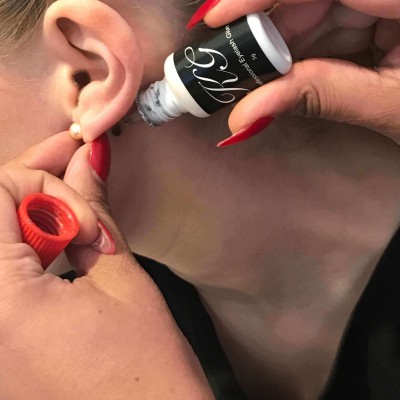
Allergic Reaction Prevention Strategies
| Prevention Method | Implementation | Effectiveness | Timing | Special Considerations |
|---|---|---|---|---|
| Patch Testing | Apply adhesive behind ear | High | 48 hours before | Essential for sensitive clients |
| Hypoallergenic Adhesives | Low-fume formulas | Moderate to high | During application | Higher cost, longer drying time |
| Proper Ventilation | Air purifiers, open windows | Moderate | Application environment | Reduces fume concentration |
| Technician Certification | Trained professionals | High | Always | Proper technique reduces exposure |
| Client History Review | Allergy assessment | Moderate | Consultation | Identifies high-risk clients |
| Quick Response Plan | Emergency protocol | High | Reaction occurrence | Minimizes severity |
Preventing allergic reactions begins with thorough client consultations that identify potential risk factors. Patch testing represents the gold standard for prevention, involving applying a small amount of adhesive behind the ear or on the inner arm 48 hours before the full appointment. This allows clients to monitor for redness, swelling, or itching that indicates sensitivity to the adhesive components. While not 100% predictive—since eyelid skin is more sensitive than other areas—patch tests catch most significant reactions before they affect the eyes. Hypoallergenic adhesives formulated without common irritants provide another layer of protection, though they typically have longer drying times and higher costs than standard formulas. These adhesives often contain medical-grade cyanoacrylates with reduced fume emission and added ingredients that soothe sensitive skin. Proper ventilation during application significantly reduces fume concentration in the breathing zone, minimizing irritation to the eyes and respiratory system. Technicians should use air purifiers with HEPA filters, maintain well-ventilated spaces, and position clients comfortably to avoid direct fume exposure. Technician certification ensures proper application techniques that minimize skin contact and adhesive exposure. Certified professionals understand how to isolate lashes precisely, use minimal adhesive, and create a barrier between the adhesive and skin using specialized tapes and pads. Reviewing client medical history helps identify individuals with known sensitivities to adhesives, acrylics, or other chemicals who may require special precautions. Having a quick response plan ready—including removal supplies, antihistamines, and cool compresses—ensures technicians can address reactions promptly if they occur despite preventive measures. Education about early warning signs empowers clients to seek help immediately rather than waiting for symptoms to worsen. This comprehensive approach significantly reduces both the frequency and severity of allergic reactions in lash extension clients.
What Aftercare Practices Prevent Lash Extension Side Effects?
Proper aftercare forms the foundation of side effect prevention, protecting both the extensions and natural lashes between appointments.
Essential aftercare includes avoiding water for 24-48 hours, gentle cleaning with lash-safe products, avoiding oil-based products, and not picking or rubbing extensions. Consistent routines maintain extension longevity and lash health.

Aftercare Practice Guide for Side Effect Prevention
| Aftercare Practice | Frequency | Importance | Tools Needed | Benefits |
|---|---|---|---|---|
| Initial 48-Hour Care | Critical period | Highest | None | Adhesive curing, bond strength |
| Daily Cleaning | Twice daily | High | Lash shampoo, brush | Prevents buildup, infections |
| Brushing | As needed | Moderate | Clean spoolie | Maintains alignment, prevents tangling |
| Sleeping Position | Every night | Moderate | Silk pillowcase | Reduces friction, maintains shape |
| Product Avoidance | Always | High | Oil-free alternatives | Preserves adhesive bond |
| Professional Removal | When needed | Highest | Technician only | Prevents natural lash damage |
Aftercare practices directly influence both the longevity of lash extensions and the health of natural lashes. The initial 48-hour period after application is most critical, as the adhesive requires this time to fully cure and create a strong bond. During this window, clients must avoid all water contact—including showers, swimming, steam, and crying—as moisture can compromise the bonding process and lead to premature extension loss. Daily cleaning becomes essential after the initial curing period, using specially formulated lash shampoos and soft brushes to remove makeup, oils, and environmental debris that accumulate throughout the day. Proper cleaning prevents bacterial buildup that can lead to infections like blepharitis while maintaining the extensions’ appearance. Brushing lashes gently with a clean spoolie brush keeps them aligned and prevents tangling that can cause uneven stress on natural lashes. Sleeping position significantly affects extension longevity—side or stomach sleeping creates friction against pillows that can twist or pull out extensions. Using a silk pillowcase reduces friction, while training oneself to sleep on the back provides ideal conditions for extension preservation. Product avoidance represents one of the most challenging but crucial aftercare components. Oil-based makeup removers, cleansers, and skincare products break down the adhesive bond, causing extensions to fall out prematurely. Water-based and oil-free alternatives maintain adhesion while allowing proper hygiene. Perhaps most importantly, clients must never attempt to remove extensions themselves, as pulling or picking can damage natural lashes permanently. Professional removal ensures extensions are dissolved properly without harming the natural lash underneath. Regular maintenance appointments every 2-3 weeks allow technicians to monitor lash health, replace lost extensions, and address any concerns before they become serious problems. Consistent aftercare not only extends the life of lash extensions but also protects the health and integrity of natural lashes between appointments.
How to Choose a Safe Lash Technician and Salon?
Selecting a qualified technician and sanitary salon environment significantly reduces the risk of side effects through proper training, hygiene standards, and quality products.
Choose certified technicians with proper training, hygienic salons with sterilization protocols, and quality products with safety certifications. Verify credentials, inspect the workspace, and review client feedback before booking.
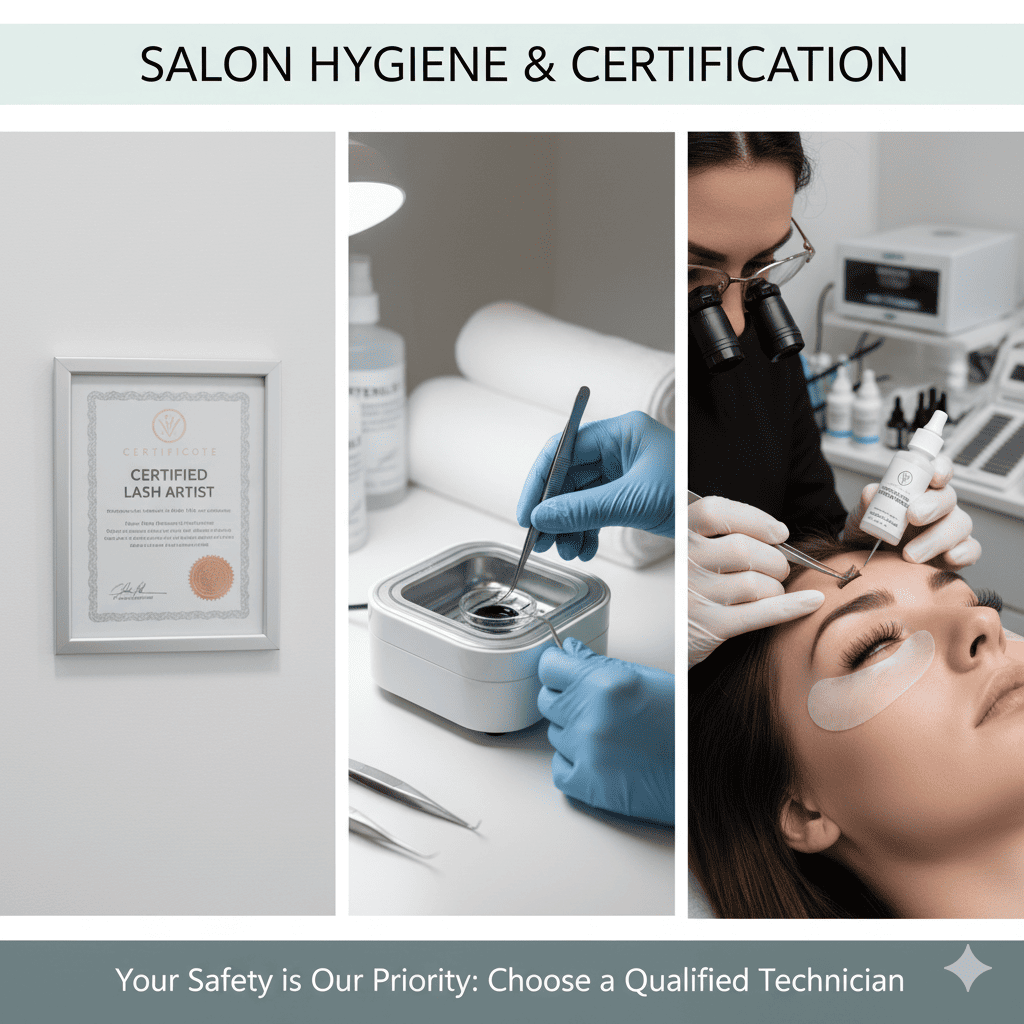
Technician and Salon Selection Criteria
| Selection Factor | What to Look For | Red Flags | Verification Method | Importance Level |
|---|---|---|---|---|
| Certification | Accredited training certificates | No displayed credentials | Ask for certification details | Highest |
| Hygiene Standards | Clean workspace, sterilized tools | Reusable tools without sterilization | Observe setup before appointment | Highest |
| Product Quality | Brand reputation, safety testing | Unknown or cheap products | Research brands beforehand | High |
| Experience Level | Portfolio, years in practice | Unable to show previous work | Ask for before/after photos | High |
| Client Reviews | Positive feedback, before/after | Multiple negative reviews | Check multiple platforms | Moderate |
| Consultation Quality | Thorough assessment, patch test | Rushed consultation, no questions | Evaluate communication style | High |
Choosing a safe lash technician begins with verifying proper certification from accredited training programs. Reputable technicians proudly display their certifications and can explain their training background when asked. Certification ensures they’ve learned proper application techniques, safety protocols, and hygiene standards that minimize side effect risks. The salon environment should appear clean and organized with clear evidence of sterilization practices. Look for sealed tool packages, disinfectant solutions, and separate storage for clean versus used implements. Technicians should wash hands thoroughly before each appointment and wear gloves during the procedure. Product quality significantly impacts safety—reputable technicians use professional-grade adhesives and extensions from established brands that undergo rigorous safety testing. Avoid salons using unknown or unusually cheap products, as these may contain harmful ingredients or lack quality control. Experience level matters for both technical skill and problem-solving ability. Experienced technicians can identify potential issues during consultation, adjust techniques for different eye shapes, and handle complications professionally. Review their portfolio of before-and-after photos to assess consistency and quality of work. Client reviews provide valuable insights into real experiences, but look for patterns rather than isolated comments. Multiple mentions of allergic reactions, infections, or lash damage warrant caution. The consultation process itself reveals much about a technician’s approach to safety. Thorough consultations include medical history questions, allergy assessments, patch test recommendations, and detailed aftercare instructions. Technicians who rush through consultations or fail to ask important health questions may prioritize speed over safety. Trust your instincts—if anything feels uncomfortable or unprofessional during the initial contact, continue your search. The small additional cost of a highly qualified technician proves worthwhile when considering the potential costs—both financial and physical—of dealing with side effects from improper application.
When Should You Remove Lash Extensions Due to Side Effects?
Recognizing when side effects necessitate removal prevents more serious complications and protects long-term lash health.
Remove lash extensions immediately for severe pain, vision changes, significant swelling, or signs of infection. For mild irritation, consult your technician for assessment before deciding on removal or treatment options.
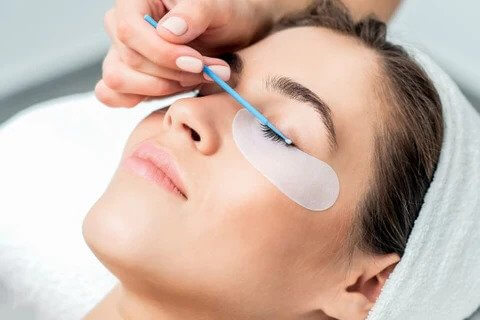
Side Effect Severity and Removal Decisions
| Symptom Severity | Indicators | Removal Urgency | Professional Consultation | Self-Care First Steps |
|---|---|---|---|---|
| Mild Irritation | Slight redness, mild itching | Optional | Recommended within 48 hours | Cool compress, avoid rubbing |
| Moderate Reaction | Noticeable swelling, discomfort | Recommended | Within 24 hours | Antihistamine, gentle cleaning |
| Severe Symptoms | Significant swelling, pain | Immediate | Emergency if vision affected | Cool compress, medical help |
| Infection Signs | Yellow discharge, fever | Immediate | Same day | Avoid touching, medical attention |
| Vision Changes | Blurriness, light sensitivity | Emergency | Immediate medical care | Do not drive, seek help |
| Breathing Issues | Difficulty breathing, throat swelling | Emergency | Call emergency services | Use epinephrine if prescribed |
Determining when to remove lash extensions due to side effects requires careful assessment of symptom severity and progression. Mild irritation characterized by slight redness, minimal swelling, or occasional itching may not require immediate removal. These symptoms often resolve with conservative measures like cool compresses, over-the-counter antihistamines, and gentle cleaning. However, if symptoms persist beyond 48 hours or worsen despite these measures, consultation with your technician is advisable. They may recommend removal if they suspect an evolving allergic reaction or if the irritation interferes with the adhesive bond. Moderate reactions involving noticeable eyelid swelling, persistent discomfort, or developing rash typically warrant removal to prevent symptom progression. The removal should be performed professionally to avoid additional trauma to natural lashes. Severe symptoms demand immediate attention and removal. These include significant swelling that partially closes the eyes, intense pain, or any vision changes like blurriness or light sensitivity. In such cases, seek medical evaluation first, as the removal process might need to wait until swelling subsides or medical treatment begins. Signs of infection—such as yellow or green discharge, crusting, fever, or increasing pain—require prompt removal to eliminate the source of contamination and allow proper medical treatment. Never attempt to remove extensions yourself when infection is suspected, as this can spread bacteria or cause additional damage. Vision changes represent the most urgent warning sign, potentially indicating corneal involvement or serious allergic reactions that need immediate medical intervention. Breathing difficulties or throat swelling suggest a systemic allergic reaction requiring emergency care beyond simple lash removal. In all cases, document your symptoms with photos and notes about their progression to help healthcare providers make accurate assessments. After removal, allow your natural lashes time to recover before considering future extension applications, and discuss alternative options with your technician to prevent recurrence.
Conclusion
Understanding lash extension side effects empowers clients to make informed decisions, while proper prevention strategies ensure beautiful, safe results that enhance natural beauty without compromise.