Eyelashes look simple—tiny hairs framing the eyes—but the world of lash materials is surprisingly technical. Whether you’re browsing strip lashes, booking lash extensions, or comparing “mink” vs “faux mink,” knowing what are fake eyelashes made of can help you choose a style that looks better, wears comfortably, and suits your values (like going vegan or avoiding allergens). This guide—Discovering What Are Lashes Made Of: A Deep Dive into Eyelash Materials—breaks down today’s most common eyelash materials, the real differences between popular eyelash types, and how to pick the safest eyelash extension materials for your needs.
Why Lash Materials Matter More Than You Think
When people ask, “What are lashes made of?” they’re usually trying to solve a practical problem:
- “Why do these lashes feel itchy?”
- “Why do my extensions look shiny or too thick?”
- “Which lash fibers hold a curl the longest?”
- “Are mink lashes cruelty free?”
- “What’s the best eyelash materials for beginners?”
The answer is that lash fibers, the way they’re treated (taper, coating, curl set), and the application materials for lashes (especially adhesive) all influence:
- Comfort (especially for sensitive eyes)
- The “finish” (matte vs glossy)
- Curl retention and longevity
- Weight on the natural lash line
- Allergic potential
- Ethics (animal-based vs vegan eyelash extensions materials)
Natural Lashes vs False Lashes: What’s the Difference in Materials?
Natural lashes (your real lashes)
Natural lashes are made of keratin—the same protein that forms hair and nails. Their thickness, growth direction, and density vary widely by genetics, hormones, and lifestyle.
Key point: Lash extensions and falsies don’t replace natural lashes—they sit on them (extensions) or above them (strip/magnetic), so the material must match your natural lash strength.
False lashes (strip, cluster, extension fibers)
False lashes materials generally fall into two categories:
- Synthetic fibers (most common; includes PBT, acrylic blends, and other polymers)
- Animal-derived fibers (mink, sable, etc.—less common today in professional extensions, but still marketed heavily)
The Most Common Lash Materials (And What They’re Really Made Of)
1) Synthetic lashes (the modern standard)
Synthetic lashes dominate the market because they’re consistent, durable, and can be engineered for different finishes and curls.
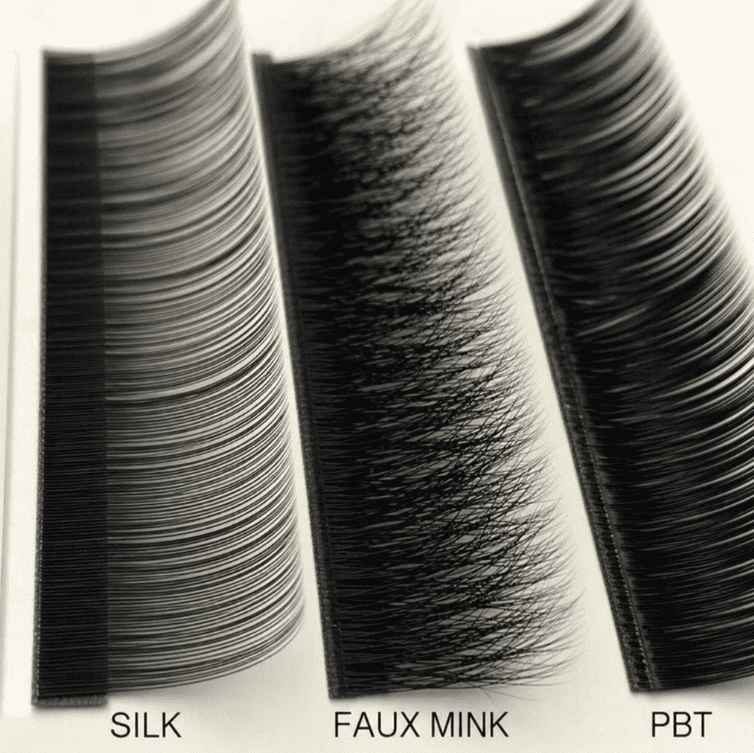
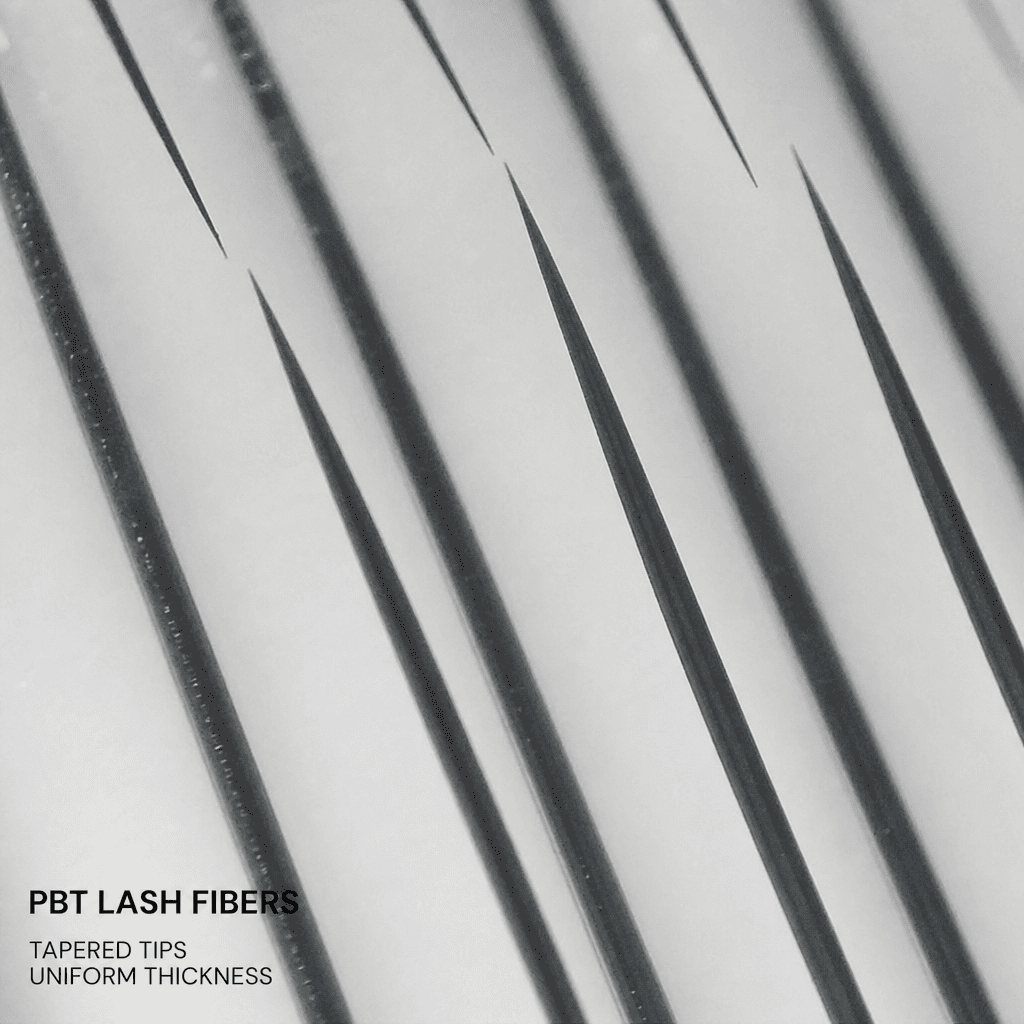
Most high-quality synthetic extension fibers are made from PBT (polybutylene terephthalate). If you’ve seen “PBT synthetic lashes explained” online, that’s why: PBT is stable, holds curl well, and can be produced in everything from ultra-matte to soft-gloss textures.
Pros
- Very consistent shape and curl (great for predictable results)
- Often the best option for hypoallergenic lashes for sensitive eyes (fiber itself is inert for many people)
- Great curl retention and styling flexibility
- Widely available in many diameters and lengths
- Compatible with most professional adhesives
Cons
- Some cheaper synthetics can feel stiff or plasticky
- Glossy fibers may look less “real” in close-up photography
Best for
- Extensions and strips
- Beginners who want reliability (best eyelash materials for beginners)
- Clients seeking best eyelash extension materials for long lashes without extra weight
2) Silk lashes (usually synthetic—yes, really)
“Silk lashes” is one of the most misunderstood labels. In most modern lash lines, “silk” refers to a finish and softness level, not real silk fabric. Many silk lashes are still PBT-based—engineered to be lightweight with a slightly shinier finish than matte faux mink.
Silk lashes vs faux mink: In general, “silk” tends to be a touch more reflective and structured; faux mink tends to be more matte and feathery. But this depends heavily on the manufacturer.
Pros
- Soft, flexible feel
- Often lightweight and comfortable
- Can look very clean and defined (great for classic sets)
Cons
- Naming can be inconsistent across brands
- Some silk-labeled fibers can be too shiny for “natural” looks
Best for
- Classic lash extensions
- Clients who like a polished, mascara-like finish
3) Faux mink (synthetic, but designed to mimic mink)
Faux mink is typically a premium synthetic (often PBT) designed to feel softer, look more matte, and taper more naturally.
If you’re choosing between mink lashes vs synthetic lashes, faux mink is often the sweet spot: it’s “mink-like” without the ethics and maintenance concerns of animal hair.
Pros
- Natural-looking matte finish
- Feather-light feel (great for wispy sets)
- Excellent for textured mapping (Kim K / wet sets depending on fiber design)
Cons
- Premium faux mink can cost more than basic synthetics
- Very soft fibers may lose shape faster if mishandled (more of a storage issue than wear issue)
Best for
- Clients wanting a realistic finish
- Everyday wear and photography
- Anyone prioritizing vegan eyelash extensions materials
4) Mink lashes (animal hair)
Mink lashes are marketed as ultra-soft and natural. They’re usually made from mink fur, and sometimes the term appears in strip lash marketing more than in professional extension systems.
Are mink lashes cruelty free? This is complicated. Some sellers claim “ethically sourced” mink fur (like collected from brushing). However, third-party verification is inconsistent, and many consumers choose to avoid it due to animal welfare concerns.
Pros
- Very soft and airy texture (when genuinely high quality)
- Natural-looking taper
Cons
- Ethical concerns and transparency issues
- Potential for more variability in fiber thickness and curl
- Can be harder to sanitize consistently (especially for repeated strip use)
- Some people experience irritation from animal hair or residues
Best for
- Users who strongly prefer animal-hair texture and accept the ethical trade-offs
Practical note: Many people who love the “mink look” are actually happier with high-end faux mink because it’s more consistent and easier to maintain.
5) “Human hair” lashes (usually for strip lashes)
Some strip lashes are made of processed human hair. They can look natural, but quality varies a lot depending on sourcing, processing, and sterilization.
Pros
- Can mimic the irregularity of real lashes
- Often photographs naturally
Cons
- Quality can be inconsistent
- Can lose curl more easily than PBT
- Sourcing transparency is often unclear
Best for
- Occasional strip lash wearers who want a very natural look
6) Magnetic lashes: magnetic eyelashes material composition
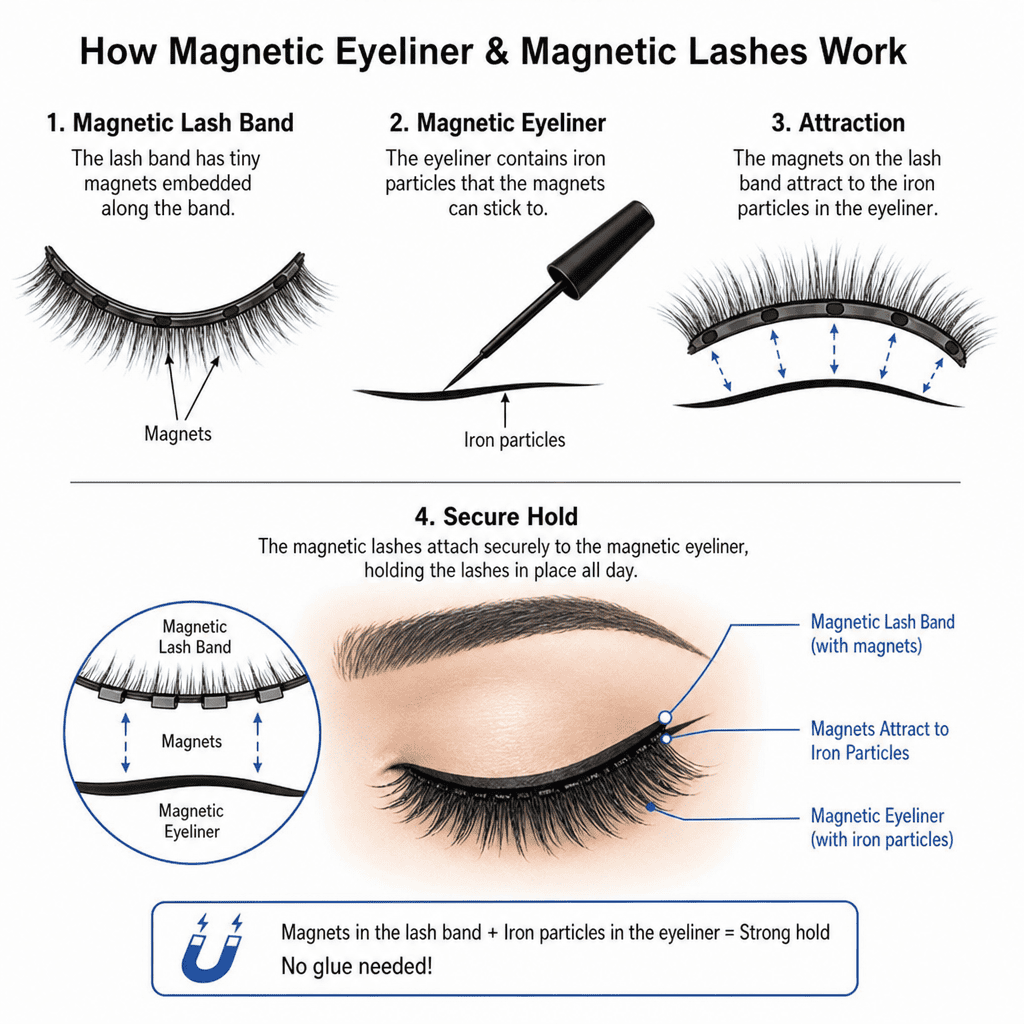
Magnetic lashes typically involve:
- A lash band (often cotton thread, plastic, or synthetic band materials)
- Lash fibers (often synthetic)
- Tiny magnets (commonly neodymium-based) embedded along the band
- Optional magnetic eyeliner (which contains iron oxides and film-formers)
When people ask about magnetic eyelashes material composition, they’re often concerned about comfort and safety.
Pros
- No lash glue required for wear (good for some sensitive users)
- Easy to remove and reuse
Cons
- Band can feel thicker/heavier than glue-on strips
- Magnetic eyeliner may irritate sensitive eyelids
- Fit and alignment take practice
Best for
- Users avoiding traditional adhesives
- Those who want a reusable option with quick removal
Eyelash Extension Fiber Types: What Technicians Actually Use
When you get professional lash extensions, the extension fiber is only one part of the system—but it’s the visible part, so it gets the spotlight.
Common eyelash extension fiber types include:
- Classic fibers (single extension per natural lash)
- Volume fibers (thinner diameters for handmade or pre-made fans)
- Cashmere / velvet / matte (usually marketing terms for texture/finish)
- Ellipse/flat lashes (shaped to appear darker at the base while staying lightweight)
- Fiber-taper variations (micro-taper vs standard taper for different softness)
Most of these still fall under the umbrella of synthetic lashes—often PBT—engineered differently.
Best eyelash extension materials for long lashes (without damage)
If your goal is long, dramatic lashes that don’t overload your natural lash line, focus on:
- Lighter diameters (especially for longer lengths)
- Softer, tapered fibers
- Flat/ellipse options for a darker look at lower weight
- Skilled mapping and proper isolation (material choice can’t fix poor technique)
Tip: “Long” doesn’t have to mean “heavy.” The best results come from matching the extension weight to natural lash strength—then building length with safe diameters and curls.
Natural vs Synthetic Eyelashes Comparison (Quick Decision Guide)
Here’s a practical natural vs synthetic eyelashes comparison that reflects real-world wear:
Choose synthetic/faux mink if you want:
- Predictable curl and consistency
- Better durability and easier maintenance
- More ethical options (vegan eyelash extensions materials)
- Great choices for sensitive clients (depending on adhesive)
Choose animal-hair options (like mink) if you:
- Prefer that specific feathered irregularity
- Are comfortable with ethical uncertainty and cost
- Are prepared for variability in curl and wear
For most users and pros today, premium synthetic (especially faux mink) wins on consistency, safety, and ethics.
Application Materials for Lashes: Bands, Adhesives, and What Matters Most
Even the best lash fibers can feel uncomfortable if the application materials for lashes aren’t right.
Lash bands (strip lashes)
Band materials vary:
- Cotton thread (flexible, comfortable, beginner-friendly)
- Clear plastic bands (can look seamless but sometimes stiffer)
- Layered bands (may feel thicker but offer better structure for dramatic styles)
Best eyelash materials for beginners (strip lashes):
- Lightweight synthetic fibers + flexible cotton band + simple shape (not too dense)
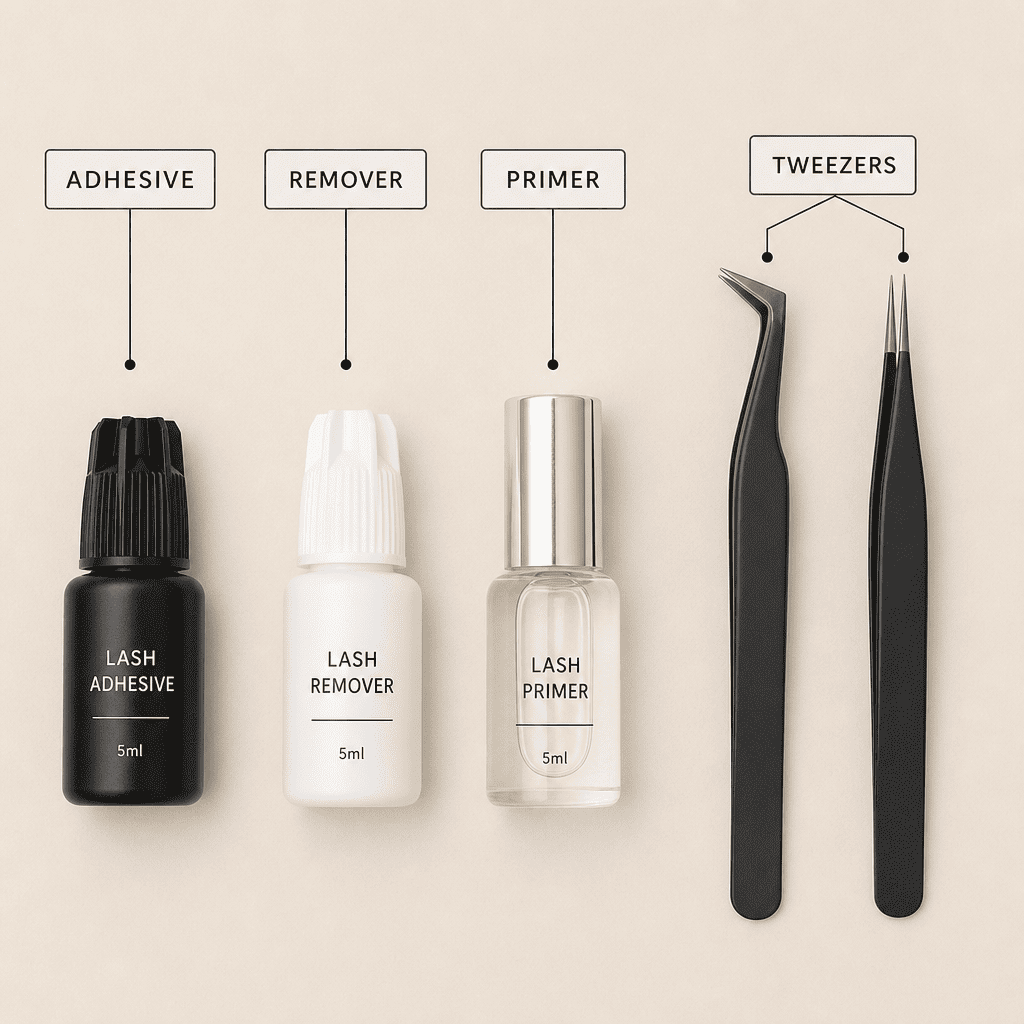
Lash Glue Ingredients to Avoid (And What to Look For)
For many people, irritation isn’t caused by the lash fiber—it’s the adhesive, remover, or eyeliner. If you’ve ever searched “lash glue ingredients to avoid,” you’re not alone.
Common irritation triggers (depending on product type)
Strip lash glues may contain:
- Latex (common allergen for some users)
- Formaldehyde-releasing preservatives (less common in reputable products, but worth watching)
- Strong solvents/fragrance that can sting watery eyes
Extension adhesives often use:
- Cyanoacrylate (the main bonding ingredient; also the most common source of sensitivity)
- Carbon black (for black adhesives; sometimes irritating to very sensitive users)
- Stabilizers and thickeners
Important: “Hypoallergenic” doesn’t guarantee zero irritation. Sensitivity can be individual, and technique matters (humidity control, curing, placement away from skin).
How to reduce risk (practical steps)
- Patch test when possible (especially for extensions)
- Choose low-fume options for sensitive clients (through a professional)
- Avoid adhesive contact with skin (critical for extensions)
- Don’t apply strips on an inflamed or compromised lash line
- Replace old glue (aged formulas can irritate more)
Safest Eyelash Extension Materials: What “Safe” Really Means
People often ask for the safest eyelash extension materials, but “safe” is a system, not a single fiber.
A safer extension setup usually includes:
- High-quality PBT or faux mink fibers (consistent, low debris)
- Proper weight selection (diameter/length suited to natural lashes)
- Professional-grade adhesive used in correct conditions
- Clean application and hygiene standards
- Gentle removers and appropriate aftercare
For sensitive eyes: hypoallergenic lashes for sensitive eyes
If you’re prone to redness, watering, or eyelid itching, consider:
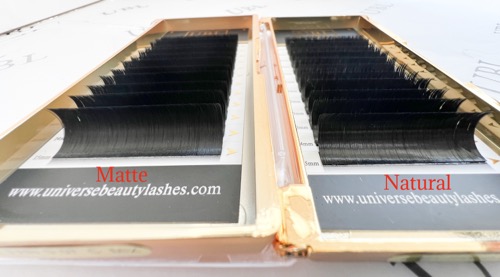
- Matte PBT/faux mink (less coating shine, often softer feel)
- Clear or sensitive adhesive options (ask your technician)
- Lower density sets (less surface area for potential irritation)
- Avoiding fragrance and harsh cleansers in aftercare
Reminder: True allergic reactions in lash extensions are most commonly linked to adhesive components, not the lash fiber.
Mink Lashes vs Synthetic Lashes: The Honest Comparison
When choosing mink lashes vs synthetic lashes, ask yourself what you value most:
Look & feel
- Mink: soft, airy, irregular (can look very natural)
- Synthetic/faux mink: can match that look while staying consistent
Ethics
- Mink: ethical sourcing difficult to verify; many choose to avoid
- Synthetic: often the more ethical and transparent choice
Performance
- Mink: curl can be less predictable; maintenance may be higher
- PBT synthetic: curl retention and uniformity are typically stronger
Price
- Mink: usually more expensive
- Synthetic: wide price range; premium faux mink can still be cost-effective long-term
For most people, a high-quality faux mink or matte PBT fiber delivers the “mink vibe” with fewer trade-offs.
Silk Lashes vs Faux Mink: Which Should You Choose?
Silk lashes vs faux mink usually comes down to finish and styling:
- Choose “silk” (often slightly shinier, more defined) if you want:
- A crisp, mascara-like lash line
- Clean classic sets
- A polished look in bright lighting
- Choose faux mink (often matte, fluffier) if you want:
- A softer, more “real lash” look
- Wispy textures and airy volume
- A matte finish that photographs beautifully
If you’re unsure, ask your lash artist to show samples against your eye shape and makeup style—your lighting, skin texture, and brow/liner routine all affect what looks “natural.”
How to Choose Lash Material (Based on Your Goals)
If you’re overwhelmed by lash labels, use this simple checklist for how to choose lash material:
1) Decide: extensions or strips?
- Extensions: prioritize weight, curl retention, and comfort over “brand labels”
- Strips: prioritize band comfort and reusability
2) Choose your finish
- Matte = softer, more realistic
- Glossy = bolder, more “mascara” effect
3) Match to your lifestyle
- Oily lids / hot climate / frequent workouts: seek durable fibers + reliable adhesive system
- Minimal makeup routine: choose a fiber that blends without heavy liner (matte faux mink often works well)
- Event-only wear: dramatic strips can be heavier since wear time is short
4) Sensitivity check
- Known latex allergy? Avoid latex strip glues.
- Sensitive eyes? Ask about low-fume adhesives and gentle aftercare.
- History of eczema/dermatitis? Consult a professional before extensions.
5) Ethics and values
- If animal welfare matters to you, choose vegan eyelash extensions materials (PBT/faux mink) and confirm sourcing.
Lash Extension Materials Pros and Cons (At-a-Glance)
Here’s a practical view of lash extension materials pros and cons—focusing on what actually impacts wear:
Pros
- Consistent, durable, strong curl retention
- Great for classic/volume/hybrid mapping
- Often the easiest to customize for different eye shapes
Cons
- Quality varies by manufacturer (shine, stiffness, taper)
Animal hair (mink)
Pros
- Naturally soft, irregular taper
Cons
- Ethical concerns
- Greater variability
- Not the best choice for many sensitive clients
Flat/ellipse synthetics (shape variation)
Pros
- Darker lash line appearance with reduced weight
- Great for classic sets that still look bold
Cons
- Some clients feel the difference in texture (rare, but possible)
What Are Fake Eyelashes Made Of? A Quick FAQ
Are all “mink” lashes actually mink?
Not always. Some brands use “mink” as a style descriptor. If you want certainty, ask for material documentation or choose clearly labeled faux mink/synthetic.
Are “silk lashes” made from real silk?
Usually not. In most cases, “silk” is a finish category within synthetic fibers.
Can lash fibers cause allergies?
It’s less common than adhesive reactions. Most irritation complaints trace back to glue, remover, or liner—not the fiber.
Do magnetic lashes work for sensitive eyes?
They can, especially if glue is your trigger. But magnetic eyeliner can irritate some people, and the band may feel heavier.
Choosing the Best Eyelash Extension Materials for Long Lashes (Without Regret)
If you want long, beautiful lash extensions that still feel comfortable weeks later, focus on “lightweight engineering,” not just length:
- Premium PBT or faux mink fibers
- Proper diameter selection for longer lengths
- Skilled mapping (longest lengths placed strategically, not everywhere)
- Thoughtful curl choice (a strong curl can look longer without adding length)
- Great aftercare (cleaning reduces irritation and improves retention)
This is the real secret behind best eyelash extension materials for long lashes: the “best” material is the one that supports your natural lash health and your styling goal.
Call to Action: Elevate Your Lash Results with UBLash
If you’re ready to upgrade your lash sets—whether you’re a lash artist sourcing premium fibers or a beauty lover looking for reliable, comfortable options—connect with UBLash. Ask about their latest eyelash materials, compare lash extension fiber options, and find lash materials that match your clients’ needs (from natural looks to bold volume). Reach out to UBLash to learn more, request product details, or place an order and experience the difference high-quality fibers and professional-grade application materials for lashes can make.
Key Takeaway
Understanding what are lashes made of helps you cut through marketing terms and choose confidently. In most cases, high-quality synthetic lashes—especially premium PBT and faux mink—deliver the best mix of comfort, consistency, ethics, and performance. Pair the right fiber with smart adhesive choices (and avoid risky lash glue ingredients to avoid), and you’ll get lashes that look stunning and feel good.