Skip to content
Eyebrow Lamination vs. Microblading: Which Is Right for You?
Eyebrow lamination and microblading are both popular eyebrow treatments, but they solve different brow problems. Lamination is best for people who want smoother, fuller-looking, better-directed brow hairs without pigment implanted into the skin, while microblading is better for people who want semi-permanent brows that create the look of individual hair strokes. This guide compares eyebrow lamination vs microblading by look, process, upkeep, comfort, cost considerations, and who each service fits best.
Which brow treatment is right for your natural brows?
Choose eyebrow lamination if you already have brow hair and want it lifted, brushed into place, and shaped for a fuller effect. Choose microblading if your brows are sparse, patchy, over-plucked, or uneven and you want a longer-lasting brow enhancement that adds the appearance of hair where little or no hair exists. If you want color more than structure, eyebrow tinting may be a better add-on or alternative, depending on your goals.
A simple way to think about eyebrow microblading vs lamination is this: lamination works mainly with the hair you already have, while microblading creates the illusion of additional brow hair through pigment. Neither option is automatically “better.” The right choice depends on your natural brow density, skin type, lifestyle, maintenance tolerance, budget, and how dramatic you want the final result to look.
Here is the fastest decision guide:
- Pick eyebrow lamination if:
- Your brow hairs grow downward, sideways, curly, or unevenly.
- You like a fluffy, brushed-up, editorial brow look.
- You want a non-tattoo brow service.
- You prefer a lower-commitment treatment that gradually wears off.
- Your brows are reasonably full but need better direction and shape.
- Pick microblading if:
- You have gaps, thin tails, asymmetry, or missing brow sections.
- You want brows that look more defined when you wake up.
- You are comfortable with a semi-permanent cosmetic tattoo technique.
- You are prepared for healing, aftercare, and future touch-ups.
- You want a more structured brow map that lasts longer than styling services.
- Consider tinting with either option if:
- Your brow hairs are light, blonde, gray, or faded.
- You have fine brow hairs that are present but hard to see.
- You want more color contrast without committing to microblading.
- You are comparing eyebrow lamination vs microblading vs tinting and mainly want your brows to look darker.

The core difference between lamination and microblading
Eyebrow lamination is a styling and reshaping service for existing brow hair. A professional uses brow-safe solutions to relax and redirect the hairs, then sets them into a more lifted or controlled position. The result can make brows look fuller, smoother, and more symmetrical because the hair is arranged to cover gaps and follow a cleaner shape.
Microblading is a semi-permanent brow enhancement technique. During the microblading process, a trained artist maps the brows, selects pigment, and creates fine hair-like strokes in the skin to mimic natural brow hairs. It is often chosen by people who want more visible structure, especially when makeup alone feels time-consuming or inconsistent.
The biggest practical difference is where the result comes from. Lamination changes the movement and finish of brow hair. Microblading changes the appearance of the brow area by placing pigment in the skin. That single distinction affects everything else: commitment, upkeep, healing, cost, suitability, and how natural the final result can look on different clients.
Eyebrow lamination at a glance
Eyebrow lamination is often described as a brow lift without needles. It can soften stubborn growth patterns, help hairs lie in one direction, and make the brow line appear cleaner. Many clients like it because the result is noticeable but not permanent.
For someone with medium to full brows, lamination can be transformative. Hairs that once pointed down can be brushed upward. Sparse-looking areas may appear more covered because the existing hairs are spread and styled more intentionally. The finish can be fluffy, sleek, natural, or bold depending on how the technician shapes and finishes the brows.
However, lamination cannot create hair where there is none. If the tail of the brow is missing or a scar has very little growth, lamination may improve the surrounding hair but will not fill the empty space the way microblading can. That is why eyebrow shaping before the service matters: the technician needs to assess whether the client has enough natural hair to support the desired look.
Microblading at a glance
Microblading is a more committed solution for semi-permanent brows. It is designed to create the appearance of natural hair strokes, especially in areas where brow hair is thin or missing. A skilled artist does not simply draw on a brow; they design a shape based on the client’s facial features, existing hair, skin tone, and desired level of definition.
The microblading benefits are strongest for clients who want consistent brows without daily penciling. It can improve shape, fill gaps, extend short tails, and balance uneven brows. When performed well on a suitable candidate, the result can look soft and realistic rather than heavy.
The tradeoff is that microblading requires more preparation and aftercare than lamination. Because pigment is placed in the skin, there is a healing period, and the final result changes as the skin settles. Clients also need to be comfortable choosing a brow shape that will remain visible for a longer period than a styling service.
Comparing the look and finish
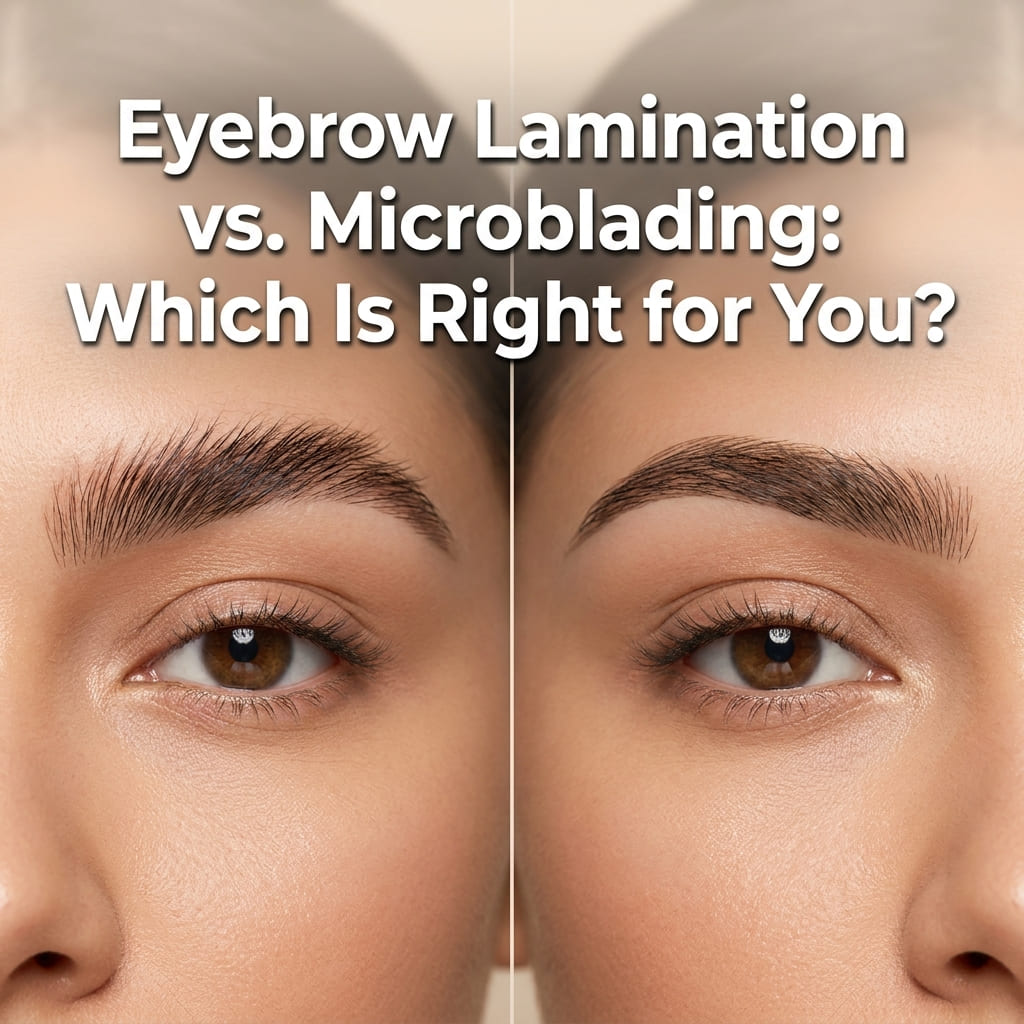
The visual difference between microblading vs eyebrow lamination is usually clear once you know what to look for. Lamination emphasizes texture, lift, and hair direction. Microblading emphasizes shape, definition, and the illusion of added hair strokes.
If your ideal brow is soft, airy, and groomed, lamination may give you the finish you want. If your ideal brow is filled, balanced, and makeup-free, microblading may be the stronger option. Some clients eventually combine techniques, but the order and suitability should be decided by a trained professional.
Use these criteria to compare the finished look:
- Fullness:
- Eyebrow lamination makes existing hair appear fuller by redirecting it.
- Microblading makes the brow area appear fuller by adding pigment strokes.
- Tinting can make pale or fine hairs more visible, creating an added fullness effect.
- Shape:
- Lamination improves shape by controlling hair flow and supporting brow styling.
- Microblading can build a clearer shape, especially when natural brows are uneven.
- Professional eyebrow shaping can improve either service by cleaning the outline.
- Texture:
- Lamination keeps real brow hair as the star, so the finish has natural texture.
- Microblading mimics hair strokes, but the finish depends heavily on artist skill and skin response.
- Tinting darkens hair and sometimes lightly stains skin, but it does not restructure texture.
- Softness vs definition:
- Lamination can look soft and fluffy or sleek and sculpted.
- Microblading typically gives more visible definition than lamination alone.
- A lighter hand with either treatment usually creates the most natural result.
- Makeup replacement:
- Lamination may reduce the need for brow gel, soap brows, or daily brushing.
- Microblading may reduce the need for brow pencil, powder, or pomade.
- Tinting may reduce the need for filling in light brow hairs.

Which option is easier to maintain?
Eyebrow lamination is usually easier if you want a lower-commitment beauty appointment with minimal downtime, while microblading requires more careful aftercare because the skin needs to heal. Lamination still needs gentle care, conditioning, and repeat appointments to keep the look fresh. Microblading needs a healing period, possible touch-ups, and long-term color maintenance.
Maintenance is one of the most important decision points in the lamination vs microblading debate. A treatment can look beautiful on day one, but it only makes sense if you can realistically care for it afterward. Clients who love quick styling services may prefer lamination. Clients who dislike applying brow makeup every morning may prefer microblading despite the more involved start.
Lamination maintenance
After eyebrow lamination, the brows generally need to be treated gently. The technician may recommend avoiding excessive moisture, steam, oils, or harsh products for a short initial period, depending on the system used. After that, regular brushing and conditioning can help the brows look soft rather than dry or overly rigid.
The practical upkeep is simple. You may need to brush the brows into place each morning, apply a nourishing brow product if recommended, and return when the effect has grown out. Because brow hair continues through its natural growth cycle, the laminated look gradually softens over time.
Lamination works best for people who are willing to maintain brow hair health. If the hairs are brittle, over-processed, or frequently bleached, the service may not be the right choice until the brow condition improves. A good technician should assess the hair before applying any solution.
Microblading maintenance
Microblading maintenance starts before the appointment and continues through healing. Clients usually need to follow pre-care instructions, arrive with realistic expectations, and avoid anything the artist says could affect the procedure or healing. After the service, the brow area must be cared for according to the artist’s aftercare plan.
The result does not settle immediately. The brows can look darker at first, then soften as the skin heals. A follow-up appointment is commonly part of the process because pigment retention can vary from person to person. Oily skin, sun exposure, skincare habits, and individual healing can all affect how crisp and long-lasting the strokes appear.
Microblading is better for clients who are patient with the process. If you need perfect brows for an event within days, it may not be the right timing. If you are comfortable planning ahead, microblading can be a practical way to maintain a consistent brow shape with less daily makeup.

The microblading process compared with a lamination appointment
A lamination appointment is typically centered on hair direction, brow shaping, and finishing. A microblading appointment is more design-heavy because the artist must create a semi-permanent brow plan before pigment is placed. Both services require skill, but the client experience is very different.
For a comparison page, it helps to look at the appointment from start to finish rather than only comparing final photos. The best treatment is not just the one you like visually; it is the one whose process, aftercare, and commitment match your comfort level.
What happens during eyebrow lamination
A brow lamination service usually begins with consultation and assessment. The technician looks at brow density, hair direction, previous processing, skin sensitivity, and the shape the client wants. This matters because not every brow should be pushed into the same dramatic upward style.
The brows are then cleansed, brushed, and treated with professional solutions that allow the hairs to be repositioned. The technician sets the direction, refines the shape, and may finish with trimming, waxing, tweezing, or tinting if appropriate and requested. The final result should still suit the client’s face, not simply copy a trend.
For clients who are new to eyebrow treatments, lamination can feel approachable. There are no incisions and no pigment implanted into the skin. The main decision is how lifted, fluffy, or polished the final brow should be.
What happens during microblading
The microblading process usually begins with a detailed consultation and brow mapping. The artist measures and sketches a brow shape, discusses color, reviews expectations, and confirms whether the client is a suitable candidate. This stage should not be rushed because the design will influence the face every day while the pigment remains visible.
Once the shape is approved, the artist creates fine strokes using a specialized hand tool and pigment. The technique is intended to mimic natural brow hairs, but the outcome depends on artistry, skin type, pigment choice, stroke placement, and aftercare. A numbing product may be used according to the provider’s method and local regulations.
After the appointment, the client receives aftercare instructions. Healing can include changes in color intensity and texture as the skin recovers. A follow-up visit may be recommended to adjust, reinforce, or perfect the result once healing is complete.
Cost considerations without guessing your local price
Eyebrow lamination vs microblading cost varies by location, technician experience, salon positioning, included services, and whether aftercare or follow-up visits are part of the package. In general, lamination is often a lower upfront commitment, while microblading is typically a higher upfront investment because it is a semi-permanent cosmetic procedure. However, the better comparison is not simply “which is cheaper today,” but which one fits your long-term routine.
Think about cost in terms of frequency, commitment, and value:
- Upfront appointment cost:
- Lamination often costs less per appointment than microblading.
- Microblading usually requires more time, mapping, technique, and aftercare support.
- Tinting is commonly positioned as a smaller add-on or standalone color service.
- Repeat maintenance:
- Lamination needs repeat visits if you want to keep the lifted look continuously.
- Microblading needs longer-term touch-ups, but not as often as temporary styling services.
- Tinting fades as hair sheds and color softens, so it is usually maintained more frequently.
- Daily product savings:
- Lamination may reduce your need for clear brow gel or styling wax.
- Microblading may reduce your need for pencils, powders, or daily brow filling.
- Tinting may reduce your need for color-based brow makeup.
- Risk of choosing only by price:
- A low-cost lamination may still damage brows if the service is rushed or unsuitable.
- A low-cost microblading service can be costly to correct if the shape, color, or technique is poor.
- A professional consultation is part of the value, especially for semi-permanent brows.
If you are budgeting, ask what is included before booking. For lamination, clarify whether shaping, tinting, and conditioning are included. For microblading, ask about consultation, follow-up appointments, aftercare guidance, and the artist’s approach to color and shape.
Skin type, brow hair, and lifestyle matter
The best eyebrow treatments are chosen around real-life factors, not just inspiration photos. Skin type affects how pigment heals and holds. Brow hair texture affects how lamination processes and sits. Lifestyle affects how well either treatment lasts and how satisfied you feel after the appointment.
People with strong natural brow growth often love lamination because it gives them control and polish. People with thin or missing brow areas may feel disappointed if they expect lamination to create density from nothing. On the other hand, people who have enough hair but dislike the idea of semi-permanent pigment may find microblading unnecessary.
Consider these personal factors before choosing:
- Your natural brow density
- Fuller brows can respond beautifully to lamination.
- Sparse brows may need microblading, tinting, makeup, or a combination approach.
- Uneven brows may benefit from mapping before either treatment.
- Your skin type
- Microblading results can vary based on how the skin heals and retains pigment.
- Very oily or textured skin may need a careful consultation about technique expectations.
- Sensitive skin should be discussed before either service.
- Your preferred makeup routine
- If you like changing your brow style often, lamination offers more flexibility.
- If you want the same base shape daily, microblading may be more convenient.
- If you only need color, tinting may be enough.
- Your tolerance for aftercare
- Lamination aftercare is generally simpler and focused on brow hair condition.
- Microblading aftercare is more detailed because pigment retention and healing matter.
- Ignoring aftercare can compromise the final result for either service.
- Your comfort with commitment
- Lamination grows out and fades from the hair styling effect.
- Microblading remains visible longer and requires more thought before booking.
- If you are unsure, start with temporary eyebrow shaping, tinting, or lamination before moving to semi-permanent brows.
Eyebrow tinting vs lamination vs microblading
Eyebrow tinting, lamination, and microblading are often compared because they all make brows look more finished. But they work in different ways. Tinting changes color, lamination changes hair direction, and microblading changes the appearance of density and shape through pigment strokes.
If you are searching for eyebrow tinting vs lamination vs microblading, the most useful question is what your brows are missing. Are they too light? Too unruly? Too sparse? Each answer points toward a different service.
Tinting is for color
Tinting darkens brow hairs so they appear more visible. It can be especially helpful for people with light, fine, or sun-faded brows. When the hair is present but hard to see, tinting can make the brow look fuller without changing the hair direction or adding semi-permanent strokes.
Tinting is also commonly paired with lamination because lifted hairs can look more defined when the color is even. It may be used before deciding whether microblading is necessary. Sometimes clients discover that tinting plus shaping gives enough definition without committing to a semi-permanent option.
Lamination is for direction and fullness
Lamination is the strongest choice when the problem is unruly brow hair. Hairs that point down, curl, cross over, or sit flat can make brows look less groomed than they really are. By redirecting those hairs, lamination can create a cleaner, fuller brow shape.
It is not a color service on its own unless tinting is added. It is also not a replacement for missing hair. Think of lamination as styling architecture: it organizes the brow you already have so the shape looks more intentional.
Microblading is for structure and semi-permanent definition
Microblading is the strongest option when the brow lacks visible structure because hair is missing, sparse, or uneven. It can create the look of fine strokes in areas where makeup would normally be applied. This is why microblading benefits clients who are tired of drawing the same gaps every day.
It is also the most serious commitment among the three. Because the pigment is placed in the skin, choosing the right artist matters more than choosing the lowest price or fastest appointment. The goal should be brows that suit your face now and still look appropriate as trends change.
Pros and cons of eyebrow lamination
Eyebrow lamination has become popular because it gives quick visual payoff without the commitment of cosmetic tattooing. It can be subtle or bold, which makes it versatile for different face shapes and personal styles. The result is especially appealing when clients want brows that look groomed but still natural.
The downside is that lamination depends on the quality and quantity of the brow hair. It cannot solve every brow concern, and over-processing can leave hairs dry or fragile. That is why professional technique and honest consultation matter.
Key advantages of eyebrow lamination include:
- It works with your natural brow hair instead of adding pigment to the skin.
- It can make brows look fuller by lifting and spreading existing hairs.
- It helps tame unruly, downward, or uneven growth patterns.
- It pairs well with eyebrow shaping and tinting.
- It offers a trend-forward look with less long-term commitment.
- It can reduce the need for daily brow gel or styling products.
Potential drawbacks of eyebrow lamination include:
- It does not create new hair or fill completely bare areas.
- It may not be suitable for damaged, weak, or over-processed brow hair.
- The lifted effect needs maintenance as brow hairs grow and shed.
- The result may look too bold if the brows are over-lifted for your face.
- Aftercare matters if you want the hairs to remain soft and healthy-looking.
Lamination is ideal for someone who wants flexibility. If you like experimenting with brow trends, it gives you room to adjust your look over time. If your main concern is missing brow hair, though, you may need another option.
Pros and cons of microblading
Microblading is popular because it can create a polished brow base that does not wash off at the end of the day. For people with sparse brows, it can feel freeing to wake up with visible shape already in place. It is also highly customizable when performed by a skilled artist who understands symmetry, facial proportion, and natural hair patterns.
The drawbacks are tied to commitment and healing. Microblading is not a casual styling service. It requires careful artist selection, realistic expectations, and a willingness to follow aftercare.
Key microblading benefits include:
- It can visually fill gaps, sparse areas, and short brow tails.
- It creates a more consistent brow shape without daily penciling.
- It can improve the appearance of symmetry when brows are uneven.
- It is useful for clients who have lost brow density from over-plucking or natural thinning.
- It offers longer-lasting definition than tinting or lamination.
- It can be designed to look soft, natural, and face-framing.
Potential drawbacks of microblading include:
- It is a semi-permanent procedure, so shape and artist choice are critical.
- It involves a healing period and specific aftercare.
- Results vary based on skin type, lifestyle, pigment retention, and technique.
- It is usually a higher upfront investment than temporary brow services.
- Poor work may require correction, fading, or removal planning.
- It may not be suitable for everyone, so a professional consultation is essential.
Microblading is ideal for someone who wants structure more than styling. If your brow hair already exists but simply grows in the wrong direction, lamination may be enough. If you are filling the same missing patches with makeup every morning, microblading may be worth considering.

Safety, suitability, and consultation essentials
Both services should begin with a consultation. A technician or artist should ask about your goals, inspect your brows, explain the process, and tell you what the treatment can and cannot do. This is especially important if you have sensitive skin, recent skin treatments, allergies, damaged brow hair, or previous semi-permanent makeup.
For lamination, the consultation should focus on brow hair condition and desired styling. If the hairs are compromised, the professional may recommend waiting or choosing a gentler shaping service. A patch test may be advised depending on the products used and local requirements.
For microblading, the consultation should be more detailed because the result is semi-permanent. You should expect a discussion about skin type, medical considerations, lifestyle, pigment selection, brow mapping, healing, touch-ups, and long-term expectations. If the provider cannot clearly explain the microblading process, aftercare, and realistic results, keep looking.
Before booking either service, ask:
- What result is realistic for my natural brows?
- Do I have enough brow hair for lamination to look full?
- Is my skin a good candidate for microblading?
- What aftercare will I need to follow?
- Will tinting improve the final result?
- How often should I return for maintenance?
- What happens if I want a softer or more natural finish?
- Can I see healed results, not just fresh photos, for microblading?
A good provider will welcome these questions. Brow treatments are personal because they sit at the center of facial expression. The safest choice is the one made with clear information, not pressure.
Best matches by brow goal
Sometimes the easiest way to decide is to start with the problem you want solved. Eyebrow lamination vs microblading is not just a service comparison; it is a goal comparison. The best treatment is the one that addresses the specific reason you are unhappy with your brows.
Use this practical matching guide:
- You want fluffy, brushed-up brows:
- Best match: eyebrow lamination.
- Why: it redirects natural hair into a lifted shape.
- Add-on to consider: tinting if the hairs are light.
- You want to fill missing patches:
- Best match: microblading.
- Why: it creates the look of hair strokes where natural hair is sparse.
- Add-on to consider: professional shaping to refine the outline.
- You want darker brows:
- Best match: tinting.
- Why: it colors existing hair for more visibility.
- Add-on to consider: lamination if the hairs also need direction.
- You want low commitment:
- Best match: lamination, tinting, or shaping.
- Why: these options fade or grow out faster than semi-permanent pigment.
- Add-on to consider: brow makeup while testing your preferred shape.
- You want less daily makeup:
- Best match: microblading if you need structure, lamination if you need styling.
- Why: each reduces a different part of the daily brow routine.
- Add-on to consider: tinting for extra color impact.
- You are unsure what suits your face:
- Best match: professional eyebrow shaping first.
- Why: shaping helps you test proportion before choosing a more committed service.
- Add-on to consider: temporary tint before microblading.
A clear recommendation for different clients
If your brows are full but messy, start with eyebrow lamination. It gives shape, lift, and control while keeping your look flexible. This is also the better first step if you are trend-curious but not ready for semi-permanent brows.
If your brows are thin, uneven, or missing definition, microblading is more likely to solve the root problem. It offers structure that lamination cannot create on its own. The key is choosing an artist carefully and understanding the healing process before committing.
If your brows are light but otherwise well-shaped, tinting may be the simplest answer. Many people comparing eyebrow lamination vs microblading vs tinting do not actually need the most advanced service. They need the service that matches the missing element: color, direction, or density.
If you are a salon owner advising clients, position the choice honestly. Lamination clients should have enough brow hair to style. Microblading clients should understand that healed results matter more than fresh photos. Tinting clients should know that color can make a big difference but will not change growth patterns or fill bare skin the same way pigment strokes can.
Final decision checklist
Before you book, take a close look at your brows in natural light without makeup. Notice whether the issue is hair direction, color, density, shape, or symmetry. Then match the treatment to that issue rather than choosing based only on a trend photo.
Use this checklist to decide:
- Choose eyebrow lamination if your brows have enough hair but need lift, control, and a fuller styled finish.
- Choose microblading if your brows need semi-permanent structure, added hair-stroke effect, or help with sparse areas.
- Choose tinting if your brows are present but too light to frame your face clearly.
- Choose shaping first if you are unsure which brow line suits your face.
- Avoid choosing any service from price alone, especially microblading.
- Ask for a consultation if you have sensitive skin, damaged brow hair, previous brow tattooing, or unrealistic expectations from edited photos.
The best brow enhancement should make your routine easier and your face feel more balanced. Lamination gives movement and polish. Microblading gives structure and longer-lasting definition. Tinting gives color. Once you know what your brows actually need, the right choice becomes much easier.
A professional note for salons and wholesalers
If you are Sophie, a lash salon owner or wholesaler building a reliable beauty business, your clients notice every detail: comfort, consistency, packaging, and delivery timing. UBLash helps you support that standard with top-quality lash products made from soft material, customizable packaging for your brand, and low MOQ options that make ordering more flexible.
When inefficient communication, quality discrepancies, or delayed production slow your business down, you need a supplier that understands professional timelines. Partner with UBLash to streamline sourcing, maintain consistent quality across repeat orders, and create a product presentation your customers remember. Reach out to UBLash to discuss your lash product needs, packaging goals, and production schedule with a team ready to support your next stage of growth.