Skip to content
Are your eyes constantly tearing up and ruining your makeup or causing discomfort? We understand how frustrating watery eyes can be, especially when you’re trying to look your best or focus on important tasks.
Watery eyes can be stopped immediately by using warm compresses, artificial tears, antihistamine eye drops, and avoiding triggers like allergens or wind. These remedies provide quick relief while identifying the underlying cause for long-term solutions.

When your eyes start watering unexpectedly, it’s not just uncomfortable – it can disrupt your day completely. Let me share the exact remedies I’ve found effective through years of working with lash clients who face this common challenge.
What Causes Watery Eyes and How Can You Identify the Trigger?
Understanding why your eyes water is the first step to finding the right solution. Many people try to treat the symptom without addressing the root cause.
Watery eyes occur when tear production increases or drainage decreases, often due to allergies, irritants, dry eye syndrome, or blocked tear ducts. Identifying your specific trigger helps choose the most effective remedy.
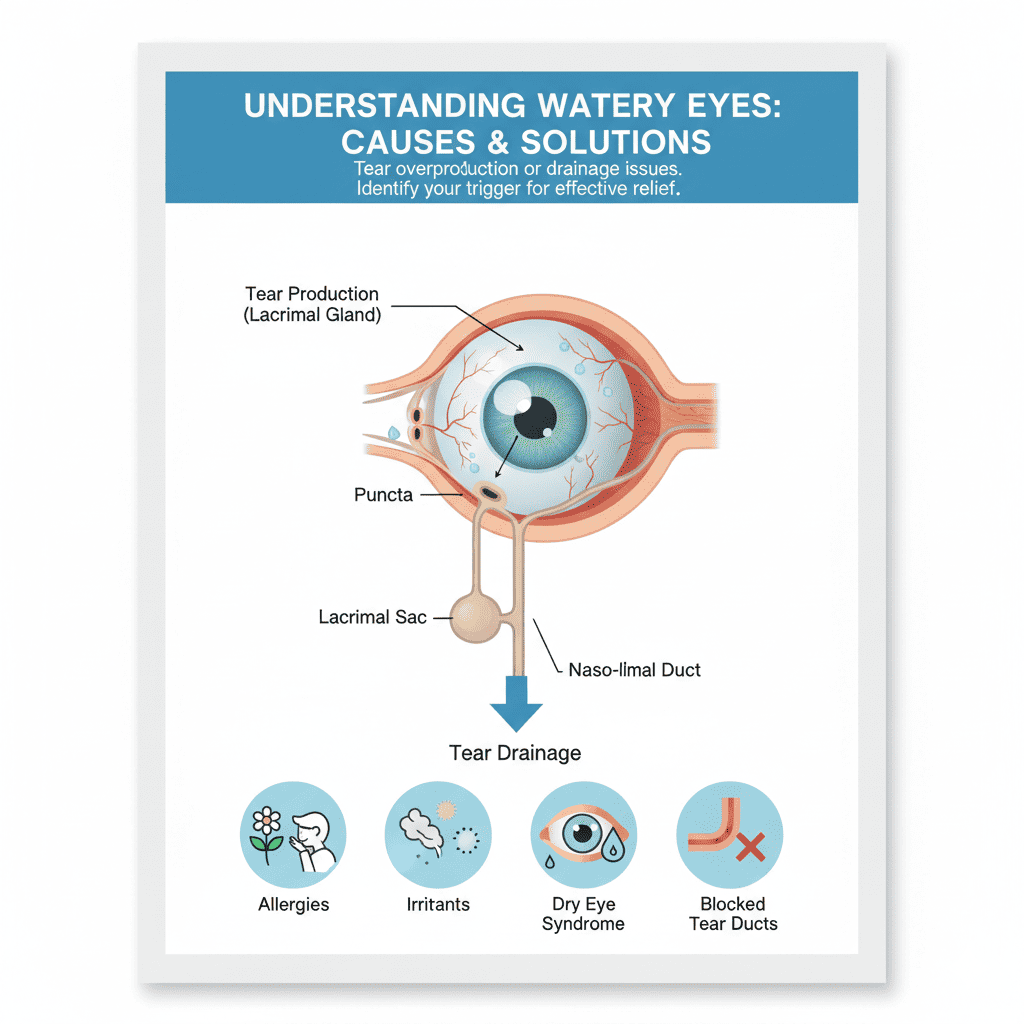
Common Watery Eye Causes and Identification
| Cause Category | Common Triggers | Symptoms | Immediate Actions |
|---|---|---|---|
| Environmental | Wind, smoke, bright light | Sudden tearing, mild irritation | Remove from trigger, use sunglasses |
| Allergies | Pollen, dust, pet dander | Itchy eyes, sneezing, nasal congestion | Antihistamine drops, avoid allergens |
| Dry Eye Syndrome | Screen time, aging, medications | Alternating dryness and tearing | Artificial tears, blink exercises |
| Infections | Conjunctivitis, blepharitis | Redness, discharge, pain | Warm compresses, medical consultation |
| Blocked Tear Ducts | Aging, injury, inflammation | Constant tearing, crusting | Massage technique, medical evaluation |
| Eyelid Problems | Ectropion, entropion | Irritation, redness | Proper eyelid hygiene, professional help |
Watery eyes stem from two main problems: excessive tear production or inadequate tear drainage. Your eyes naturally produce tears to lubricate and protect themselves. When they encounter irritants like smoke, wind, or allergens, they produce extra tears as a defense mechanism. This is why your eyes water when you chop onions or step outside on a windy day. Allergies represent another common trigger – when pollen or dust enters your eyes, your body releases histamines that cause itching and increased tear production. Interestingly, dry eye syndrome can also cause watery eyes. When your eyes become too dry, they may overcompensate by producing excessive tears of poor quality that don’t properly lubricate. Eye infections like conjunctivitis or blepharitis irritate the eye surface, leading to tearing as part of the inflammatory response. Structural issues like blocked tear ducts prevent proper drainage, causing tears to overflow. Eyelid problems such as ectropion (outward turning) or entropion (inward turning) can disrupt the normal tear film. Identifying your specific trigger involves noting when the watering occurs, what makes it better or worse, and any accompanying symptoms like itching, redness, or pain.
How Effective Are Warm Compresses for Immediate Watery Eye Relief?
Warm compresses provide one of the fastest and most natural ways to soothe watery eyes, especially when caused by blocked glands or mild irritation.
Warm compresses work by melting blocked oils in eyelid glands, improving tear quality, and soothing irritation. Applying a clean, warm cloth for 5-10 minutes can provide immediate relief from watery eyes caused by blepharitis or dry eye.
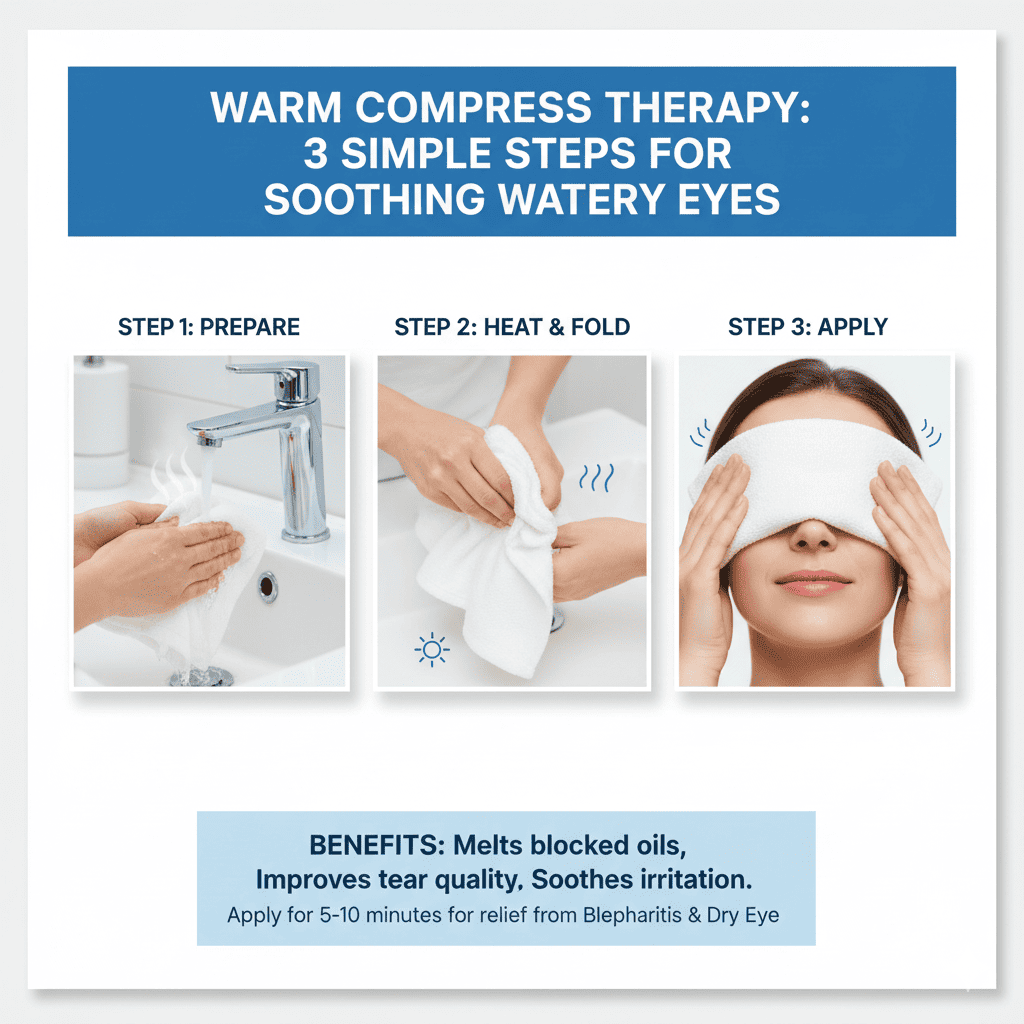
Warm Compress Application Guide
| Compress Type | Temperature | Duration | Frequency | Best For |
|---|---|---|---|---|
| Wet Cloth | Warm, not hot | 5-10 minutes | 2-4 times daily | General irritation, mild dryness |
| Microwaveable Mask | Controlled heat | 10-15 minutes | 1-2 times daily | Chronic dry eye, meibomian gland issues |
| Rice Sock | Retains heat well | 8-12 minutes | As needed | Quick relief, portable option |
| Tea Bags | Warm, contains tannins | 5-7 minutes | 1-2 times daily | Allergy-related watering, inflammation |
| Gel Pack | Consistent temperature | 10 minutes | 2-3 times daily | Precision application, reusable |
| Steam Treatment | Gentle warmth | 3-5 minutes | Once daily | Sinus-related eye watering, congestion |
Warm compresses offer multiple benefits for watery eyes through different mechanisms of action. The primary function involves melting the hardened oils in your meibomian glands – these tiny glands along your eyelid margins produce the oily layer of your tear film that prevents evaporation. When these glands become blocked, your tears evaporate too quickly, causing dry spots that trigger reflex tearing. The warmth helps liquefy these oils, allowing them to flow properly and stabilize your tear film. Warm compresses also improve blood circulation around your eyes, bringing oxygen and nutrients that promote healing while carrying away irritants. The moist heat soothes inflammation and reduces eyelid swelling that can interfere with proper tear drainage. For allergy-related watery eyes, warmth can help dilute and flush out allergens while providing comforting relief from itching. The application technique matters significantly – you should use a clean cloth soaked in warm water (not hot enough to burn), wring it out thoroughly, and apply it gently to closed eyelids. The ideal temperature is warm enough to feel soothing but comfortable against your skin. Maintain the compress for 5-10 minutes, reheating if necessary. Many people find combining warm compresses with gentle eyelid massage enhances the benefits by physically expressing the melted oils from the glands. This combination approach often provides immediate relief that lasts for several hours.
Can Artificial Tears Really Stop Watery Eyes Immediately?
Artificial tears might seem counterintuitive for watery eyes, but they play a crucial role in stabilizing the tear film and reducing reflex tearing.
Artificial tears work by supplementing natural tears, improving tear film stability, and reducing the reflex tearing caused by dry spots. Using preservative-free formulations provides immediate relief without irritation.
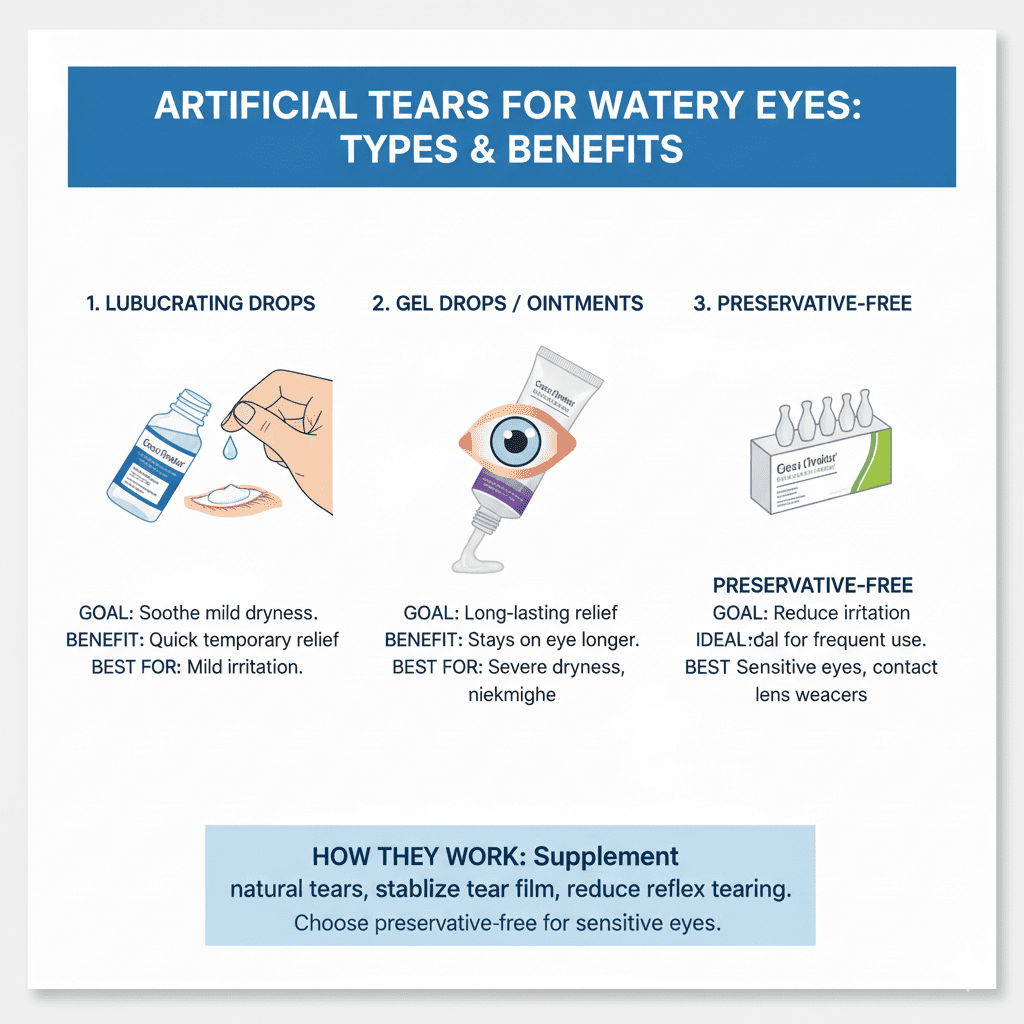
Artificial Tears Selection and Usage Guide
| Tear Type | Key Ingredients | Best For | Application Frequency | Special Considerations |
|---|---|---|---|---|
| Preservative-Free | Basic electrolytes | Frequent use, sensitive eyes | As needed, up to 4-6 times daily | Single-use vials, no irritation |
| Lubricating | Carboxymethylcellulose | Moderate dry eye | 2-4 times daily | Longer lasting, thicker consistency |
| Gel-Based | Carboner, polyacrylic acid | Severe dryness | 1-2 times daily | Blurry vision initially, overnight use |
| Lipid-Based | Mineral oil, castor oil | Evaporative dry eye | 2-3 times daily | Addresses oily layer deficiency |
| Antihistamine | Ketotifen, olopatadine | Allergy-related watering | 2 times daily | Reduces itching and inflammation |
| Vasoconstrictor | Naphazoline, tetrahydrozoline | Redness with watering | Limited use | Temporary relief, rebound redness risk |
Artificial tears serve multiple purposes in managing watery eyes, particularly when the watering stems from dry eye syndrome. Many people don’t realize that excessive tearing can actually be a symptom of dryness. When certain areas of your eye surface become too dry, they send distress signals to your brain, triggering reflex tearing. These emergency tears are mostly water with insufficient oils and mucin, so they don’t properly lubricate the eye and simply overflow. Artificial tears work by supplementing your natural tear film with the missing components. Preservative-free artificial tears are ideal for frequent use because they lack chemicals that can irritate sensitive eyes with prolonged use. They typically contain electrolytes that mimic natural tears and help maintain corneal health. Lubricating artificial tears with ingredients like carboxymethylcellulose provide longer-lasting relief by creating a protective layer over the eye surface. Gel-based tears offer even more substantial coating for severe dryness but may cause temporary blurring. Lipid-based artificial tears specifically address evaporative dry eye by supplementing the oily layer that prevents tear evaporation. For allergy-related watery eyes, antihistamine artificial tears provide dual action by relieving itching while stabilizing the tear film. It’s crucial to apply artificial tears correctly – tilt your head back, pull down your lower eyelid, and instill one drop into the pocket rather than directly onto the cornea. Wait a few minutes between different eye drop medications if using multiple products. Many people find that regular use of appropriate artificial tears significantly reduces episodes of reflex tearing.
What Role Do Antihistamine Eye Drops Play in Stopping Watery Eyes?
Antihistamine eye drops provide targeted relief for allergy-related watery eyes by blocking the chemical reactions that trigger excessive tearing.
Antihistamine eye drops work by blocking histamine receptors in the eyes, reducing itching, inflammation, and tear production. They provide fast relief within 10-15 minutes for allergy-induced watery eyes.
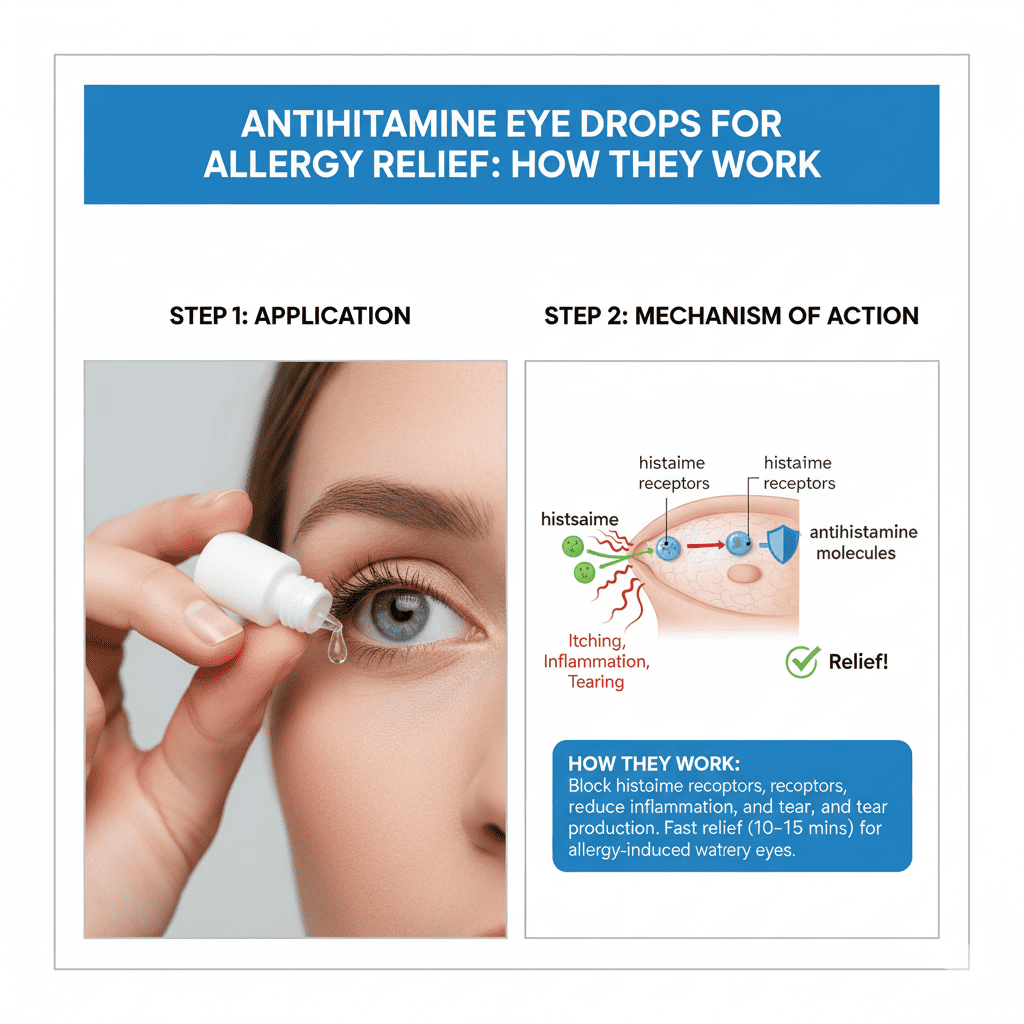
Antihistamine Eye Drops Comparison
| Medication Type | Active Ingredient | Onset of Action | Duration | Special Features |
|---|---|---|---|---|
| Fast-Acting | Ketotifen fumarate | 10-15 minutes | 8-12 hours | Dual action, mast cell stabilization |
| Long-Lasting | Olopatadine | 15-30 minutes | 16-24 hours | Once-daily dosing, potent relief |
| Multi-Action | Azelastine | 10-15 minutes | 8-12 hours | Additional anti-inflammatory effects |
| OTC Options | Pheniramine/naphazoline | 5-10 minutes | 4-6 hours | Vasoconstrictor combination |
| Prescription | Bepotastine | 15-20 minutes | 12-24 hours | Minimal side effects |
| Natural Alternatives | Homeopathic formulations | Varies | Varies | Gentle approach, fewer side effects |
Antihistamine eye drops target the specific mechanism behind allergy-related watery eyes. When allergens like pollen, dust, or pet dander contact your eyes, they trigger mast cells in the conjunctiva to release histamine and other inflammatory chemicals. Histamine binds to receptors in your eye tissues, causing blood vessels to dilate (redness), nerve endings to become irritated (itching), and tear production to increase dramatically. Antihistamine drops work by competitively binding to these histamine receptors, blocking the allergic response. Fast-acting formulations like ketotifen begin working within 10-15 minutes and provide relief for 8-12 hours. These medications often have dual action – they not only block histamine receptors but also stabilize mast cells to prevent future histamine release. Long-lasting options like olopatadine offer once-daily convenience with potent, extended relief. Multi-action drops may combine antihistamine properties with additional anti-inflammatory effects for comprehensive allergy management. Over-the-counter options typically combine antihistamines with vasoconstrictors to reduce redness quickly, though these should be used sparingly due to rebound redness risk. Prescription antihistamine drops often provide stronger relief with fewer side effects for severe allergies. Natural alternatives include homeopathic formulations that take a gentler approach. Proper application is crucial for effectiveness – wash your hands first, avoid touching the dropper tip to your eye, and wait at least 5 minutes between different eye medications. Many people find that starting antihistamine drops before allergy season or known exposure provides better prevention of watery eyes.
How Can Eyelid Hygiene Help Control Watery Eyes?
Proper eyelid hygiene addresses the root causes of many watery eye conditions by maintaining healthy eyelid function and preventing irritation.
Eyelid hygiene reduces watery eyes by removing irritants, unblocking oil glands, and preventing infections. Daily cleaning with warm water and gentle cleansers maintains eyelid health and proper tear function.
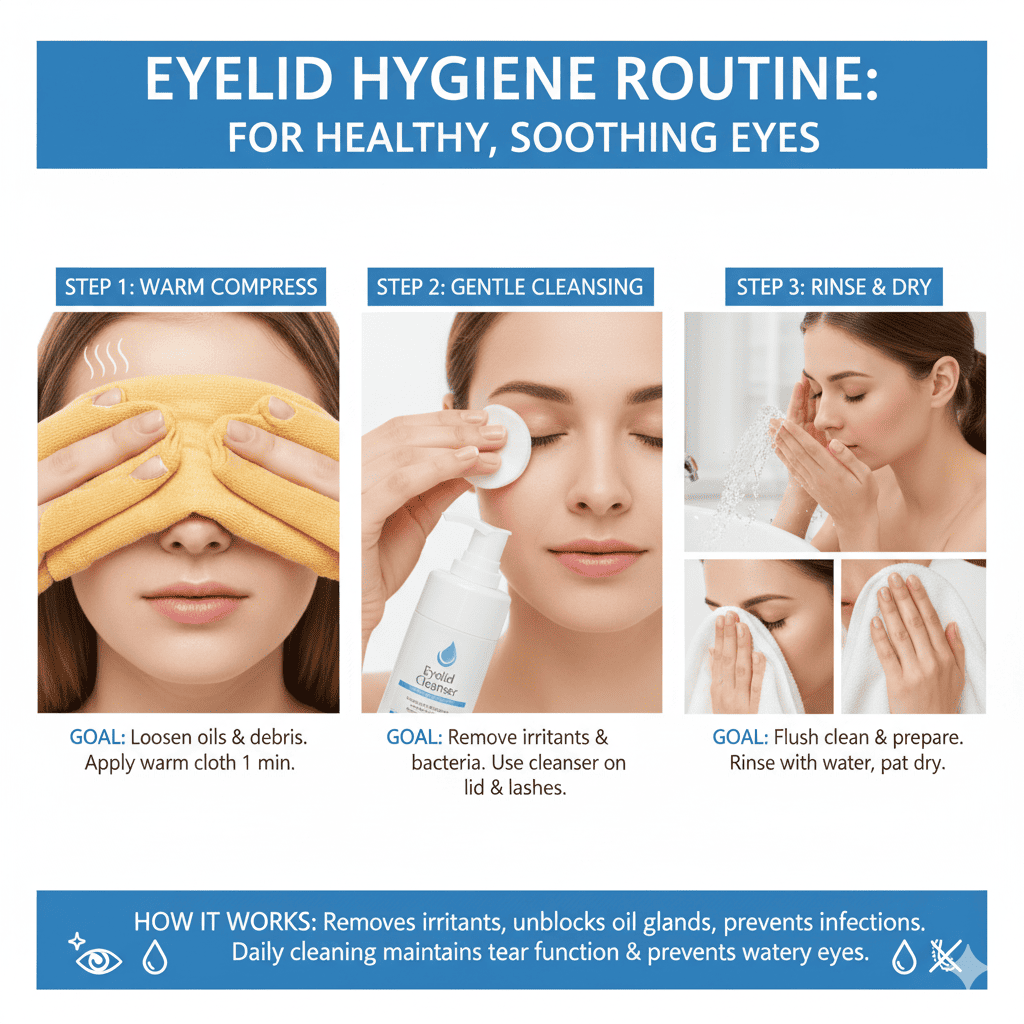
Eyelid Hygiene Practices for Watery Eye Control
| Hygiene Practice | Tools Needed | Frequency | Technique | Benefits |
|---|---|---|---|---|
| Lid Scrubs | Pre-moistened pads, dilute baby shampoo | Twice daily | Gentle edge cleaning | Removes debris, reduces bacteria |
| Warm Compresses | Clean cloth, warm water | 1-2 times daily | 5-10 minute application | Unblocks glands, improves oil flow |
| Eyelid Massage | Clean fingers | After warm compress | Gentle pressure downward | Expresses blocked glands |
| Makeup Removal | Oil-free remover, cotton pads | Every night | Gentle sweeping motions | Prevents pore blockage |
| Lash Cleaning | Gentle cleanser, soft brush | Daily | Base cleaning | Removes allergens, bacteria |
| Avoiding Eye Rubbing | Consciousness | Always | Use cold compress instead | Prevents irritation spread |
Eyelid hygiene forms the foundation of managing many types of watery eyes, particularly those related to blepharitis, dry eye, and allergies. Your eyelids play a crucial role in tear production and distribution – they contain the meibomian glands that produce the oily layer of your tear film and help spread tears evenly across your eye surface. When eyelids become inflamed or infected (blepharitis), they can’t perform these functions properly, leading to unstable tears that either evaporate too quickly or overflow. Daily lid scrubs using pre-moistened pads or dilute baby shampoo remove crusting, bacteria, and excess oils that contribute to inflammation. The technique involves closing your eyes and gently scrubbing the base of your eyelashes using horizontal motions. Warm compresses preceding lid hygiene help soften debris and open blocked glands. Eyelid massage after warming involves applying gentle pressure to the eyelids to express the melted oils from meibomian glands. Proper makeup removal is essential – sleeping with eye makeup can clog glands and harbors bacteria. Use oil-free removers and avoid waterproof formulas that require harsh rubbing. Regular lash cleaning prevents the accumulation of allergens and irritants that trigger watering. Perhaps most importantly, avoiding eye rubbing prevents mechanical irritation and the spread of allergens across the eye surface. Instead of rubbing, use a cold compress to soothe itching. Many people find that establishing a consistent eyelid hygiene routine significantly reduces both the frequency and severity of watery eye episodes.
What Environmental Changes Can Provide Immediate Watery Eye Relief?
Modifying your environment offers immediate relief from watery eyes by removing or reducing exposure to triggers that stimulate excessive tear production.
Environmental adjustments like using humidifiers, wearing sunglasses, avoiding wind exposure, and controlling allergens can provide immediate relief from watery eyes by eliminating triggering factors.
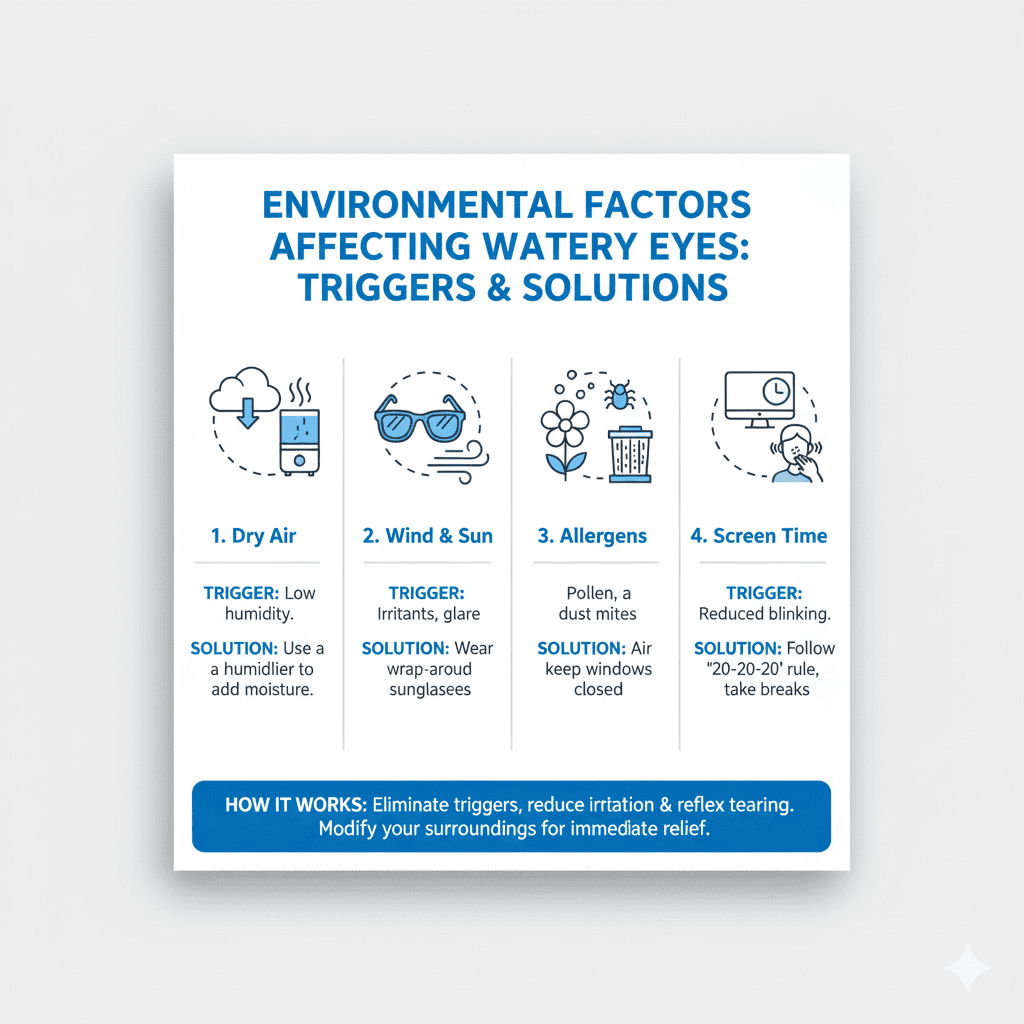
Environmental Modification Strategies
| Environmental Factor | Problem | Immediate Solution | Long-Term Prevention |
|---|---|---|---|
| Dry Air | Increased evaporation | Use humidifier, blink frequently | Maintain 40-60% humidity |
| Wind Exposure | Physical irritation | Wear wrap-around sunglasses | Avoid windy conditions |
| Allergens | Histamine release | Close windows, use air purifier | Regular cleaning, allergy control |
| Screen Time | Reduced blinking | 20-20-20 rule, artificial tears | Proper screen positioning |
| Smoke/Irritants | Direct irritation | Leave area, use protective eyewear | Avoid smoking areas |
| Bright Light | Photophobia | Polarized sunglasses, dim lights | Light sensitivity management |
Environmental factors represent some of the most common and easily addressed causes of watery eyes. Dry indoor air, common in heated or air-conditioned spaces, accelerates tear evaporation, leading to dry spots that trigger reflex tearing. Using a humidifier to maintain 40-60% humidity provides immediate relief by stabilizing the tear film. Wind exposure physically irritates the eye surface and accelerates evaporation – wearing wrap-around sunglasses outdoors creates a protective barrier. For allergy sufferers, environmental control is crucial. Keeping windows closed during high pollen seasons, using high-efficiency particulate air (HEPA) filters, and regular cleaning reduce allergen exposure. Digital eye strain from prolonged screen use reduces blink rate by up to 60%, causing incomplete blinking that doesn’t properly spread tears. Following the 20-20-20 rule (looking 20 feet away for 20 seconds every 20 minutes) and conscious blinking exercises help maintain proper tear distribution. Smoke and chemical irritants directly stimulate tear production as a protective mechanism – removing yourself from these environments or using protective eyewear provides immediate relief. Bright light can cause photophobia-related tearing in some individuals – polarized sunglasses and adjusting lighting conditions help manage this sensitivity. Many people find that simple environmental modifications, like positioning computer screens slightly below eye level to reduce exposed eye surface, make a significant difference. Carrying preservative-free artificial tears for quick relief when environmental triggers are unavoidable provides an additional safety net.
When Should You Seek Medical Help for Watery Eyes?
While most watery eyes respond to home remedies, certain symptoms indicate the need for professional medical evaluation to rule out serious conditions.
Seek medical help for watery eyes if you experience pain, vision changes, eye injury, persistent symptoms despite treatment, or signs of infection like yellow discharge. Professional evaluation ensures proper diagnosis and treatment.
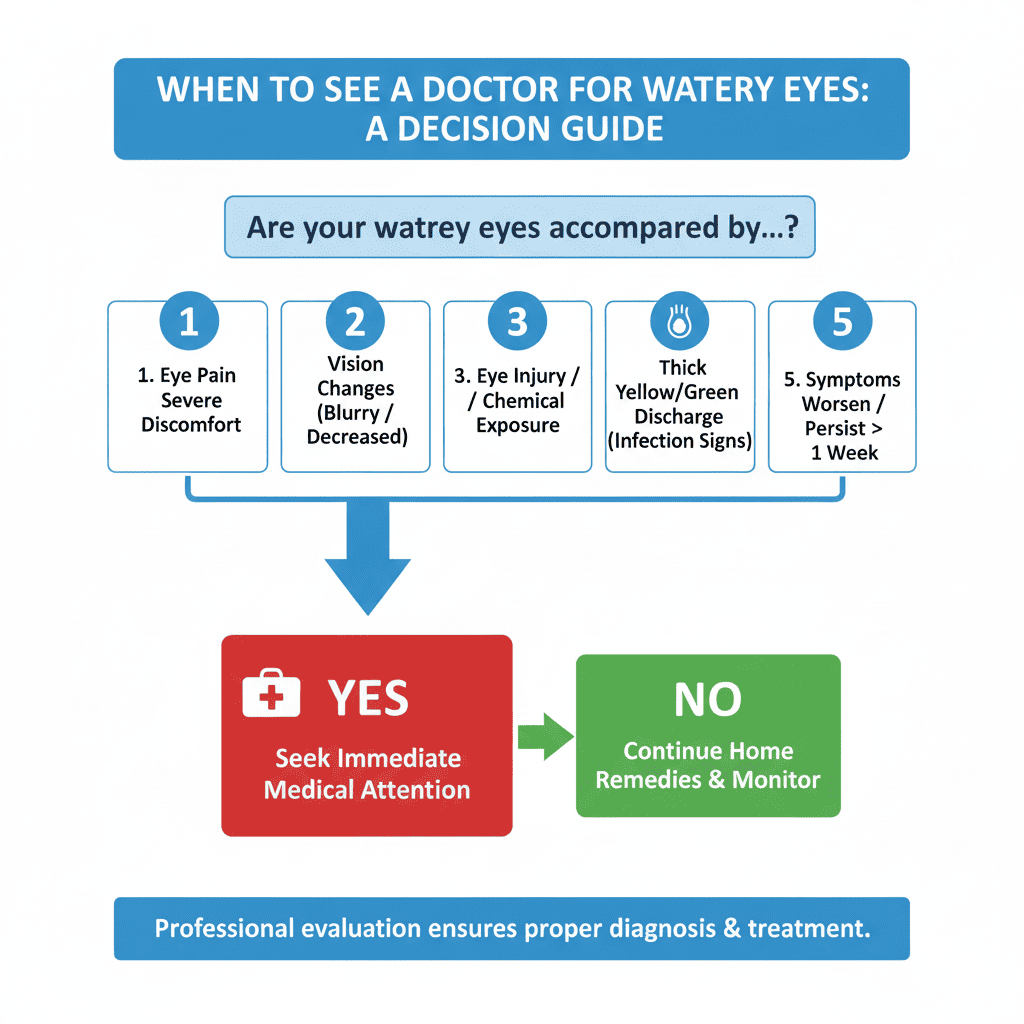
Medical Evaluation Indicators and Actions
| Symptom Pattern | Possible Conditions | Urgency | Recommended Action |
|---|---|---|---|
| Persistent Watering1 | Blocked tear duct, eyelid issues | Schedule appointment | Comprehensive eye exam |
| Pain with Watering2 | Glaucoma, corneal abrasion | Immediate care | Emergency evaluation |
| Vision Changes3 | Serious conditions | Urgent | Same-day appointment |
| Eye Injury | Trauma complications | Emergency | Immediate medical attention |
| Yellow/Green Discharge4 | Bacterial infection | Within 24 hours | Antibiotic treatment |
| No Improvement | Underlying conditions | 1-2 weeks | Specialist referral |
While most cases of watery eyes are bothersome rather than dangerous, certain symptoms warrant prompt medical attention. Persistent watering despite trying home remedies for 1-2 weeks suggests an underlying issue that requires professional diagnosis. Conditions like blocked tear ducts, eyelid malpositions, or neurological problems need specialized evaluation. Pain accompanying watery eyes raises concern for more serious conditions like acute glaucoma, corneal abrasions, or uveitis. These require immediate medical attention to prevent vision loss. Any vision changes – whether blurriness, double vision, or light sensitivity – should prompt urgent evaluation to rule out serious neurological or ocular conditions. Recent eye injury with accompanying watering needs immediate assessment to check for penetrating injuries or foreign bodies. Signs of infection, such as yellow or green discharge, crusting, and redness, indicate bacterial conjunctivitis requiring antibiotic treatment. Systemic symptoms like fever, facial pain, or headache accompanying watery eyes may suggest sinus infections or other medical conditions. Children with persistent watery eyes, especially infants, should be evaluated for congenital tear duct obstruction. Older adults with new-onset watery eyes need assessment for age-related changes or neurological conditions. People with known autoimmune diseases or those taking medications that affect tear production should discuss persistent watering with their healthcare providers. Remember that sudden onset of watering in one eye, especially if accompanied by other neurological symptoms, could indicate Bell’s palsy or other nerve issues. When in doubt, it’s always better to seek professional evaluation than to risk missing a serious condition.
Conclusion
Quick relief from watery eyes is achievable through targeted remedies like warm compresses, artificial tears, and environmental adjustments while addressing underlying causes for lasting solutions.
-
Explore this link to understand the underlying issues and treatments for persistent watering, ensuring you get the right care. ↩
-
This resource will guide you on the urgent steps to take if you’re experiencing pain with watering, helping to prevent serious complications. ↩
-
Learn about the serious conditions linked to vision changes and why immediate evaluation is crucial for your eye health. ↩
-
Discover the implications of yellow/green discharge and the necessary treatments to address potential infections effectively. ↩