Skip to content
The beauty industry continues to boom globally, creating massive opportunities in lash extension wholesale distribution. Entrepreneurs are finding profitable niches in supplying quality products to beauty professionals.
Lash extension supply business opportunities focus on wholesale distribution to salons, technicians, and retailers. Key opportunities include private label manufacturing, B2B wholesale partnerships, dropshipping models, and e-commerce distribution targeting growing demand for professional lash products.

After building UBLash into an international wholesale business, I’ve identified the most promising distribution opportunities. This guide reveals profitable paths for entrepreneurs entering the lash supply market.
What Are the Most Profitable Lash Distribution Business Models?
Understanding different distribution models helps entrepreneurs choose the right path for their skills and resources. Each model offers unique advantages and challenges.
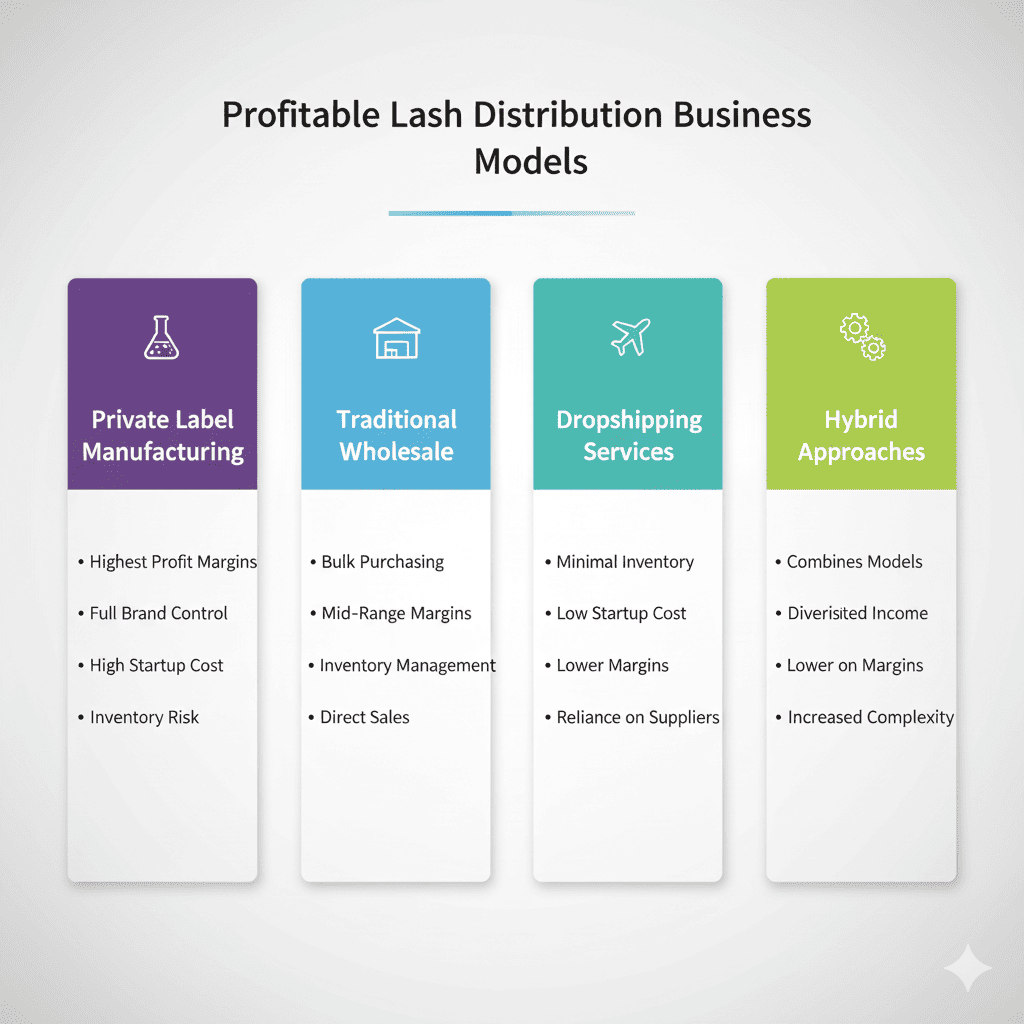
The most profitable lash distribution models include private label manufacturing, traditional wholesale, dropshipping services, and hybrid approaches. Private label offers highest margins while dropshipping requires minimal inventory investment.
Detailed Analysis of Distribution Models
| Business Model | Investment Required | Profit Margins | Scalability | Target Customers |
|---|---|---|---|---|
| Private Label | Medium-high | 60-80% | Gradual growth | Salons, retailers |
| Traditional Wholesale | Medium | 30-50% | Moderate | Beauty stores |
| Dropshipping | Low | 20-35% | Highly scalable | Individual techs |
| Hybrid Model | Variable | 40-60% | Flexible | Multiple segments |
| Direct Import | High | 50-70% | Limited | Large retailers |
Private label manufacturing stands out as the most profitable model with 60-80% margins. This involves partnering with manufacturers like UBLash to create custom-branded products with your labels. The initial investment covers minimum order quantities and branding costs, but returns are substantial once established. Traditional wholesale offers more immediate revenue with existing brand products, though margins typically range 30-50%. This model requires maintaining inventory and managing logistics but provides steady cash flow. Dropshipping minimizes risk by eliminating inventory needs – you simply forward orders to manufacturers who ship directly to customers. Margins are lower at 20-35%, but scalability is almost unlimited. Hybrid models combine elements of multiple approaches, allowing flexibility to serve different customer segments simultaneously. Direct import involves purchasing large quantities directly from factories overseas, requiring significant capital but offering 50-70% margins for those who can handle international logistics and quality control. Each model suits different entrepreneurial profiles – private label works well for brand builders, wholesale fits established sales professionals, dropshipping appeals to digital marketers, and direct import benefits experienced importers. The key is matching the model to your strengths, resources, and market connections.
How Do You Source Quality Lash Products for Wholesale Distribution?
Product sourcing determines your business reputation and profitability. Quality consistency separates successful distributors from short-term operators.
Quality lash product sourcing requires vetting manufacturers’ certifications, testing product samples, negotiating MOQs, securing supply contracts, and establishing quality control protocols. Focus on medical-grade materials, consistent production standards, and reliable delivery timelines.

Comprehensive Sourcing Strategy Framework
| Sourcing Factor | Quality Standards | Verification Methods | Risk Management | Cost Considerations |
|---|---|---|---|---|
| Manufacturer Vetting | ISO certifications | Factory audits | Multiple suppliers | Payment terms |
| Product Testing | Material safety | Sample evaluation | Batch testing | Quality vs price |
| MOQ Negotiation | Minimum quantities | Volume discounts | Gradual scaling | Cash flow impact |
| Supply Contracts | Delivery guarantees | Legal protection | Penalty clauses | Long-term pricing |
| Quality Control | Consistent standards | Inspection protocols | Rejection rights | Additional costs |
Sourcing quality lash products begins with thorough manufacturer vetting. Look for suppliers with ISO certifications for medical devices or beauty products, as these indicate established quality systems. Always request and test product samples before committing to large orders – evaluate material quality, adhesive performance, packaging durability, and overall craftsmanship. Minimum order quantity (MOQ) negotiations are crucial – while lower MOQs reduce risk, they often come with higher unit prices. Aim for suppliers offering reasonable MOQs that align with your sales projections and budget. Supply contracts should clearly outline delivery timelines, quality standards, payment terms, and dispute resolution procedures. Quality control protocols must be established upfront – this includes pre-shipment inspections, batch testing requirements, and procedures for handling defective products. Material quality is non-negotiable – seek suppliers using medical-grade synthetic fibers, hypoallergenic adhesives, and safety-tested components. Production consistency matters more than occasional perfection – look for manufacturers with stable production processes rather than those producing exceptional samples but inconsistent bulk orders. Delivery reliability impacts your customer relationships – choose suppliers with proven track records of meeting deadlines. Payment security is equally important – use secure payment methods and consider using escrow services for new supplier relationships. Regular supplier evaluations help maintain quality standards as your business grows.
What Markets Offer the Best Opportunities for Lash Distribution?
Market selection dramatically impacts business success. Different regions offer varying growth rates, competition levels, and profitability potential.
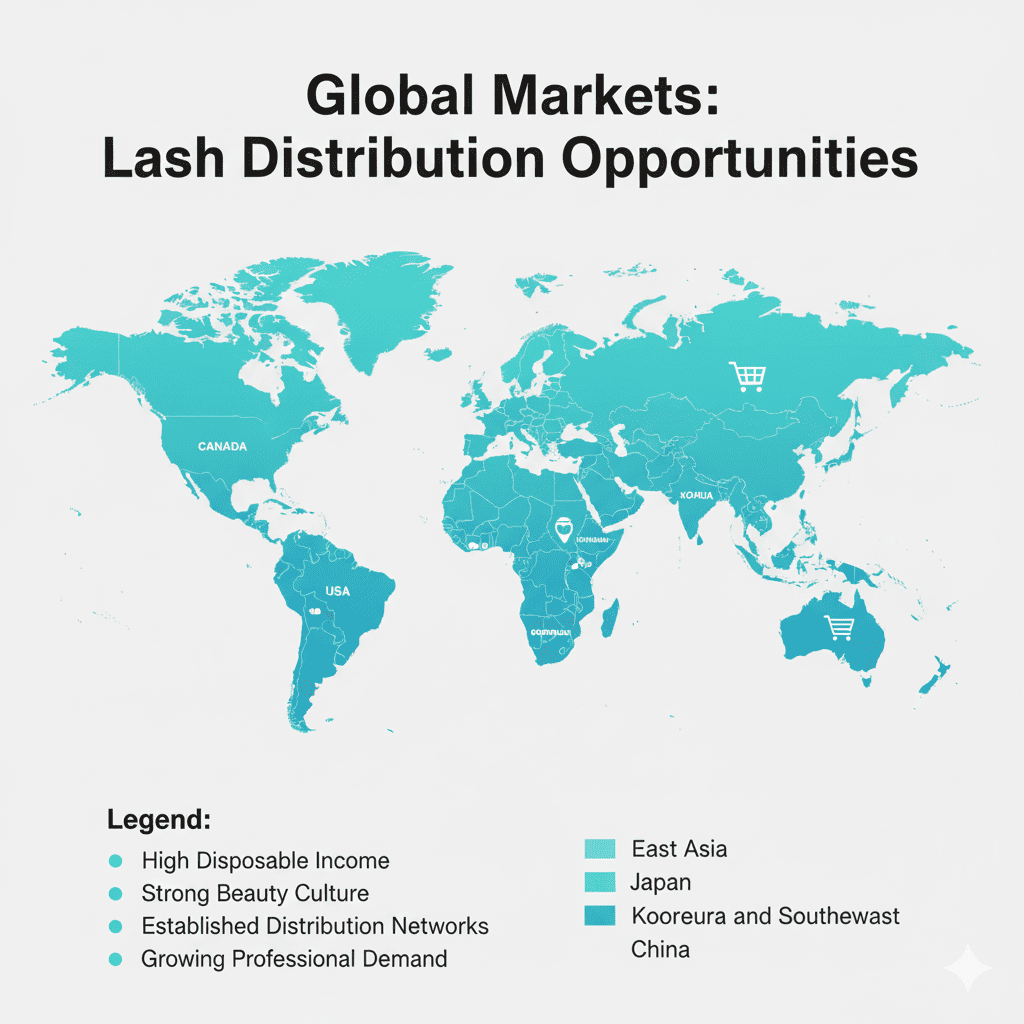
The best markets for lash distribution include North America, Europe, Australia, and emerging Asian markets. Factors favoring these markets include high disposable income, strong beauty culture, established distribution networks, and growing professional lash service demand.
Market Opportunity Analysis by Region
| Market Region | Growth Rate | Competition Level | Regulatory Environment | Distribution Channels |
|---|---|---|---|---|
| North America | 15-20% annually | Moderate | Strict regulations | Diverse options |
| Europe | 12-18% annually | Medium-high | Varies by country | Established networks |
| Australia | 18-25% annually | Low-medium | Stringent standards | Limited but growing |
| Asia Pacific | 25-30% annually | High | Developing | E-commerce focused |
| Middle East | 20-28% annually | Low | Cultural factors | Luxury-oriented |
North America presents substantial opportunities with 15-20% annual growth in the lash industry. The market benefits from high disposable income, strong beauty culture, and established professional standards. Competition exists but focuses mainly on major urban centers, leaving suburban and rural areas underserved. Europe offers diverse opportunities across different countries – Western Europe has mature markets with steady growth, while Eastern Europe shows faster expansion. Regulatory environments vary significantly, requiring tailored approaches for each country. Australia stands out with 18-25% annual growth and relatively lower competition compared to North American markets. The country’s regulatory standards are stringent but create barriers that limit competition from low-quality imports. Asia Pacific represents the fastest-growing region with 25-30% annual expansion, particularly in markets like South Korea, Japan, and Southeast Asia. Competition is intense but opportunities abound in the rapidly growing middle class. The Middle East offers unique opportunities with 20-28% growth driven by luxury beauty spending and cultural emphasis on eye beauty. Market selection should align with your expertise, language capabilities, and distribution connections. Emerging markets offer faster growth but higher risks, while mature markets provide stability but slower expansion. Consider starting with markets where you have existing connections or cultural understanding before expanding internationally.
How Much Capital Do You Need to Start a Lash Distribution Business?
Capital requirements vary significantly by business model and scale. Proper funding ensures sustainable growth without premature cash flow challenges.
Starting capital requirements range from $5,000 for dropshipping to $50,000+ for private label manufacturing. Major cost categories include inventory investment, marketing budget, operational expenses, legal fees, and contingency funds for unexpected costs.
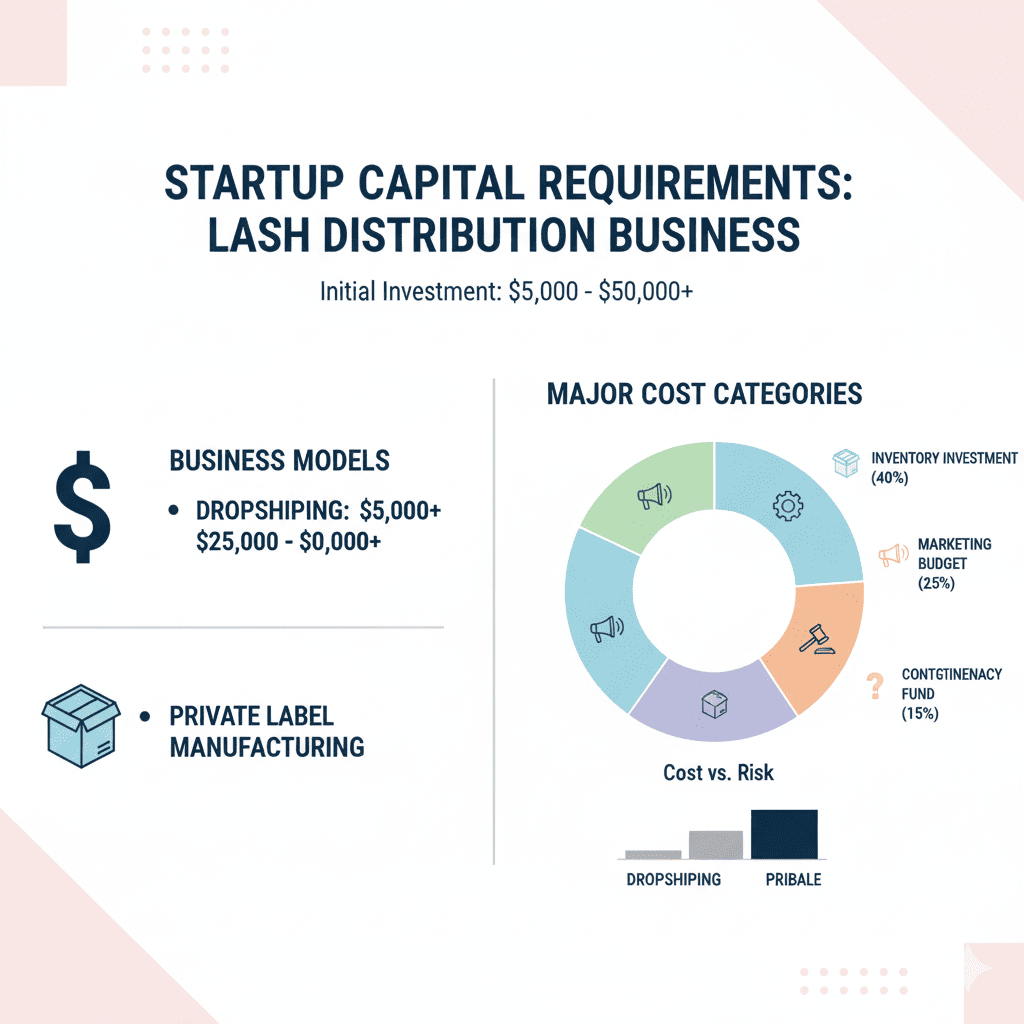
Detailed Capital Requirement Breakdown
| Expense Category | Dropshipping Model | Wholesale Model | Private Label | Direct Import |
|---|---|---|---|---|
| Initial Inventory | $500-2,000 | $10,000-25,000 | $15,000-40,000 | $30,000-75,000 |
| Marketing Budget | $2,000-5,000 | $5,000-15,000 | $8,000-20,000 | $10,000-25,000 |
| Operational Costs | $1,000-3,000 | $3,000-8,000 | $5,000-12,000 | $8,000-18,000 |
| Legal & Licensing | $500-1,500 | $1,500-3,000 | $2,000-5,000 | $3,000-7,000 |
| Contingency Fund | $1,000-2,000 | $3,000-6,000 | $5,000-10,000 | $8,000-15,000 |
Capital requirements depend heavily on your chosen business model. Dropshipping requires minimal inventory investment ($500-2,000) since you only purchase products after receiving customer orders. Marketing becomes the primary expense ($2,000-5,000) to drive traffic and conversions. Traditional wholesale demands significant inventory investment ($10,000-25,000) to maintain adequate stock levels across product categories. Marketing budgets ($5,000-15,000) support reaching salon owners and beauty retailers through trade shows and industry events. Private label manufacturing involves higher upfront costs ($15,000-40,000) covering MOQs, custom packaging, and branding development. Marketing investment ($8,000-20,000) focuses on building brand awareness and securing distribution partnerships. Direct import requires the largest capital outlay ($30,000-75,000) for container shipments, customs duties, and warehousing. Operational costs include website development, e-commerce platforms, payment processing, shipping supplies, and office expenses. Legal and licensing fees cover business registration, trademark protection, insurance, and compliance requirements. The contingency fund (typically 15-20% of total budget) provides buffer for unexpected expenses like shipping delays, currency fluctuations, or market changes. Bootstrapping options exist for those with industry connections – starting with consignment arrangements or pre-orders can reduce initial capital needs. Consider phased funding approaches where you start with a smaller product range and expand as revenue grows.
What Marketing Strategies Work Best for Lash Distribution Businesses?
Effective marketing separates successful distributors from those struggling to find customers. The right strategies target your specific customer segments efficiently.
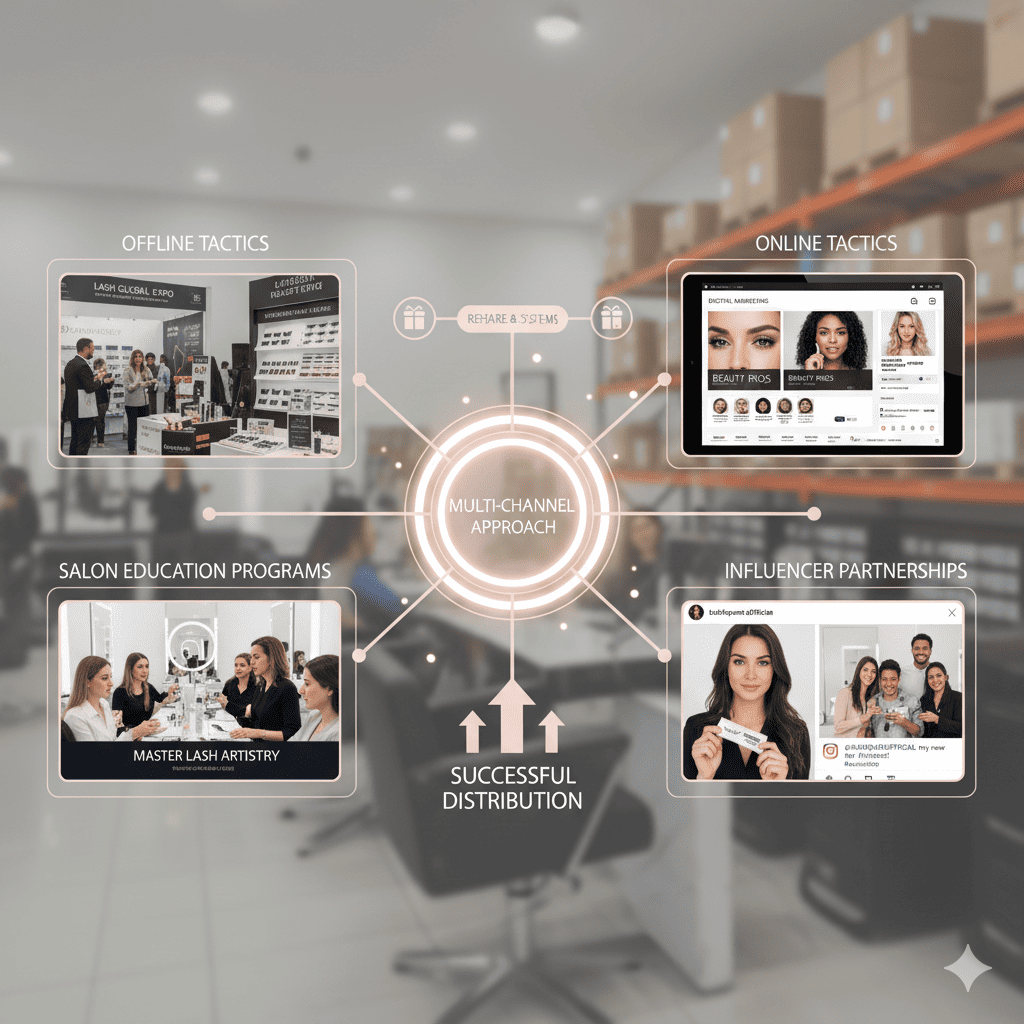
The most effective marketing strategies include trade show participation, digital marketing targeting beauty professionals, influencer partnerships, salon education programs, and referral systems. Multi-channel approaches combining online and offline tactics deliver the best results.
Comprehensive Marketing Strategy Framework
| Marketing Channel | Target Audience | Cost Effectiveness | Implementation Complexity | Measurable Results |
|---|---|---|---|---|
| Trade Shows | Salon owners, retailers | Medium-high | High | Direct sales leads |
| Digital Marketing | Technicians, buyers | High | Medium | Trackable metrics |
| Influencer Partnerships | End consumers | Variable | Low-medium | Brand awareness |
| Education Programs | Professional techs | High | Medium | Loyalty building |
| Referral Systems | Existing customers | Very high | Low | Cost-effective growth |
Trade show participation remains highly effective for reaching salon owners and beauty retailers directly. Industry events like IECSC, Beautyworld, and regional beauty expos provide face-to-face opportunities to demonstrate product quality and build relationships. Digital marketing targeting beauty professionals through platforms like Instagram, Facebook, and professional beauty networks delivers measurable results. Search engine optimization for terms like "wholesale lash extensions" and "lash supplier" attracts qualified traffic. Influencer partnerships with respected lash technicians and educators build credibility and reach targeted audiences. Compensation can include free products, commissions, or flat fees based on campaign objectives. Salon education programs create loyal customers by providing value beyond product sales. Hosting technical workshops, certification courses, or online training builds community and positions your brand as an industry leader. Referral systems leverage satisfied customers to bring new business through incentives like discounts, free products, or commission payments. Content marketing through blogs, YouTube tutorials, and social media educates potential customers while demonstrating expertise. Email marketing nurtures leads through educational content, product updates, and special offers. Public relations efforts securing features in industry publications build brand credibility. Partnership marketing with complementary businesses like lash adhesive manufacturers or beauty equipment suppliers expands reach. The most successful distributors combine multiple channels tailored to their specific customer segments and budget constraints. Regular measurement and optimization ensure marketing investments deliver maximum return.
What Are the Biggest Challenges in Lash Distribution and How to Overcome Them?
Understanding common challenges helps prepare effective solutions before they impact your business operations and profitability.
The biggest challenges include quality consistency issues, inventory management complexities, international logistics hurdles, payment processing risks, and competitive pricing pressures. Overcoming these requires systematic processes, technology solutions, and strategic partnerships.
Challenge Management and Solution Framework
| Common Challenge | Root Causes | Immediate Impacts | Prevention Strategies | Resolution Methods |
|---|---|---|---|---|
| Quality Issues | Supplier inconsistency | Customer complaints | Supplier vetting | Replacement policies |
| Inventory Problems | Demand fluctuations | Stockouts/overstock | Forecasting systems | Just-in-time ordering |
| Logistics Delays | Customs, shipping | Customer dissatisfaction | Multiple carriers | Buffer stock |
| Payment Risks | Fraud, defaults | Cash flow problems | Verification systems | Secure payment methods |
| Price Competition | Market saturation | Margin compression | Value differentiation | Niche targeting |
Quality consistency challenges arise from supplier production variations and material sourcing issues. Prevention starts with rigorous supplier qualification processes and detailed quality specifications. Implement batch testing procedures and maintain samples from each production run for comparison. Develop clear replacement policies for defective products to maintain customer trust. Inventory management complexities stem from demand fluctuations and long lead times. Implement inventory management software with demand forecasting capabilities based on historical sales data and seasonal patterns. Establish safety stock levels for high-turnover items and consider drop-shipping arrangements for slow-moving products. International logistics hurdles include customs clearance delays, shipping cost fluctuations, and documentation requirements. Work with experienced freight forwarders familiar with beauty product regulations. Maintain buffer inventory to cover unexpected delays and offer multiple shipping options at different price points. Payment processing risks involve fraudulent orders, chargebacks, and collection challenges. Implement address verification systems, require signatures for high-value deliveries, and use secure payment gateways with fraud detection. Consider offering multiple payment methods to accommodate different customer preferences while managing risk exposure. Competitive pricing pressures require strategic positioning rather than price-cutting wars. Differentiate through superior customer service, technical support, exclusive products, or faster delivery times. Focus on niche markets where you can establish leadership rather than competing solely on price in crowded segments. Building strong supplier relationships provides access to better pricing and priority treatment during supply constraints. Continuous improvement processes help identify and address challenges before they escalate into major problems.
Conclusion
The lash extension supply business offers substantial opportunities for entrepreneurs who understand distribution models, sourcing quality products, and effective marketing strategies in growing global markets.