Skip to content
I once received a panicked email from Sophie asking if the mink lashes she’d been selling were actually made from real mink fur. Her customers were concerned about animal welfare, and she honestly didn’t know the answer. This confusion happens all the time in the lash industry.
False lashes are primarily made from synthetic materials like PBT (polybutylene terephthalate), silk-like synthetic fibers, or natural materials including mink fur, human hair, and silk. Modern lash extensions predominantly use Korean PBT fiber, which offers durability, flexibility, and consistent quality without animal sourcing.
Understanding what your lashes are actually made of helps you make informed choices about quality, ethics, and performance. Let me break down everything you need to know about lash materials.
The Basics of Lash Composition
The lash industry uses confusing terminology that often misleads consumers. Terms like “silk” and “mink” don’t always mean what you think they mean.
Lash materials fall into two main categories: natural materials derived from animals or humans, and synthetic materials manufactured from plastic polymers. The terms “silk,” “mink,” and “faux mink” often describe texture and appearance rather than actual material composition.

What Are Lashes Made Of?
Your natural eyelashes consist of keratin, the same protein that makes up your hair and nails. Each lash grows from a follicle in your eyelid, following a growth cycle that lasts 3-6 months before naturally shedding and regrowing.
Natural lashes contain three layers. The medulla forms the inner core, though some fine lashes lack this layer entirely. The cortex makes up the middle layer, containing melanin that gives your lashes their color. The cuticle covers the outside, protecting the inner layers with overlapping scales.
This structure explains why your natural lashes feel different from any artificial lash material. The scales on the cuticle create a slightly rough texture when you run your fingers down the lash. This natural texture helps mascara adhere but also makes lashes prone to tangling.
What Are Fake Lashes Made Of?
Fake lashes use either animal-derived materials or synthetic polymers. The material affects everything from appearance to durability to price point. Understanding these differences helps you choose products that match your values and performance needs.
Animal-derived options include:
- Mink fur from farm-raised minks
- Silk fibers from silkworm cocoons
- Human hair collected from donors
- Fox fur (less common)
- Horse hair (rarely used now)
Synthetic options include:
- PBT (Polybutylene Terephthalate) – most common for extensions
- Acrylic polymers – used in budget strip lashes
- Synthetic silk – mid-range material
- Synthetic mink – high-quality polymer designed to mimic mink
The shift toward synthetic materials has accelerated in recent years. When I started in this industry, real mink dominated the premium market. Now, advanced synthetic fibers match or exceed natural material performance while addressing ethical concerns.
Understanding Lash Terminology
The lash industry creates confusion by using material names that describe characteristics rather than actual composition. A “silk lash” often contains zero silk. A “mink lash” might be entirely synthetic.
Here’s what these terms actually mean:
| Term | What It Really Means | Actual Material |
|---|---|---|
| Silk Lashes | Semi-matte finish, slight sheen | Usually synthetic PBT or acrylic |
| Mink Lashes | Soft, tapered, natural appearance | Can be real mink or synthetic |
| Faux Mink | Synthetic alternative to real mink | PBT or advanced polymer |
| Synthetic | Generic polymer material | Various plastics, often acrylic |
| Vegan Lashes | No animal products | Synthetic materials only |
This terminology confusion stems from marketing practices. Manufacturers name products based on the look and feel they’re trying to achieve rather than literal material content. Always check product descriptions carefully or ask suppliers directly about actual composition.
Natural Hair Lashes
Natural hair lashes come from animal or human sources. These materials dominated the market before synthetic alternatives improved enough to compete on quality.
Natural hair lashes offer unique softness and taper but come with ethical concerns, higher costs, inconsistent quality, and shorter lifespan compared to synthetic options. They work best for clients seeking the most natural appearance possible.
What Are Mink Lashes Made Of?
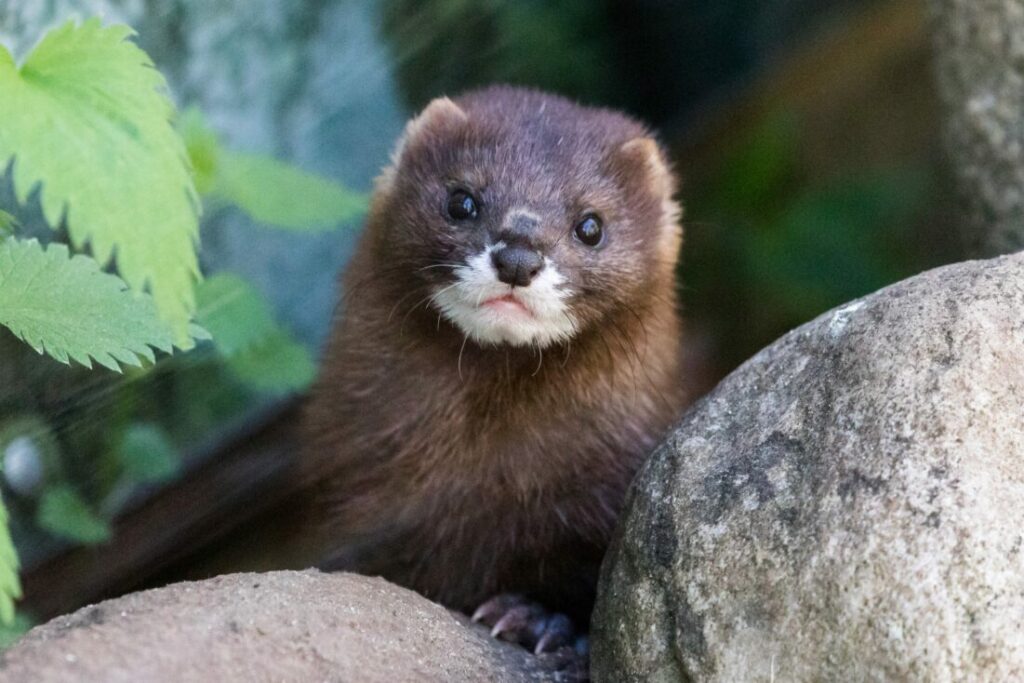
Real mink lashes come from the tail fur of Siberian or Chinese minks. Farms raise these animals primarily for their fur, which gets harvested through brushing during shedding season or after the animal is killed for fur coats.
The harvesting process varies by farm. Some farms claim to brush minks gently and collect naturally shed fur. Others use fur from animals killed for the broader fur industry. This makes it nearly impossible to verify ethical sourcing claims.
Mink fur has natural taper and varied thickness along each strand. This creates the most realistic-looking extensions because they mimic how natural lashes grow thinner toward the tips. The natural protein structure also gives mink fur a unique softness.
However, mink lashes lose their curl when wet. The protein structure absorbs moisture and relaxes, causing the lash to straighten. This means clients can’t get their mink lashes wet for the first 24-48 hours after application, and the curl gradually loosens over time.
Quality varies significantly between mink sources. Premium mink comes from well-cared-for animals with healthy, shiny fur. Lower-grade mink may feel coarse or brittle. This inconsistency makes quality control challenging for lash businesses.
Human Hair Lashes: Pros and Cons
Human hair lashes use real hair collected from donors, similar to wig production. The hair gets sterilized, processed, and curled to create lash extensions or strip lashes.
These lashes offer incredible naturalness since they’re actual human hair. They can be dyed, permed, and heated just like the hair on your head. This versatility appeals to some clients.
But human hair has significant drawbacks:
- Extremely expensive due to collection and processing costs
- Heavy compared to synthetic alternatives
- Requires more maintenance
- Loses shape quickly
- Can look too thick and blunt at the base
- Limited curl options that hold shape
I rarely see human hair lashes in the market anymore. Synthetic technology has advanced so much that the slight natural advantage of human hair doesn’t justify the cost and maintenance burden. Most suppliers who claimed to offer human hair lashes were actually selling synthetic alternatives anyway.
What Are Faux Mink Lashes Made Of?
Faux mink lashes contain no animal products despite the name. They’re made from advanced synthetic polymers, primarily Korean PBT fiber, engineered to replicate mink fur’s softness and taper.
Modern faux mink actually outperforms real mink in several ways. The synthetic fiber holds its curl even when wet. It’s more durable and lasts longer. The quality stays consistent across batches because manufacturing controls every aspect.
Premium faux mink uses Korean PBT fiber with specific properties:
- 0.03-0.25mm diameter range
- Heat-treated for permanent curl memory
- Matte finish that mimics natural lashes
- Natural taper from base to tip
- Lightweight despite durability
- Hypoallergenic composition
The manufacturing process creates this taper by chemically or mechanically thinning the fiber tip. This gives faux mink the same natural appearance as real mink without ethical concerns.
I always recommend faux mink over real mink to my clients. The performance is identical or better, the price is lower, and you avoid supporting fur farming. Most clients can’t tell the difference between high-quality faux mink and real mink once applied.
Synthetic Lash Materials
Synthetic lashes dominate today’s market across all price points. Understanding different synthetic materials helps you choose the right products for your needs.
Synthetic lash materials range from basic acrylic to advanced PBT fibers. Quality varies dramatically based on polymer type, manufacturing process, and finishing treatments. Premium synthetic lashes now match or exceed natural material performance in every category.
What Are Synthetic Lashes Made Of?
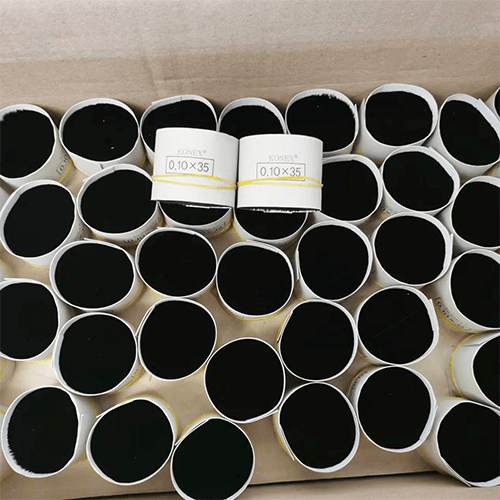
Most synthetic lashes use plastic polymers molded or extruded into fine fibers. The specific polymer affects the lash’s flexibility, durability, and appearance.
Common synthetic materials include:
Acrylic polymers form the base of budget lashes. These fibers are stiff, shiny, and obviously artificial. They hold their shape well but feel uncomfortable and look fake. You’ll find these in drugstore strip lashes priced under $5.
PBT (Polybutylene Terephthalate) represents the premium synthetic option. This thermoplastic polymer offers excellent memory, flexibility, and durability. Korean and Japanese PBT fibers lead the market in quality. They’re used for professional lash extensions and premium strip lashes.
Polyester fibers sit in the middle range. They’re more flexible than acrylic but less durable than PBT. Many mid-priced strip lashes use polyester because it’s cheaper than PBT while still offering decent quality.
The manufacturing process matters as much as the base material. Premium manufacturers use:
- Multi-stage extrusion for consistent diameter
- Heat treatment for curl memory
- Chemical processing for matte finish
- Precision cutting for clean tips
- Quality control testing at multiple stages
Benefits of Using Synthetic Fibers
Synthetic lashes offer numerous advantages over natural materials. These benefits explain why the industry has shifted heavily toward synthetic options.
Consistency stands out as the biggest advantage. Every fiber from a batch has identical properties. This predictability makes application easier and results more reliable. You never worry about one lash being softer or curlier than another.
Durability exceeds natural materials significantly. Synthetic fibers don’t break down from oils, water, or regular wear. A quality synthetic lash can last 6-8 weeks on a client’s eye, while mink typically needs replacement after 4-5 weeks.
Curl retention remains perfect throughout the lash’s life. The heat-treated curl never loosens, even with daily water exposure. Clients can swim, shower, and cry without losing their curl. This reliability eliminates a major complaint about natural mink lashes.
Cost efficiency benefits everyone in the supply chain. Synthetic fibers cost less to produce than sourcing and processing animal materials. This savings gets passed down, making quality lashes accessible at lower price points.
Hypoallergenic properties prevent reactions in sensitive clients. Natural materials can trigger allergies to animal proteins. Synthetic fibers are chemically inert, reducing allergic reaction risk to nearly zero.
Ethical peace of mind matters to many people. Synthetic lashes require no animal farming or harvesting. Customers who care about animal welfare can use lashes without compromise.
Comparison with Natural Hair Lashes
The gap between synthetic and natural lashes has closed dramatically over the past decade. In some ways, synthetic now performs better than natural.
| Feature | Natural (Mink/Silk/Human) | Synthetic (PBT) |
|---|---|---|
| Softness | Very soft, natural feel | Increasingly soft, nearly identical |
| Taper | Natural, varied | Manufactured, consistent |
| Curl Retention | Poor, loses shape when wet | Excellent, permanent memory |
| Durability | 3-5 weeks typical | 6-8 weeks typical |
| Consistency | Varies by source | Identical across batch |
| Price | $80-$150+ per tray | $15-$60 per tray |
| Allergic Risk | Higher, animal proteins | Lower, inert material |
| Ethical Concerns | Animal welfare questions | None |
| Appearance | Most natural possible | Nearly indistinguishable |
| Maintenance | Higher, special care | Lower, more forgiving |
Natural lashes still edge ahead in one area: the most discerning eye can detect a slight difference in movement and appearance. Real mink moves exactly like natural lashes because it has the same protein structure. But this advantage is so subtle that most people will never notice it.
For professional lash extensions, I recommend synthetic PBT fiber without hesitation. The performance advantages outweigh any minor aesthetic difference. For clients who specifically want natural materials and understand the limitations, mink remains an option.
Lash Extension Types
Lash extensions use specific materials optimized for semi-permanent wear. Understanding these materials helps you choose the right products for your services.
Professional lash extensions predominantly use Korean PBT fiber in diameters ranging from 0.03mm to 0.25mm. Different curl patterns, lengths, and thickness options create various looks from natural to dramatic without changing the base material.

What Are Lash Extensions Made Of?
Professional lash extensions almost exclusively use PBT fiber now. The material’s properties make it ideal for semi-permanent attachment to natural lashes.
Korean PBT fiber leads the market due to superior quality control. South Korean manufacturers have perfected the extrusion process to create fibers with perfect consistency. Each fiber has identical:
- Diameter throughout its length
- Curl pattern
- Flexibility
- Weight
- Taper angle
- Surface finish
This consistency matters enormously during application. Technicians can predict exactly how each lash will perform. The client’s results look uniform and professional.
Chinese manufacturers also produce PBT fiber, with quality ranging from poor to excellent. Premium Chinese PBT approaches Korean quality at lower cost. Budget options suffer from inconsistent diameter and poor curl memory.
The fiber undergoes several processing steps after extrusion:
- Heat treatment to set permanent curl pattern
- Chemical treatment for matte surface finish
- Precision cutting to desired lengths
- Quality inspection for defects
- Sterilization before packaging
Curl patterns include J, B, C, CC, D, DD, L, L+, M, and U. Each serves different eye shapes and desired effects. The heat treatment makes these curls permanent, unlike natural mink that loses curl over time.
Overview of Lash Cluster Materials
Lash clusters use slightly different materials than individual extensions. The bonding base requires specific properties that differ from single fibers.
Most clusters use the same PBT fiber for the lash portions. However, the base where fibers connect uses a different material to create the thick bonding point. This base material is typically:
- Heat-treated PBT formed into a flat or rounded base
- Acrylic polymer for a stiffer attachment point
- Silicone-coated fiber for softer feel against skin
The base material affects how clusters perform. Softer bases feel more comfortable but may not bond as securely. Stiffer bases create stronger attachment but can poke or irritate the eyelid.
What Are Lash Clusters Made Of?
Clusters combine multiple PBT fibers (usually 3-10) bonded together at a shared base. The manufacturing process differs from individual extensions.
Manufacturers create clusters by:
- Selecting fibers of uniform length and curl
- Arranging them in the desired fan shape
- Applying bonding agent to create shared base
- Heat-treating the base for permanent shape
- Cutting to final length
- Quality checking for uniformity
The bonding agent used for the base contains cyanoacrylate or similar adhesive that creates a rigid connection point. This differs from the flexible fiber material, creating a distinct texture change between the base and the lashes themselves.
Premium clusters use lightweight fibers (0.05-0.10mm) to minimize weight despite having multiple lashes. Budget clusters often use thicker fibers (0.15-0.20mm) that create heavy, uncomfortable clusters.
The base shape varies by cluster style:
| Base Type | Shape | Best For | Comfort Level |
|---|---|---|---|
| Flat | Thin horizontal strip | Strip application | Medium |
| Rounded | Circular connection | Individual placement | High |
| Knot | Tied appearance | Classic dramatic look | Low |
| Feathered | Spread-out base | Natural blending | High |
The Manufacturing Process
Understanding how lashes are manufactured helps you evaluate quality and identify potential issues.
Lash manufacturing involves fiber extrusion, heat treatment for curl setting, precision cutting, and quality control. Premium manufacturers use automated processes with multiple inspection stages, while budget producers rely more on manual labor with limited quality checks.

How Are Fake Lashes Made?
The manufacturing process varies significantly between strip lashes and individual extensions. Let me walk you through both.
Strip Lash Manufacturing:
Strip lashes begin with fiber selection. Manufacturers choose synthetic fibers in specific diameters and cut them to various lengths. These fibers get arranged on a backing strip in the desired pattern.
Workers or machines apply adhesive to a thin cotton or plastic band. They press individual fibers into this adhesive in predetermined patterns. The lashes might be arranged uniformly or in varied lengths for a more natural appearance.
The adhesive cures for several hours. Then workers inspect each strip for defects, removing any with gaps, loose fibers, or adhesive clumps. Approved strips get packaged forsale.
Premium strip lashes undergo additional processing:
- Hand-knotting for more secure attachment
- Multi-layer construction for dimension
- Graduated length patterns for natural taper
- Invisible band technology for seamless application
- Sterilization before final packaging
Individual Extension Manufacturing:
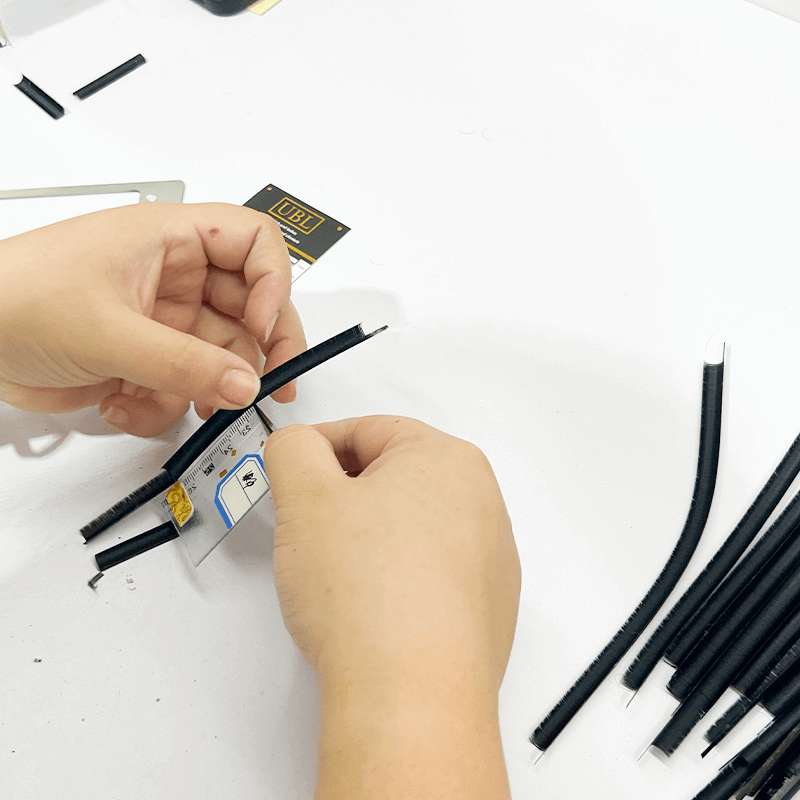
Individual lash extensions follow a different process. It starts with PBT polymer pellets heated and extruded through precision dies. The diameter of the die determines the fiber thickness.
The extruded fiber passes through cooling chambers that solidify it at the exact desired diameter. Quality manufacturers measure fiber diameter continuously during extrusion to ensure consistency within 0.001mm.
Next comes curl treatment. The straight fibers get wound around heated cylinders of specific diameters. The heat treatment permanently sets the curl pattern into the fiber’s molecular structure. Different cylinder sizes create different curl types.
After curl setting, the fibers receive surface treatment. Chemical processing creates the matte finish that mimics natural lashes. This removes the plastic shine that makes cheap lashes look obviously fake.
The long fiber strands then get cut to precise lengths using automated cutting machines. These machines can cut thousands of lashes per minute with perfect accuracy.
Finally, technicians hand-arrange the cut lashes onto adhesive strips in organized rows. This creates the lash trays that professionals purchase. Each tray typically contains 12-16 rows of lashes in a single length.
What Are False Lashes Made Of?
The term “false lashes” encompasses both strip lashes and individual extensions. I already covered individual extensions, so let me focus on strip lash specifics.
Strip lashes use three main components: the lash fibers, the band, and the adhesive that bonds them together.
Lash Fibers:
Most strip lashes use acrylic or polyester synthetic fibers rather than premium PBT. These materials cost less but perform adequately for temporary wear. The fibers range from 0.10mm to 0.20mm in diameter, thicker than extensions because they need to stand out without individual attachment.
Band Material:
The band that holds strip lashes together comes in several materials:
- Cotton thread (traditional, visible)
- Plastic strip (durable, slightly visible)
- Clear plastic (invisible band technology)
- Silicone (flexible, comfortable)
- Paper-thin mesh (most invisible option)
The band material significantly affects comfort and appearance. Thick cotton bands work well for beginners because they’re easy to handle, but they show more. Invisible bands look better but require more skill to apply correctly.
Bonding Adhesive:
The adhesive holding fibers to the band is typically a latex-based or cyanoacrylate formula. This differs from the lash glue you use to apply strips to your eyelid. The bonding adhesive is permanent and creates the structure of the lash strip itself.
Innovations in Lash Technology
The lash industry continues evolving with new materials and manufacturing techniques. These innovations improve performance, comfort, and accessibility.
Recent advances include:
Magnetic Lashes:
These use tiny magnets embedded in the lash band. Two strips sandwich your natural lashes, held together by magnetic attraction. No adhesive needed, making application easier and less messy. However, they feel heavier than traditional strips and don’t work well with lash extensions.
Self-Adhesive Strips:
Some manufacturers now coat the lash band with a gentle pressure-sensitive adhesive. You simply press them onto your lash line without separate glue. The adhesive is reusable for multiple applications but provides lighter hold than traditional lash glue.
Ultra-Light Fibers:
New manufacturing techniques create PBT fibers as thin as 0.03mm that maintain strength and curl. These ultra-light options allow dramatic volume without weight, opening new possibilities for mega-volume techniques.
Colored and Gradient Lashes:
Advanced dyeing processes create lashes with multiple colors or gradual color transitions. The dye penetrates the fiber rather than coating the surface, so color doesn’t fade or transfer.
Pre-Made Volume Fans:
Manufacturers now create pre-made fans with 2-20 lashes already arranged in perfect fan shapes. This speeds up application significantly while maintaining consistency. The fans use ultra-fine fibers (0.03-0.07mm) bonded at a tiny connection point.
Smart Curl Technology:
Some premium fiber lashes now feature a “memory curl” technology, which allows them to be temporarily straightened during application and then spring back into their full curl. This innovation not only simplifies the application process, but also ensures the curl remains intact over time.
From what I’ve observed, Sophie has fully embraced these advancements in her business. She started with basic synthetic lash extensions, but has since expanded to offer pre-made volume fans and colored lashes. As a result, her clients appreciate the wider range of options, and what’s more, the newer products have actually made her work easier.
Ethical Considerations in Lash Materials
The ethics of lash materials deserve serious consideration. Your purchasing choices impact animal welfare and industry practices.
Real mink and other animal-derived lashes raise ethical concerns about fur farming, animal treatment, and harvesting methods. Cruelty-free and vegan alternatives now match or exceed natural material quality while avoiding these ethical issues.
What Are Fake Lashes Made Of Animal?
Several lash types use animal materials, each with different ethical implications.
Mink Lashes:
Real mink fur comes from farms primarily in China and Europe. Minks are small carnivorous mammals raised in cages for fur production. The fur industry claims some mink lashes come from brushed fur collected during shedding season, but this is difficult to verify.
Most mink fur actually comes from animals killed for fur coats. The lash industry uses fur that would otherwise be discarded as too short for garment production. This means purchasing mink lashes supports the broader fur farming industry.
Mink farms have documented animal welfare issues:
- Small wire cages that prevent natural behaviors
- Stress-induced psychological problems
- Limited veterinary care
- Inhumane killing methods in some facilities
Silk Lashes:
Real silk comes from silkworm cocoons. The production process involves boiling cocoons with the silkworm pupae still inside, killing them. While silkworms are insects rather than mammals, some people still consider this cruel.
However, most “silk lashes” contain no actual silk. They’re synthetic fibers with a silk-like finish. Always verify material composition if this matters to you.
Fox and Horse Hair:
Some luxury lashes use fox fur or horse hair. In practice, these materials are even rarer than mink in the lash industry. Fox fur typically comes from fur farms, which is similar to the sourcing process for mink. Meanwhile, horse hair is generally obtained from tail hair cut from live horses. While this process is less harmful, it still raises ethical questions about animal use.
Ultimately, the reality is that animal-derived lashes, regardless of source, inevitably create a market for animal farming. Therefore, even if specific lashes are marketed as coming from “ethically sourced” fur, the broader practice normalizes using animal products, especially when effective synthetic alternatives are readily available.
Cruelty-Free Options in the Market
The shift toward cruelty-free lashes has accelerated dramatically. Most major lash brands now offer vegan options, and many have eliminated animal products entirely from their lines.
Synthetic PBT Fiber:
This remains the best cruelty-free option. High-quality synthetic lashes perform identically to animal-derived options without any ethical concerns. Korean PBT fiber especially offers premium quality that satisfies even the most demanding clients.
Plant-Based Innovations:
Some companies now experiment with plant-based fibers for lashes. These materials come from renewable plant sources like bamboo or cotton. However, plant-based lashes haven’t achieved the same performance as PBT yet. They’re more of a niche eco-friendly option than a mainstream choice.
Recycled Materials:
A few manufacturers use recycled plastic polymers to create lash fibers. This addresses environmental concerns while maintaining cruelty-free status. The quality can vary, but it’s an interesting sustainable direction for the industry.
Certification and Verification:
Look for these certifications when seeking cruelty-free products:
| Certification | What It Means | Verification Level |
|---|---|---|
| PETA Certified Vegan | No animal products or testing | Third-party verified |
| Leaping Bunny | No animal testing | Comprehensive audit |
| Vegan Society Trademark | No animal ingredients | Ingredient verification |
| Cruelty-Free International | No animal testing at any stage | Ongoing monitoring |
I always recommend synthetic options to my clients now. The quality is excellent, the price is better, and you avoid supporting animal farming. When Sophie asked about the ethics of her mink lashes, I helped her transition to premium synthetic alternatives. Her clients couldn’t tell the difference, and she felt better about her business practices.
Conclusion
Summary of Lash Materials
The lash industry offers materials ranging from animal-derived fur to advanced synthetic polymers. Historically, natural materials like mink, silk, and human hair provided the original premium lash experience, though they come with ethical concerns, inconsistent quality, and higher costs.
In contrast, synthetic materials, particularly Korean PBT fiber, have evolved to match or even exceed the performance of natural materials. For example, modern synthetic lashes offer superior durability, perfect consistency, permanent curl retention, and hypoallergenic properties. Consequently, they cost less while performing better, which makes them the practical choice for most applications.
Choosing the Right Lashes for You
Your material choice should align with your values, budget, and performance needs. Consider these factors:
- <strong>Ethics: Synthetic options avoid animal welfare concerns entirely
- Performance: Premium synthetic matches or beats natural materials
- Budget: Synthetic costs significantly less than mink or silk</li>
- Consistency: Synthetic offers perfect uniformity across batches
- Durability: Synthetic lasts longer and maintains shape better
- Appearance: High-quality synthetic is virtually indistinguishable from natural
Professional lash services often rely on Korean PBT fiber extensions for their durability and finish. Meanwhile, for retail products, vegan-certified synthetic lashes with invisible bands are a responsible and high-quality choice. <strong>However, clients who specifically want natural materials must be sourced from suppliers that verify ethical practices.</p>
Ultimately, the lash material you choose impacts not just your appearance but also animal welfare and industry practices. <strong>Given that synthetic options now match natural materials in quality, there’s little reason to choose animal-derived lashes unless personal preference strongly favors them.
<p>
Email: contact@universebebautylashes.com
Website Link: www.ublash.com